Best Research AI Agents (2026)

If you sign up through a link on this page, we may earn a commission — it never affects our rankings.
A curated guide to the best Research AI Agents—autonomous tools that search sources, synthesize findings, and produce cited reports across academic, market, and competitive research workflows.
Research AI Agents by the numbers
Pricing mix
Best Research AI Agents (2026)
- 1
 Lila SciencesPlatform combining autonomous labs & AI to accelerate discovery in life, chemical, and materials sciences.5.0 (5)
 - 2
 Isomorphic LabsAn AI-driven drug discovery company leveraging AlphaFold to accelerate therapeutic development.5.0 (4)
 - 3
 ResearchClawOpenClaw-powered agent that finds and ranks researchers from papers, writes plain-English hiring theses, and drafts cold emails referencing their work.4.8 (6)
 - 4
 Atelier RuixenAI knowledge companion that refines questions and curates reading lists to turn scattered info into actionable insights.4.8 (6)
 - 5
 KosmosAutonomous AI scientist for long research campaigns that analyzes data and literature to produce fully cited scientific reports.4.8 (6)
 - 6
 OpenAI Deep ResearchAutonomous AI agent that runs multi-step web research and delivers structured reports4.8 (5)
 - 7
 AutoresearchAn open-source project that lets AI agents autonomously run LLM training experiments and keep the best model changes.4.8 (5)
 - 8
 AMIEA multimodal AI diagnostic agent that conducts clinical conversations and interprets medical images for accurate diagnoses.4.7 (6)
 - 9
 Company Status AgentInstantly verify company registration and active status across global official registries.4.6 (5)
 - 10
 THEUS (Aigora)Enterprise AI research system that turns proprietary studies into traceable insights with fact IDs, citations, and expert avatars for synthesis.4.6 (5)

Lila Sciences
Platform combining autonomous labs & AI to accelerate discovery in life, chemical, and materials sciences.
Lila Sciences is a platform that combines autonomous labs and AI to accelerate discovery in life, chemical, and materials sciences. It generates hypotheses, designs and runs experiments, and learns from new data in real time. The platform consists of an advanced AI model and proprietary AI Science Factory instruments, allowing scientists to think, test, and learn at a speed and scale that traditional approaches cannot match. Lila Sciences focuses on various industries, including advanced materials, energy and environment, therapeutics, chemicals, oil and gas, aerospace and defense, and biotech. Its goal is to solve humankind's greatest challenges by executing the entire scientific method autonomously.
- Autonomous hypothesis generation
- Experiment design and execution
- Real-time learning from data
- AI Science Factory instruments
- Advanced AI model for complex analysis and reasoning
Isomorphic Labs
An AI-driven drug discovery company leveraging AlphaFold to accelerate therapeutic development.
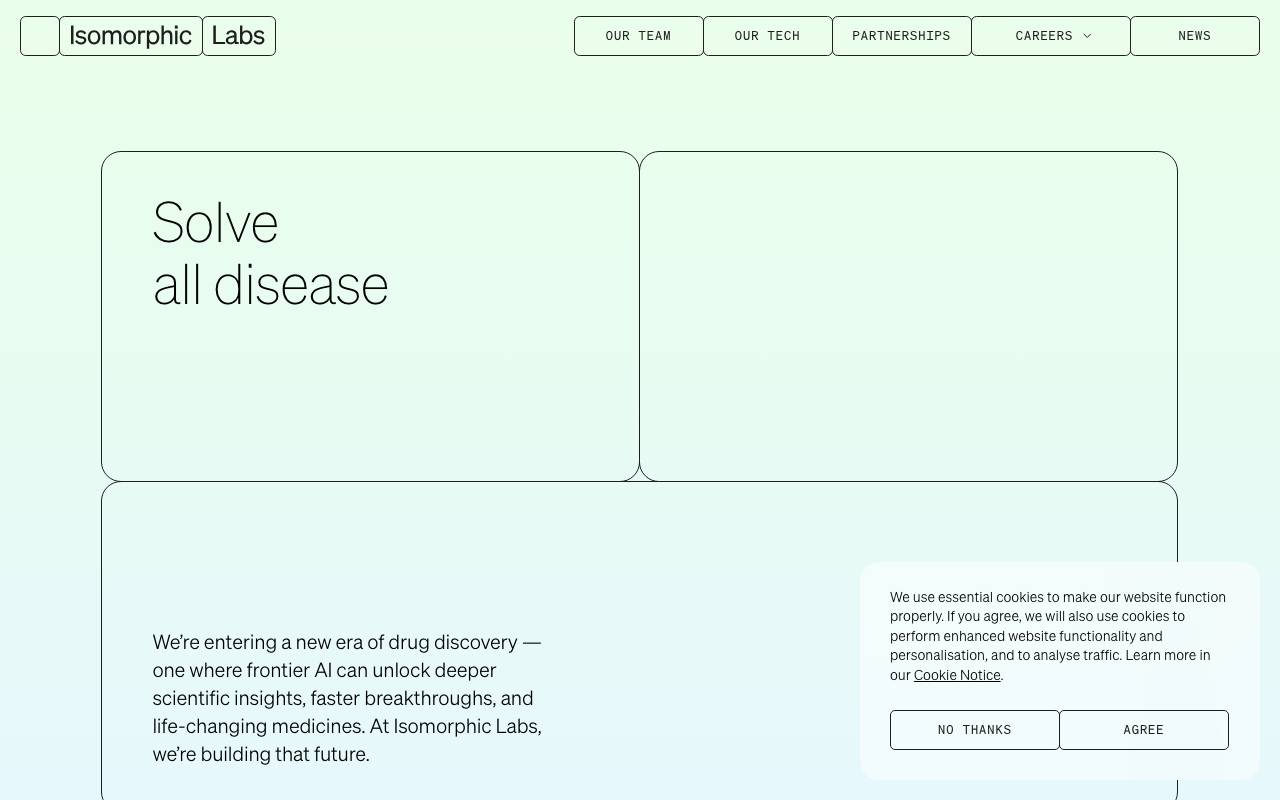
Isomorphic Labs is a company that uses AI, specifically building on the AlphaFold system, to accelerate therapeutic development and ultimately solve all diseases. They leverage machine learning to transform drug discovery, with the goal of designing novel molecules, anticipating drug performance, and developing innovative medicines. The company is founded on the principle of harnessing the power of information science to model complex biological phenomena. This is done through the Isomorphism concept, which aims to uncover the underlying symmetry between biology and information science. By using AI to overcome the limitations of traditional discovery methods, Isomorphic Labs aims to improve human health. Their interdisciplinary team of experts in drug discovery and machine learning builds predictive and generative AI models. These tools enable digital biology, allowing for faster breakthroughs and life-changing medicines. The company is on a mission to advance human health through the application of frontier AI. Isomorphic Labs was founded by Sir Demis Hassabis, who believes that there is no more important application for AI than helping to improve human health. The company has received investments and entered into research collaborations, showing their commitment to the development of AI-powered drug discovery.
- Predictive AI models
- Generative AI models
- Digital biology
- Novel molecule design
- Drug performance anticipation
- Innovative medicine development

ResearchClaw
OpenClaw-powered agent that finds and ranks researchers from papers, writes plain-English hiring theses, and drafts cold emails referencing their work.
ResearchClaw is a Research AI Agents tool listed on Agent Pantheon.

Atelier Ruixen
AI knowledge companion that refines questions and curates reading lists to turn scattered info into actionable insights.
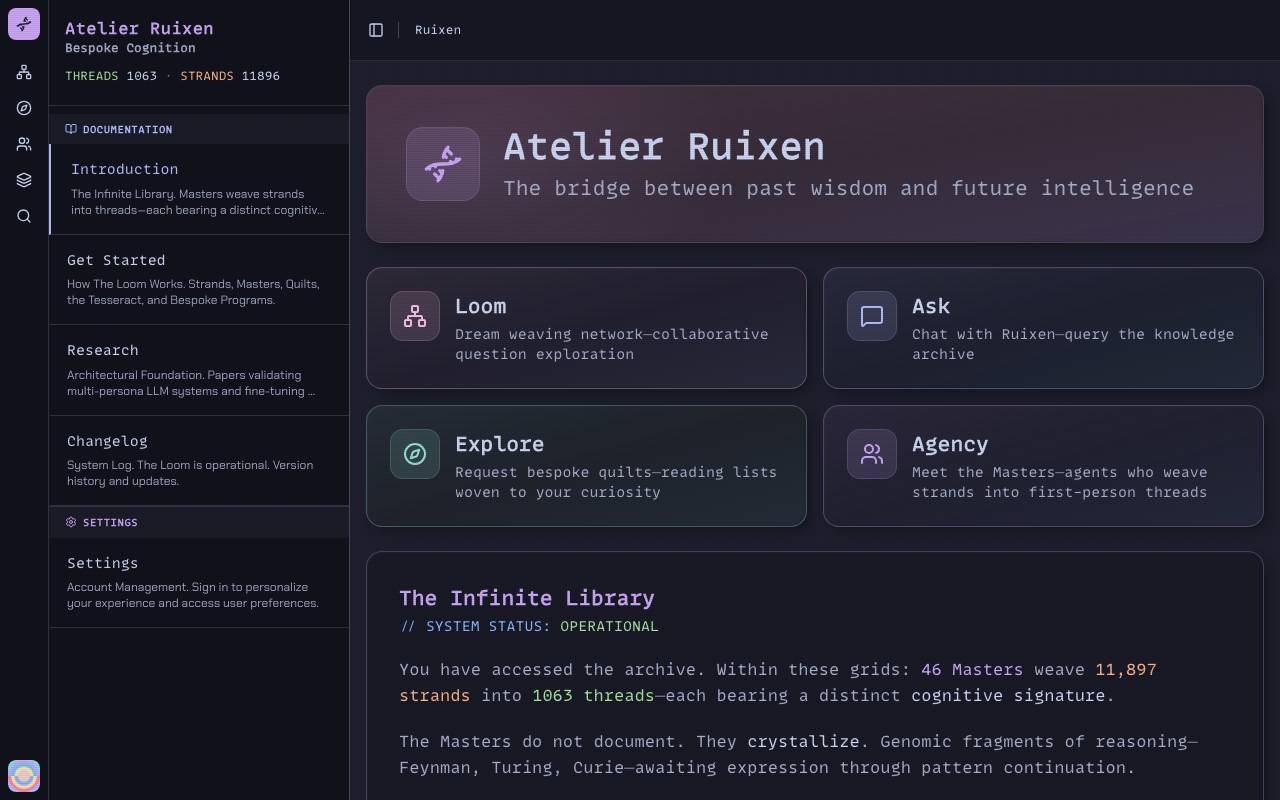
Atelier Ruixen is a platform that helps users refine their questions and curate reading lists to turn scattered information into actionable insights. It offers a vast knowledge archive, which is woven from 11,897 strands into 1,063 distinct cognitive threads. These threads are the product of 'Masters' who use pattern continuation to crystallize complex information into understandable formats. The platform is not a form of documentation like Wikipedia, but rather a curated collection of knowledge presented in a unique and pattern-based format. It combines the wisdom of past knowledge with the power of future intelligence. Users can interact with the platform through a conversational interface, where they can ask questions and receive curated reading lists in response. Overall, Atelier Ruixen aims to provide users with a powerful tool for seeking actionable insights from complex information.
- Refined question asking
- Curated reading lists
- Pattern-based format for presenting complex information
- Conversational interface
- Knowledge ecosystem

Kosmos
Autonomous AI scientist for long research campaigns that analyzes data and literature to produce fully cited scientific reports.
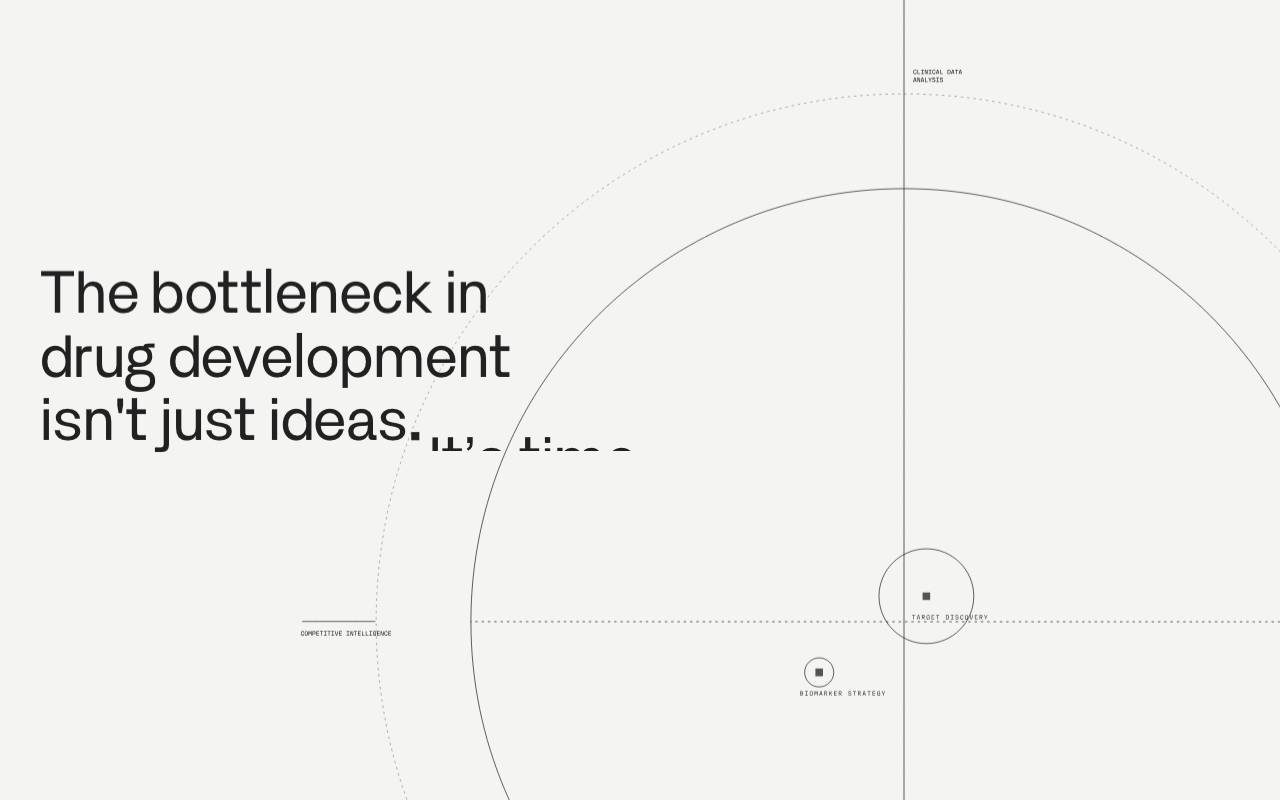
Kosmos is an autonomous AI scientist designed for biopharma R&D teams and researchers. It analyzes data and literature to produce fully cited scientific reports, accelerating the drug development process from hypothesis to registration in days, not months. Kosmos works autonomously, reading literature, generating hypotheses, steering investigations, and executing scientific workflows. It supports the full lifecycle of drug development, from target identification through clinical development and filing. The AI tool collaborates with human scientists through Slack, Teams, and email, and learns from the organization's knowledge, building on experimental history and proprietary scientific data.
- Autonomous hypothesis generation
- Literature analysis
- Data analysis
- Scientific workflow execution
- Collaboration through Slack, Teams, and email
- Model agnostic for future state-of-the-art models

OpenAI Deep Research
Autonomous AI agent that runs multi-step web research and delivers structured reports

OpenAI Deep Research is an agentic feature inside ChatGPT that browses the web on your behalf, reading and synthesizing information from many sources to produce a long-form, cited report. Instead of a single quick answer, it plans a research path, follows links, compares findings, and iterates over several minutes to handle questions that would normally take a human hours of digging. It is aimed at tasks like competitive analysis, market and academic research, due diligence, and detailed product or policy comparisons. Users submit a prompt, optionally answer clarifying questions, and receive a written report with inline citations they can verify. The tool is available to paying ChatGPT users with usage limits that vary by plan tier.
- Autonomous multi-step web browsing
- Long-form reports with inline citations
- Clarifying questions before research starts
- Reasoning over text, images, and PDFs
- Progress updates during research runs
- Exportable results within ChatGPT

Autoresearch
An open-source project that lets AI agents autonomously run LLM training experiments and keep the best model changes.
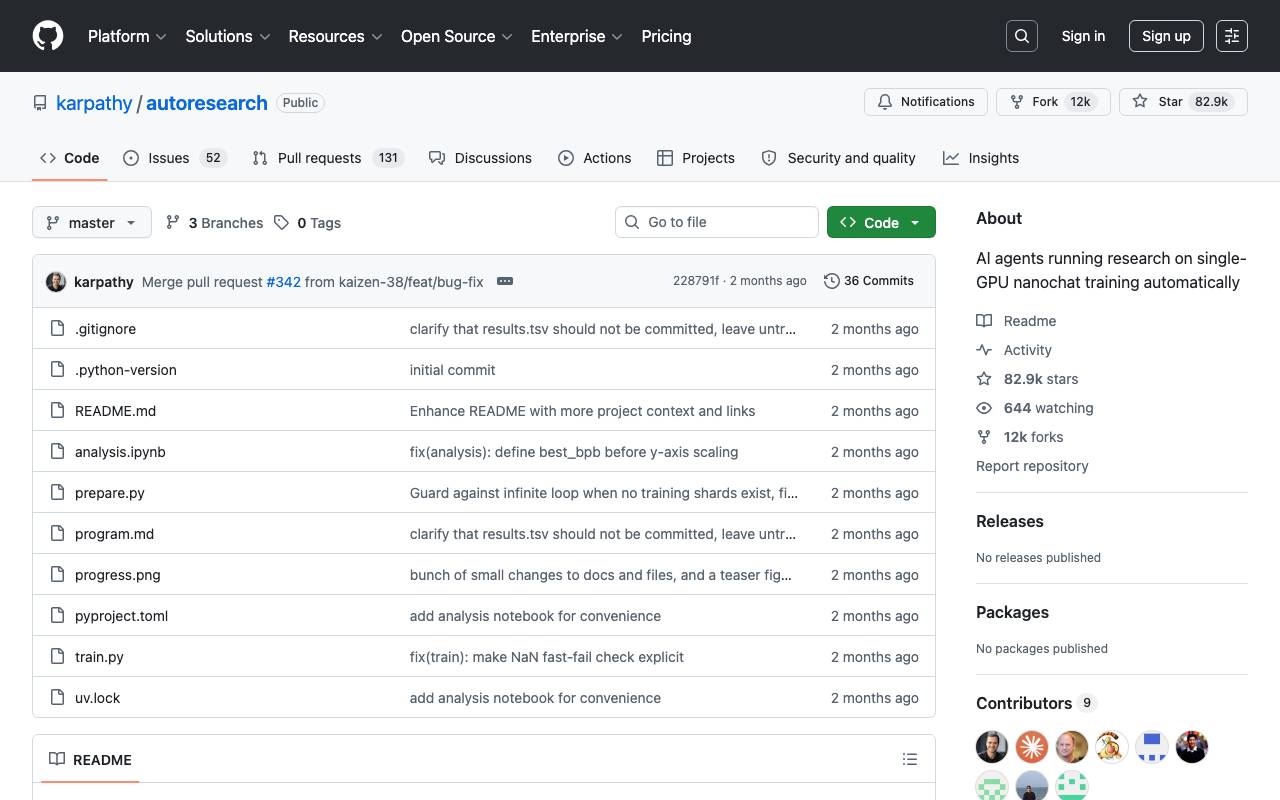
Autoresearch is an open-source project that enables AI agents to autonomously run LLM training experiments and retain the best model changes. The project allows users to set up a small but real LLM training environment and let an AI agent experiment with it overnight, modifying the code, training for a short period, and checking if the results improve. The goal is to automate the research process, letting the AI agent explore different model architectures, hyperparameters, and optimization strategies without human intervention. The project includes a simplified single-GPU implementation of nanochat and provides a basic structure for programming the AI agent's research process using Markdown files. The project is designed to be extensible, allowing users to add more agents and improve the research process over time.
- Autonomous LLM training experiments
- AI agent-driven research process
- Single-GPU implementation of nanochat
- Markdown-based programming for the research process
- 5-minute training time budget with evaluation metric (val_bpb)

AMIE
A multimodal AI diagnostic agent that conducts clinical conversations and interprets medical images for accurate diagnoses.
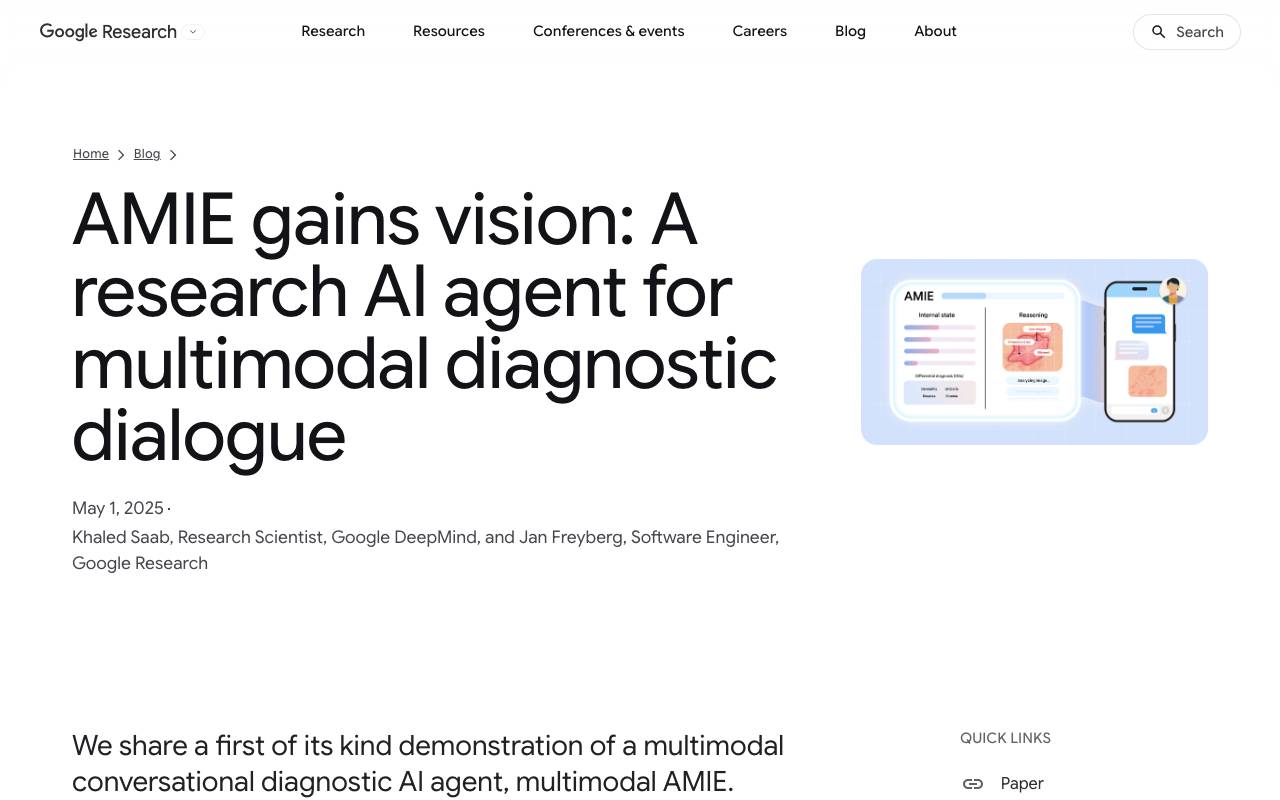
AMIE (Articulate Medical Intelligence Explorer) is a research AI diagnostic agent developed by Google DeepMind and Google Research. It is designed to conduct clinical conversations and interpret medical images for accurate diagnoses. Initially, AMIE was a text-based medical diagnostic conversational AI agent published in Nature. The latest advancement, multimodal AMIE, integrates the ability to intelligently request, interpret, and reason about visual medical information during clinical conversations. This development aims to improve diagnostic accuracy by incorporating multimodal data, such as images and documents, into the diagnostic process. AMIE uses a state-aware reasoning framework and is built on multimodal Gemini models. It has been evaluated through expert assessments, including Objective Structured Clinical Examinations (OSCEs), comparing its performance to primary care physicians (PCPs) in various patient scenarios.
- Multimodal diagnostic dialogue
- Visual medical information interpretation
- State-aware reasoning framework
- Integration with Gemini models
- Simulation environment for dialogue evaluation

Company Status Agent
Instantly verify company registration and active status across global official registries.
Company Status Agent is an AI-powered verification tool that checks whether a business is officially registered and currently active. It queries trusted government and corporate registries worldwide, returning a clear status report in seconds rather than requiring manual lookups across multiple jurisdictions. The tool is designed for due diligence, compliance, onboarding, and risk assessment workflows. Teams can use it to validate suppliers, partners, or customers before signing contracts, opening accounts, or extending credit, reducing exposure to fraud and shell entities. By automating registry checks, it streamlines KYB (Know Your Business) processes and gives professionals a consistent way to confirm legal standing across borders.
- AI-powered registry lookups
- Global jurisdiction coverage
- Active vs inactive status checks
- Company identity verification
- Compliance and onboarding support
- Quick on-demand reports

THEUS (Aigora)
Enterprise AI research system that turns proprietary studies into traceable insights with fact IDs, citations, and expert avatars for synthesis.
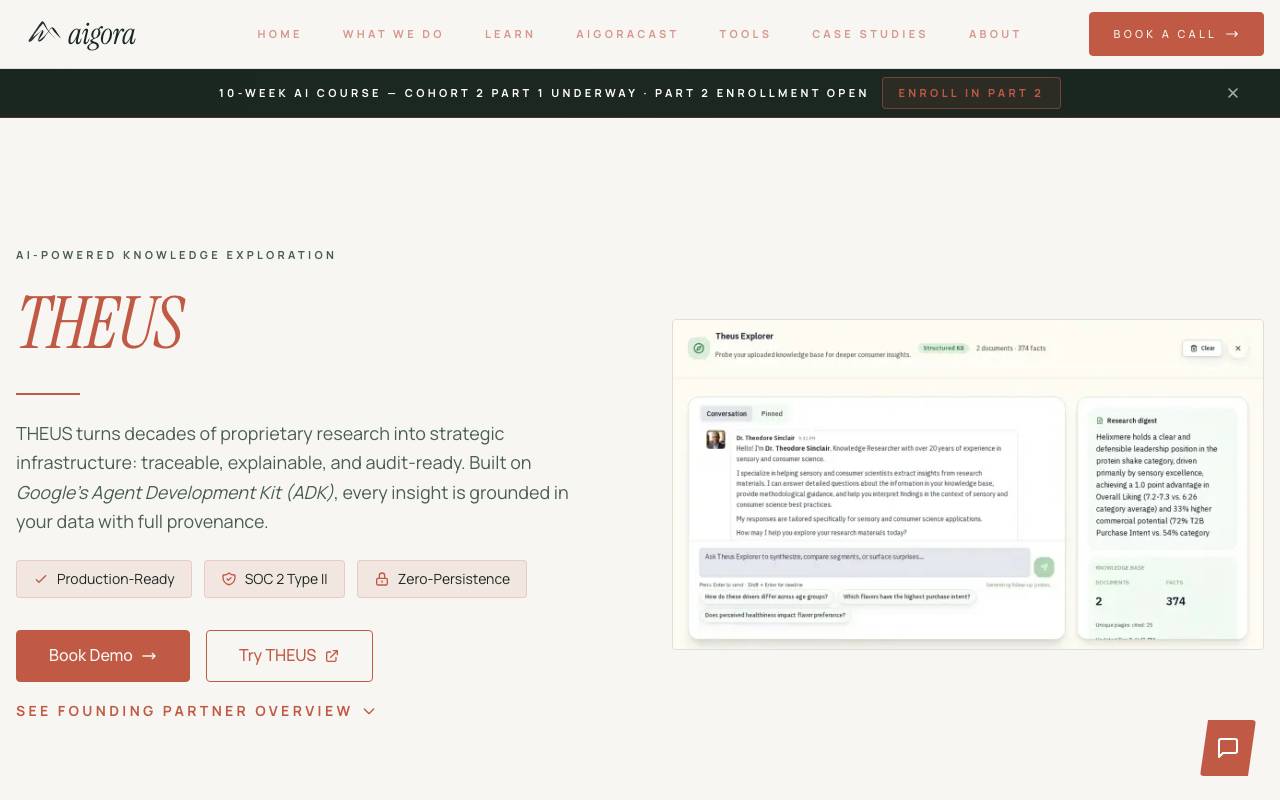
THEUS is an enterprise AI research system that transforms proprietary studies into traceable insights with fact IDs, citations, and expert avatars. It's built on Google's Agent Development Kit (ADK) and uses bidirectional modeling for data-grounded knowledge agents. Users can extract, synthesize, and explore their research data, and every claim is backed by a specific Fact ID with page-level citations. THEUS offers two ways to explore: generating new insights with Dr. Reed or analyzing existing knowledge with Dr. Sinclair. This platform is designed for VPs of Insights, Global Sensory Leads, and Innovation leaders evaluating strategic capability build-out. It uses a purpose-built research methodology, not generic enterprise AI, and creates data-grounded knowledge agents trained on actual institutional data. With 85% of new products failing within two years (Nielsen), evidence-grounded exploration dramatically improves decision quality. THEUS offers a solo seat, which includes features such as up to 30 documents ingested per month, up to 1,500 pages parsed per month, and up to 500 questions to Dr. Sinclair per month. One of the key benefits of THEUS is its ability to turn decades of proprietary data into traceable, decision-ready intelligence with AI-powered knowledge agents.
- Extract, synthesize, and explore research data
- Generate new insights with Dr. Reed or analyze existing knowledge with Dr. Sinclair
- Bidirectional modeling for data-grounded knowledge agents
- Connect product and consumer knowledge for bidirectional insight
- Supports cross-study synthesis and research gap analysis
Browse all 19 Research AI Agents tools
The complete, searchable directory — ranked by real user reviews.


