Best Information Agents (2026)

If you sign up through a link on this page, we may earn a commission — it never affects our rankings.
A buyer's guide to the best Information Agents — AI tools that autonomously gather, summarize, and deliver knowledge from documents, the web, and internal data sources.
Information Agents by the numbers
Pricing mix
Best Information Agents (2026)
- 1
 ZoteroOpen-source reference manager for collecting, organizing, citing, and sharing research.5.0 (4)
 - 2TTavilyReal-time web search and data retrieval API built for AI agents and LLM workflows.5.0 (4)
- 3CConsensusAI-powered search engine that finds and synthesizes answers from peer-reviewed research.5.0 (4)
- 4
 AnswerGridAI research and enterprise search built for consultants and B2B sales teams.4.8 (6)
 - 5
 AskPandiAI-powered answer engine that aggregates multiple sources for fast, reliable responses.4.8 (6)
 - 6
 Browse AINo-code web scraping and monitoring with prebuilt robots and scheduled runs4.8 (5)
 - 7
 Zylon AIPrivate, self-hosted AI platform for enterprises that need full data sovereignty.4.8 (5)
 - 8SScrapeGraphAITurn any website into a structured data API using AI-driven scraping.4.8 (5)
- 9
 Andi AIConversational AI search engine that delivers direct, chat-style answers instead of link lists.4.8 (4)
 - 10
 RAW@AIAI-powered risk management advisor for smarter insights, mitigation, and workflow automation.4.8 (4)

Zotero
Open-source reference manager for collecting, organizing, citing, and sharing research.
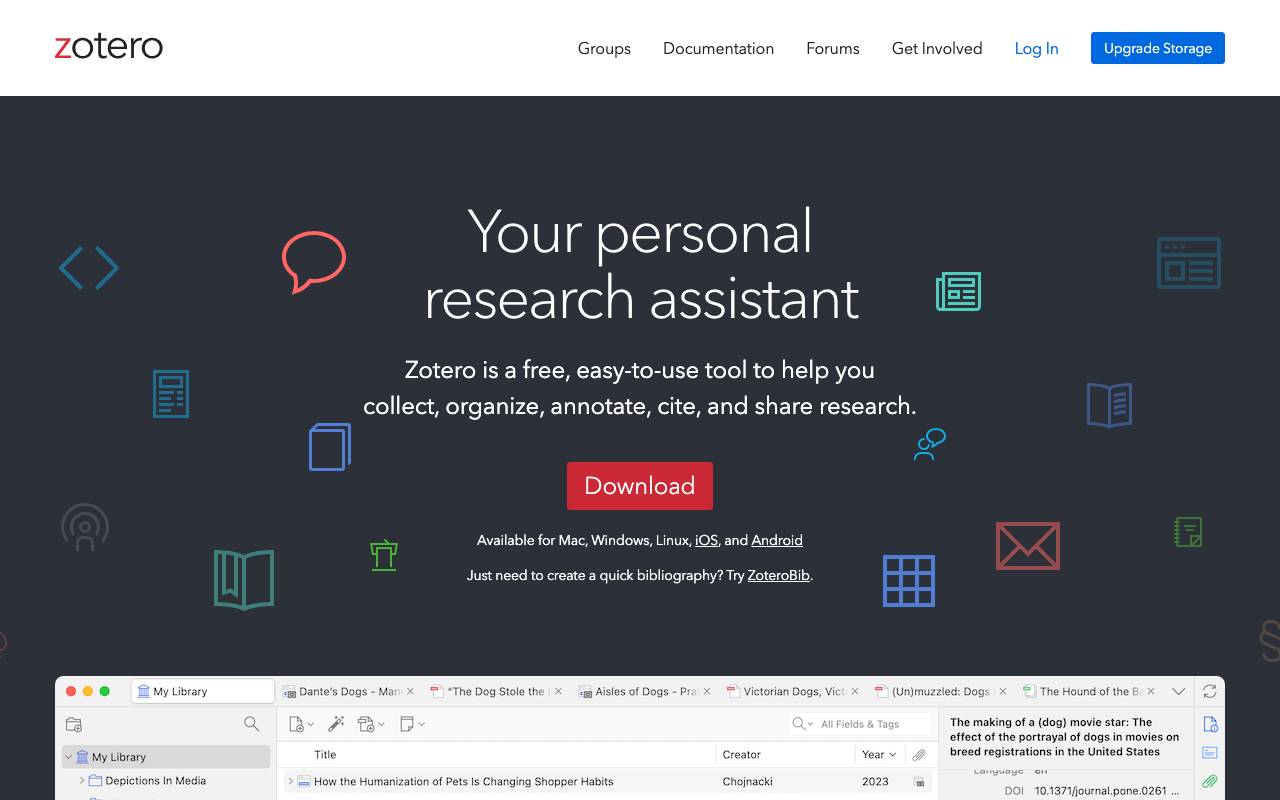
Zotero is a free, open-source research tool that helps academics, students, and writers collect citations, organize sources, and generate bibliographies. It captures references directly from browsers, databases, and PDFs, then stores them in a searchable library with attached files, notes, and tags. Beyond basic citation management, Zotero supports collaborative group libraries, syncs across devices, and integrates with Word, LibreOffice, and Google Docs for in-text citations in thousands of styles. A growing ecosystem of plugins adds AI-assisted features like PDF summarization, semantic search, and automated tagging, extending its core workflow for modern research.
- One-click reference capture from web sources
- PDF storage with annotation and note-taking
- Citation generation in 10,000+ styles
- Shared group libraries for collaboration
- Cross-device sync and backup
- Plugin support for AI and workflow extensions
Tavily
Real-time web search and data retrieval API built for AI agents and LLM workflows.
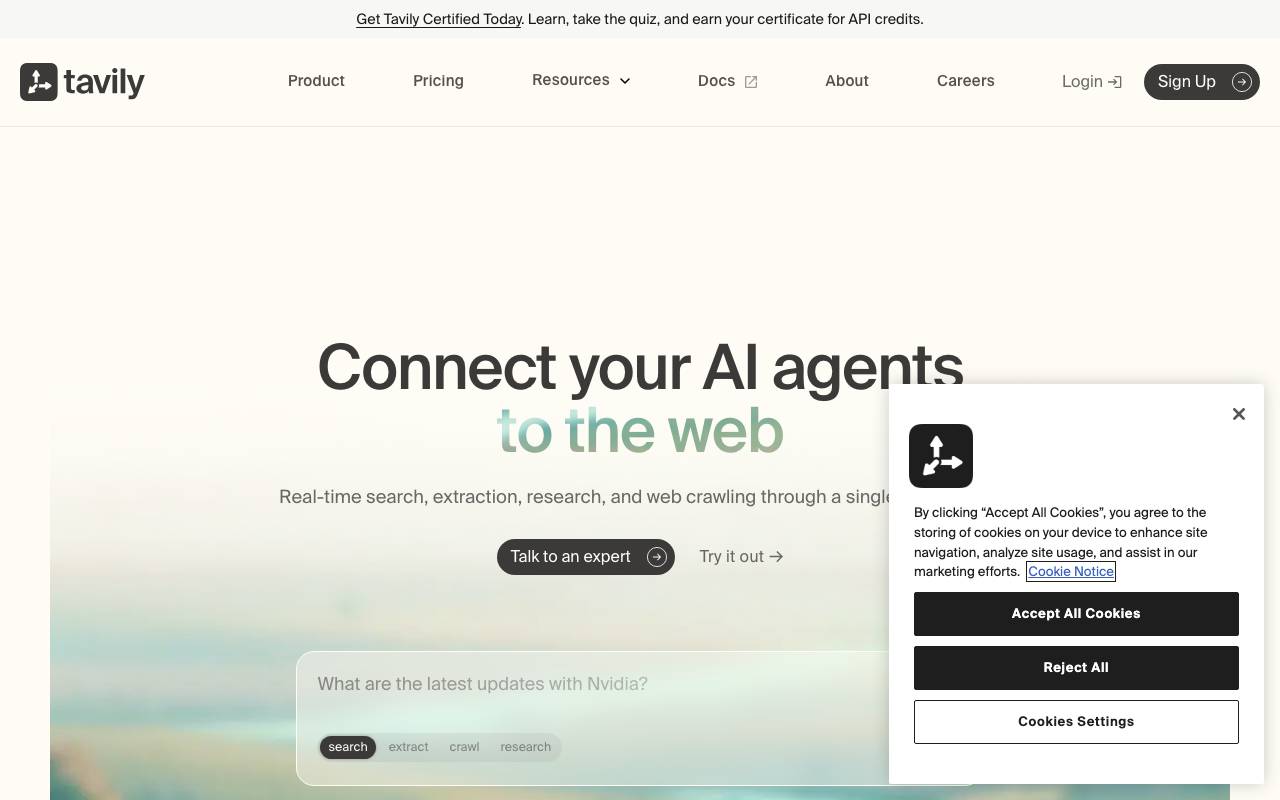
Tavily is a search and retrieval API designed specifically for AI agents, RAG pipelines, and LLM-powered applications. Instead of returning raw search results, it delivers structured, source-attributed answers optimized for machine consumption, helping developers ground model outputs in current web data. The service handles query interpretation, page crawling, content extraction, and result ranking in a single call, removing much of the plumbing teams typically build around web search. Tavily integrates with popular frameworks such as LangChain and LlamaIndex, making it straightforward to add live information access to chatbots, research assistants, and autonomous agents.
- Real-time web search API
- Content extraction and summarization
- Source citations with each result
- LangChain and LlamaIndex integrations
- Configurable search depth and domain filters
- Endpoints tailored for RAG and agents
Consensus
AI-powered search engine that finds and synthesizes answers from peer-reviewed research.
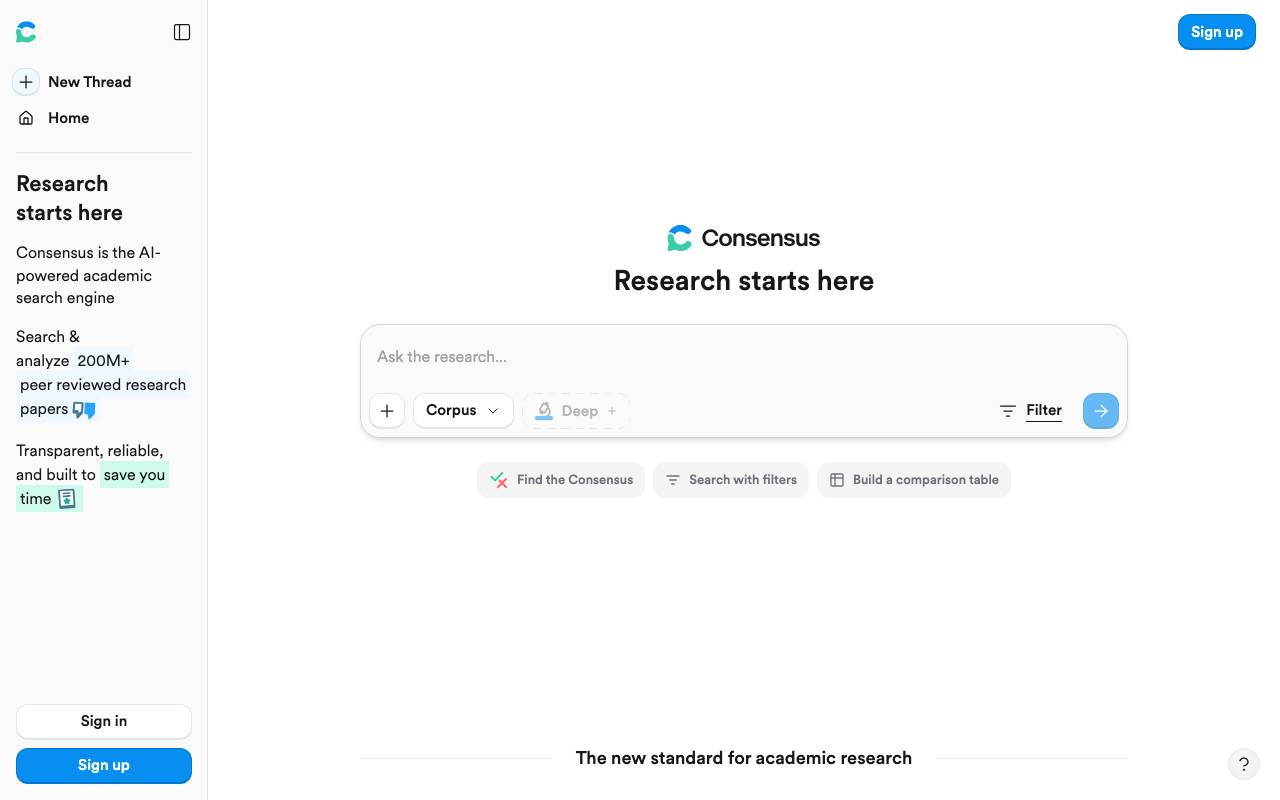
Consensus is an academic search tool that uses AI to surface evidence-based answers from a large database of peer-reviewed scientific papers. Instead of returning a list of links, it extracts key findings directly from studies and presents them alongside source citations, making it easier to see what the research actually says on a given question. Designed for researchers, students, clinicians, and curious readers, Consensus combines natural language search with features like consensus meters, study summaries, and quality indicators. This helps users quickly gauge where scientific opinion stands on a topic without having to read every paper from start to finish.
- AI-generated answers from scientific papers
- Consensus meter for aggregated study results
- Study snapshots and plain-language summaries
- Citation links to original sources
- Filters for study type, year, and journal quality
- GPT-powered synthesis of multiple papers

AnswerGrid
AI research and enterprise search built for consultants and B2B sales teams.

AnswerGrid is an AI-powered research platform that helps consultants and B2B sales professionals find, organize, and synthesize information from across the web and internal sources. Instead of jumping between tabs and tools, users can run structured queries that return comparable data points across companies, markets, or prospects. The platform is designed around grid-style outputs, letting teams build lists, enrich them with researched attributes, and export results into workflows. It aims to compress hours of manual desk research into minutes while keeping sources traceable. Typical use cases include market mapping, competitor analysis, account research, and prospect qualification for go-to-market teams.
- AI-driven web research automation
- Spreadsheet-style result grids
- Bulk company and market enrichment
- Enterprise search across connected sources
- Citation tracking for each data point
- Export to CRM and analysis tools

AskPandi
AI-powered answer engine that aggregates multiple sources for fast, reliable responses.
AskPandi is an AI-powered answer engine that aggregates multiple sources to provide fast and reliable responses. The platform allows users to search for answers, discover new content, and contribute to the world's knowledge. It features a variety of content types, including interactive quizzes, assessments, and curated wisdom on topics such as mindfulness and motivational quotes. AskPandi also provides in-depth information on various subjects, including biology, psychology, and technology. While the platform appears to offer a wide range of features and content, its primary focus is on providing accurate and reliable answers to user queries.
- Multi-source answer aggregation
- Conversational Q&A interface
- Source citations for verification
- Fast response generation
- Designed for research and learning
- Accessible web-based platform

Browse AI
No-code web scraping and monitoring with prebuilt robots and scheduled runs
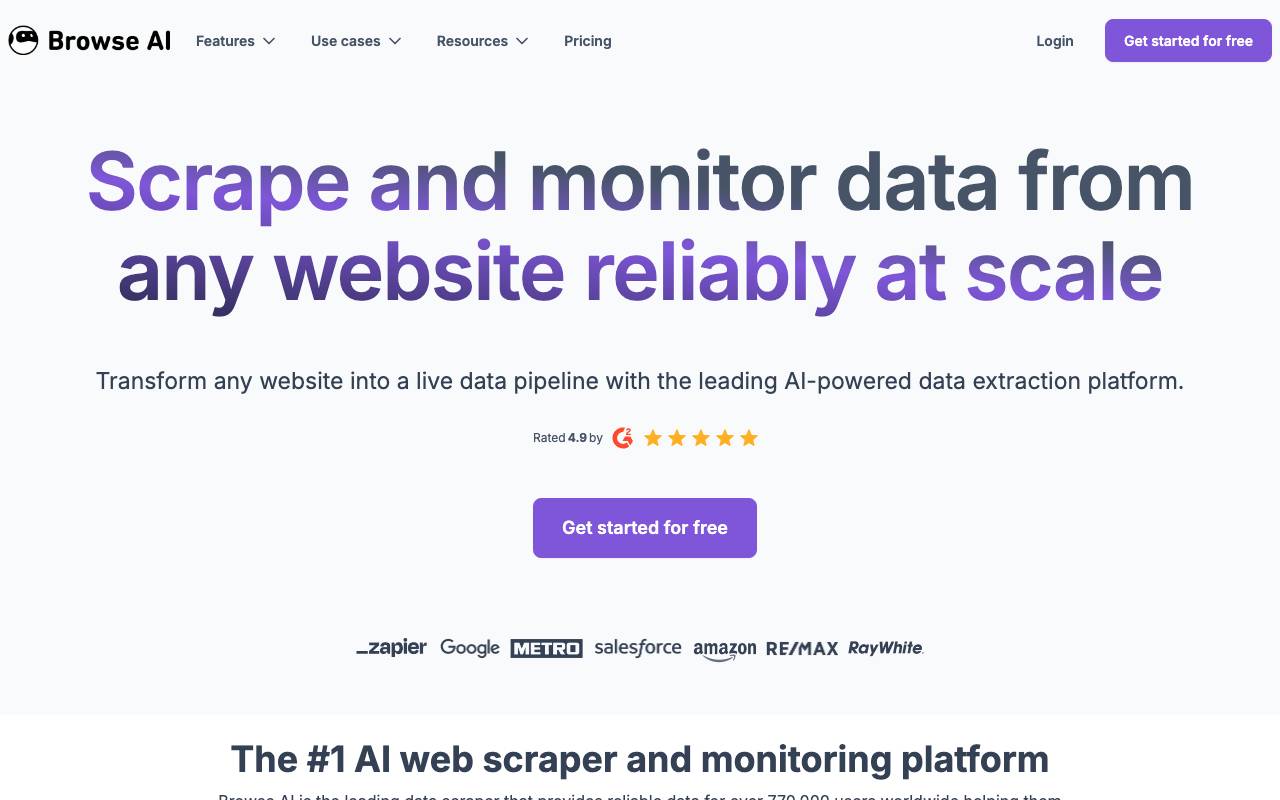
Browse AI is a no-code web scraping and monitoring platform that allows users to extract, scrape, and monitor data from almost any website. It provides a point-and-click interface to build AI web scrapers or monitors without requiring coding knowledge. The platform offers features such as dynamic content capture, built-in bot evasion, proxy management, automatic retries, and rate limiting. It also allows users to export, integrate, or connect scraped data with over 7,000 tools and apps to build automated workflows. Additionally, Browse AI provides enterprise-grade security and compliance standards, including SOC 2 Type II certification, GDPR compliance, and encrypted data transfer. The platform is designed for limitless scale and reliability, making it suitable for businesses and individuals who need to extract data from thousands of web pages.
- Visual robot training in the browser
- Scheduled and on-demand data extraction
- Website change detection and alerts
- Bulk run with input lists
- Webhook and API access
- Library of prebuilt scraping templates

Zylon AI
Private, self-hosted AI platform for enterprises that need full data sovereignty.
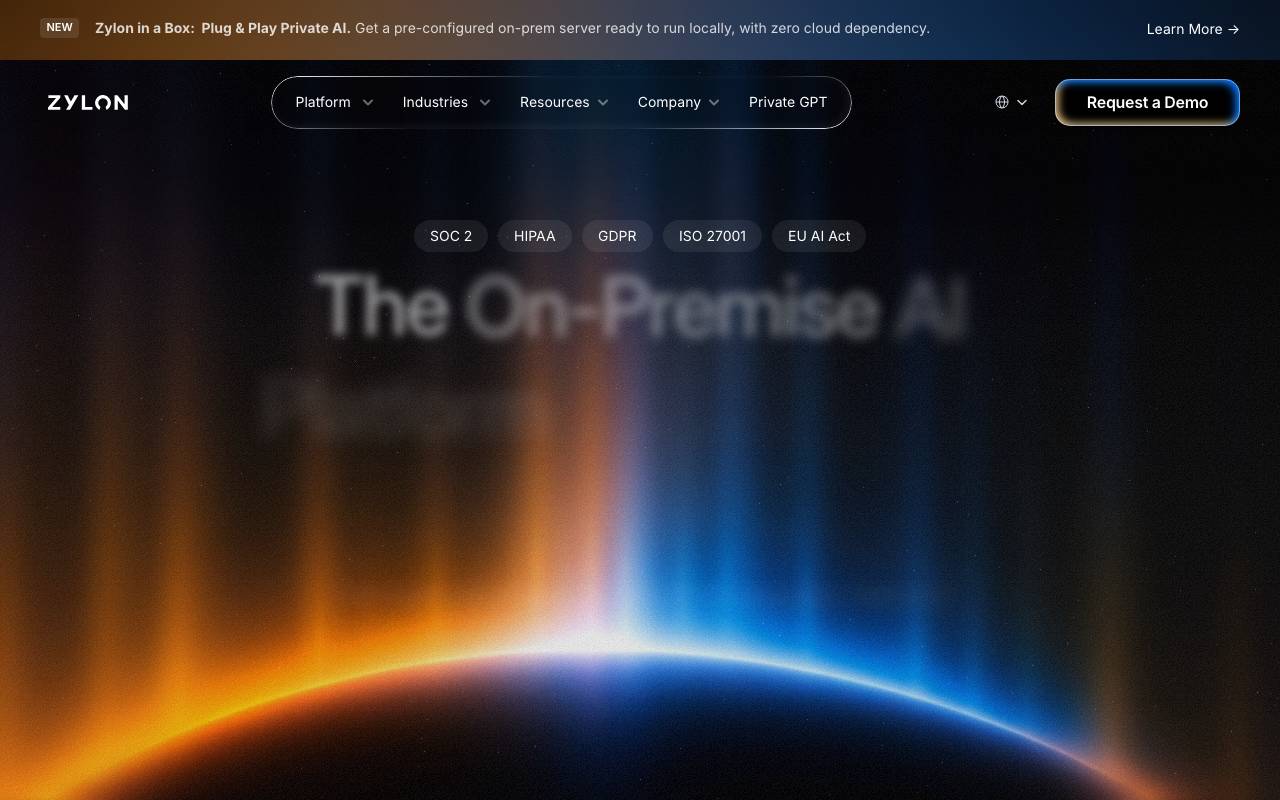
Zylon AI is an enterprise platform for deploying and operating AI models inside an organization's own infrastructure, whether on-premises, in a private cloud, or in an air-gapped environment. It is designed for teams that need the productivity benefits of generative AI without sending sensitive data to third-party services. The platform handles model serving, knowledge integration, and user-facing assistants, while giving IT and security teams centralized control over access, governance, and compliance. It is commonly used in regulated industries such as finance, healthcare, legal, and the public sector, where data residency and confidentiality are non-negotiable. By combining open-source and commercial LLMs with retrieval over private documents, Zylon AI lets organizations build internal copilots, research assistants, and workflow automations on top of their own knowledge base.
- Self-hosted LLM deployment
- Retrieval-augmented generation over internal data
- Role-based access and admin controls
- Support for multiple open and commercial models
- Enterprise integrations and connectors
- Audit logging and compliance tooling
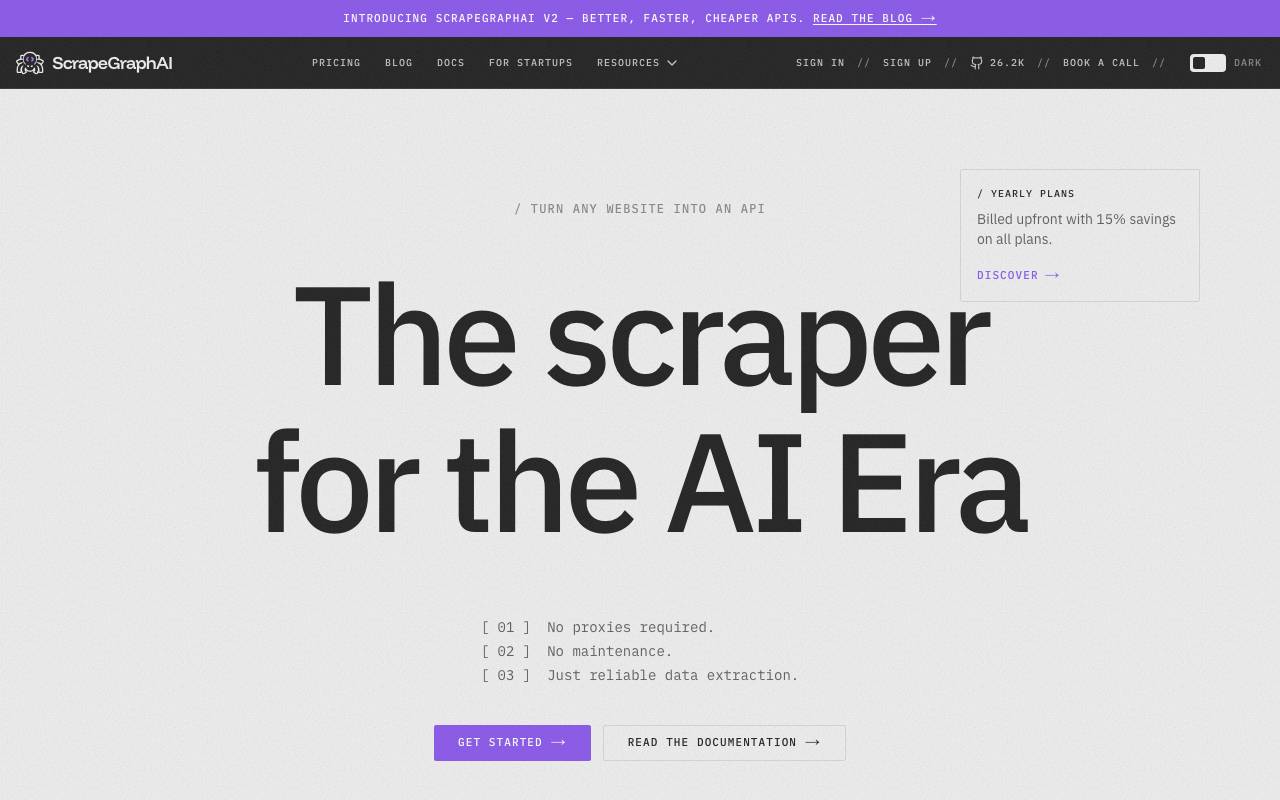
ScrapeGraphAI is an AI-powered web scraping platform that converts unstructured website content into clean, structured data accessible through an API. Instead of writing and maintaining brittle scraping scripts, users describe what they want to extract in natural language and let the underlying language models handle parsing, navigation, and data shaping. The service is aimed at developers, data teams, and businesses that need reliable pipelines for market research, lead generation, price monitoring, or training datasets. It abstracts away common scraping headaches like layout changes, pagination, and JavaScript rendering, returning JSON output ready to drop into downstream applications.
- Natural language data extraction
- REST API for easy integration
- Automatic handling of pagination and navigation
- Support for dynamic, rendered websites
- Structured JSON output
- Scalable cloud-based scraping

Andi AI
Conversational AI search engine that delivers direct, chat-style answers instead of link lists.
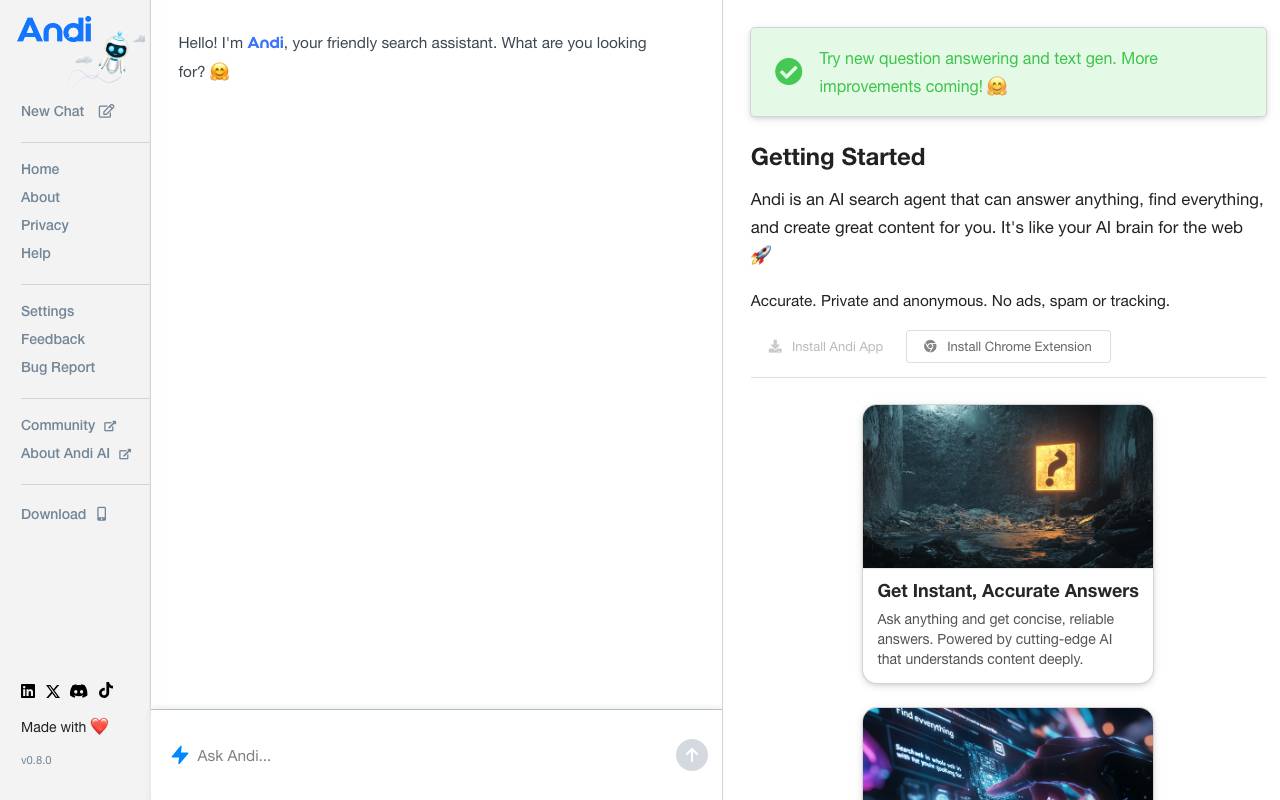
Andi AI is a search engine that uses generative AI and language models to answer questions in a conversational format. Rather than returning a page of blue links, it summarizes information from across the web and presents it as a chat-style response, with cited sources users can click through for verification. The tool is designed to feel more like talking with a knowledgeable friend than querying a traditional search index. It emphasizes a clean, ad-free interface, visual previews of source pages, and follow-up prompts that let users refine or expand on a topic. Andi is positioned as an alternative for people seeking quick, readable answers to factual or research-style queries.
- Chat-style AI answer generation
- Source citations and link previews
- Follow-up and refinement prompts
- Summarization of web results
- Minimalist, distraction-free UI
- Mobile and desktop access

RAW@AI
AI-powered risk management advisor for smarter insights, mitigation, and workflow automation.

RAW@AI is a risk management platform that uses artificial intelligence to help organizations identify, assess, and respond to risks across their operations. It provides data-driven insights and tailored mitigation strategies, aiming to reduce the manual burden traditionally associated with risk analysis. The tool combines advisory capabilities with process automation, allowing risk teams to streamline routine tasks such as risk scoring, reporting, and documentation. It is positioned for use by compliance officers, risk managers, and decision-makers who need faster, more consistent risk evaluations. By integrating AI into the risk lifecycle, RAW@AI seeks to make risk management more proactive, helping teams move from reactive responses to anticipatory planning.
- AI-driven risk identification and analysis
- Mitigation strategy suggestions
- Process automation for risk workflows
- Risk reporting and documentation tools
- Advisory-style guidance for decision-makers
Browse all 27 Information Agents tools
The complete, searchable directory — ranked by real user reviews.


