
Cell2SentenceOpen-source framework that turns single-cell gene expression into 'cell sentences' so LLMs can analyze and generate biology insights.

Overview
Key features
- Transformation of expression vectors into cell sentences
- C2S-Scale models for advanced single-cell tasks
- Support for fine-tuning on custom prompt templates
- Multi-cell prompt formatting
- Pre-trained models based on Pythia and Gemma-2 architectures
Pricing
- Model
- Free
- Category
- Research AI Agents
- Rating
- 4.3 / 5 (4)
Use cases
Analyze single-cell RNA-seq with LLMs
Convert single-cell gene expression profiles into 'cell sentences' so language models can interpret cellular states and uncover patterns in transcriptomic data.
Generate synthetic cell expression data
Use LLMs trained on cell sentences to generate plausible gene expression profiles for hypothesis testing or augmenting sparse single-cell datasets.
Cell type annotation and classification
Leverage LLM reasoning over cell sentences to predict cell types and identify biologically meaningful subpopulations from single-cell experiments.
Biological insight discovery
Apply natural language reasoning to single-cell data to surface novel gene relationships, pathways, or hypotheses for downstream experimental validation.
Pros & Cons
Pros
- Enables LLMs to analyze single-cell transcriptomics data using natural language
- Unifies transcriptomic and textual data for advanced single-cell tasks
- Supports fine-tuning on custom prompt templates and multi-cell prompt formatting
- Includes pre-trained models available on Hugging Face
Cons
- Requires knowledge of single-cell transcriptomics and LLMs
- May require computational resources for large-scale data analysis
- Limited documentation for users without a background in bioinformatics or LLMs
Reviews
Average from 4 ratings.
Sign in to leave a review.
Does the job
Pretty happy overall. The integrations just works and support is responsive. A few rough edges remain can be annoying, but no dealbreakers — I'd recommend it to a friend without hesitating.
Years in this space
I've evaluated a lot of these over the years. What stands out here is the automation — handled better than most — and support is responsive. Pricing gets steep at scale is my one real gripe. Worth the time if this is your use case.
Solid for our team
We rolled this out across the team last quarter and it saves real time. The integrations fits neatly into how we already work, and the core workflow removed a step we used to do by hand. but it has held up under daily use.
Solid for our team
We rolled this out across the team last quarter and the value for money is strong. The onboarding fits neatly into how we already work, and the integrations removed a step we used to do by hand. The docs could be deeper, which is the main caveat, but it has held up under daily use.
Q&A
Is Cell2Sentence free to use?
Yes. Cell2Sentence is an open-source framework, so it is freely available for use, though you may incur costs from the underlying LLMs or compute infrastructure you choose to run it on.
Who is Cell2Sentence designed for?
It is aimed at computational biologists, bioinformaticians, and ML researchers working with single-cell gene expression data who want to leverage LLMs for analyzing or generating biological insights from transcriptomic data.
What is Cell2Sentence and how does it work?
Cell2Sentence is an open-source framework that converts single-cell gene expression data into 'cell sentences,' a text-based representation that large language models can process to analyze and generate biology insights.
Ask a question
Research AI Agents alternatives

Lila Sciences
Research AI Agents
Platform combining autonomous labs & AI to accelerate discovery in life, chemical, and materials sciences.

Isomorphic Labs
Research AI Agents
An AI-driven drug discovery company leveraging AlphaFold to accelerate therapeutic development.

ResearchClaw
Research AI Agents
OpenClaw-powered agent that finds and ranks researchers from papers, writes plain-English hiring theses, and drafts cold emails referencing their work.

Atelier Ruixen
Research AI Agents
AI knowledge companion that refines questions and curates reading lists to turn scattered info into actionable insights.

Kosmos
Research AI Agents
Autonomous AI scientist for long research campaigns that analyzes data and literature to produce fully cited scientific reports.


OpenAI Deep Research
Research AI Agents
Autonomous AI agent that runs multi-step web research and delivers structured reports
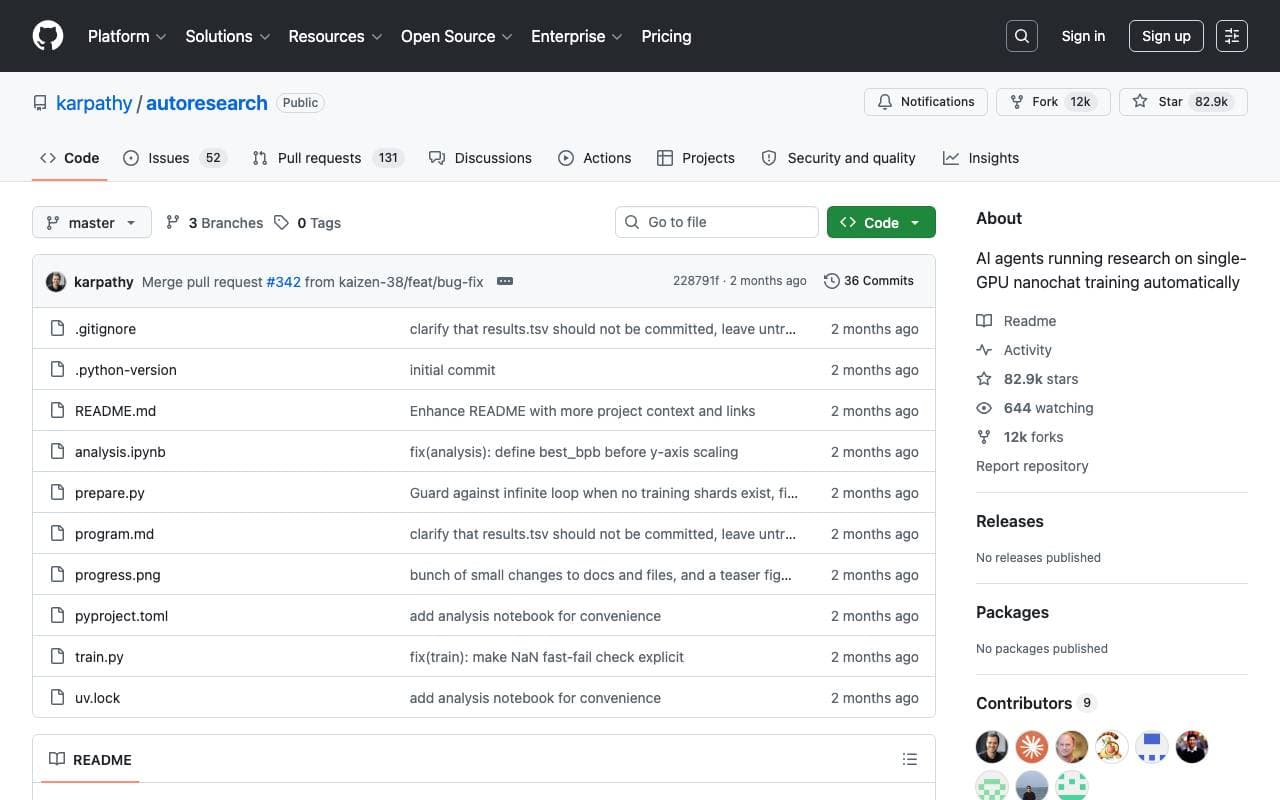

Autoresearch
Research AI Agents
An open-source project that lets AI agents autonomously run LLM training experiments and keep the best model changes.
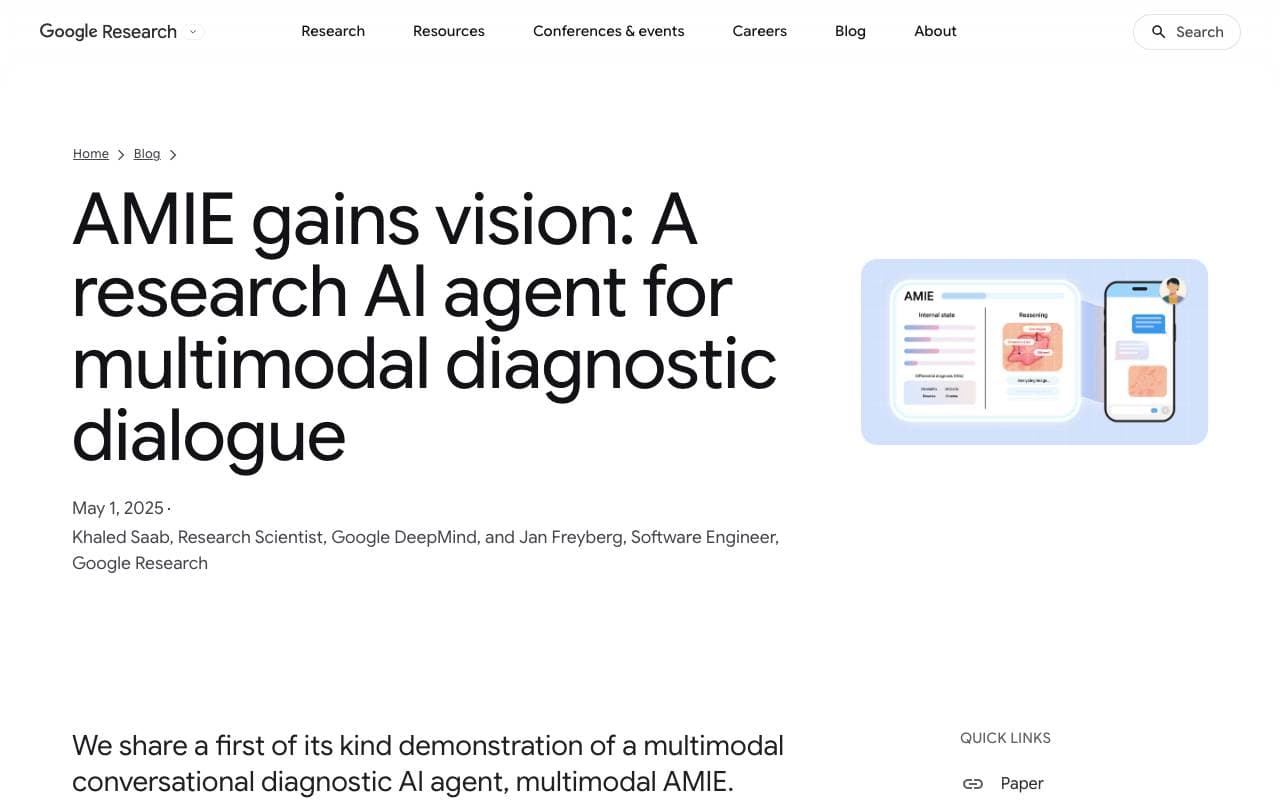

AMIE
Research AI Agents
A multimodal AI diagnostic agent that conducts clinical conversations and interprets medical images for accurate diagnoses.
Trending now

Doozer Ai
Sales Agent
Digital co-workers that automate operational workflows to boost team efficiency.

Claude
AI Agents & Chatbots
Conversational AI assistant from Anthropic for writing, analysis, coding, and document tasks

Consistent Character AI
Images
Generate consistent AI characters across scenes from a single reference photo.

Pin AI
Workflow automation
Agentic AI recruiter that automates sourcing, screening, and outreach to accelerate hiring.