Best Storage (2026)

Genom att klicka på dessa länkar kan vi få en provision, men det påverkar inte våra bedömningar.
A curated guide to the best AI-powered storage tools, covering cloud platforms, smart file organization, and intelligent data management solutions for individuals and teams.
Storage i siffror
Prismix
Best Storage (2026)
- 1
 FloraEn intelligenta duk som knyter samman kreativa AI-verktyg i en enda visuell arbetsflöde.5.0 (5)
 - 2
 Pinecone AIHanterat vektoravsnitt för snabb och skalbar semantisk sökning och RAG-åtgärder.4.8 (5)
 - 3
 OpenfabricOmvärldsramverk för att bygga, ansluta och köra AI-agenter med kraft och lagring på kedjan.4.8 (4)
 - 4
 Milvus AIÖppen källkods-baserad vektorbas som är konfigurerad för skalbar likhetsåtkomst och AI-appar.4.5 (4)

Flora
En intelligenta duk som knyter samman kreativa AI-verktyg i en enda visuell arbetsflöde.
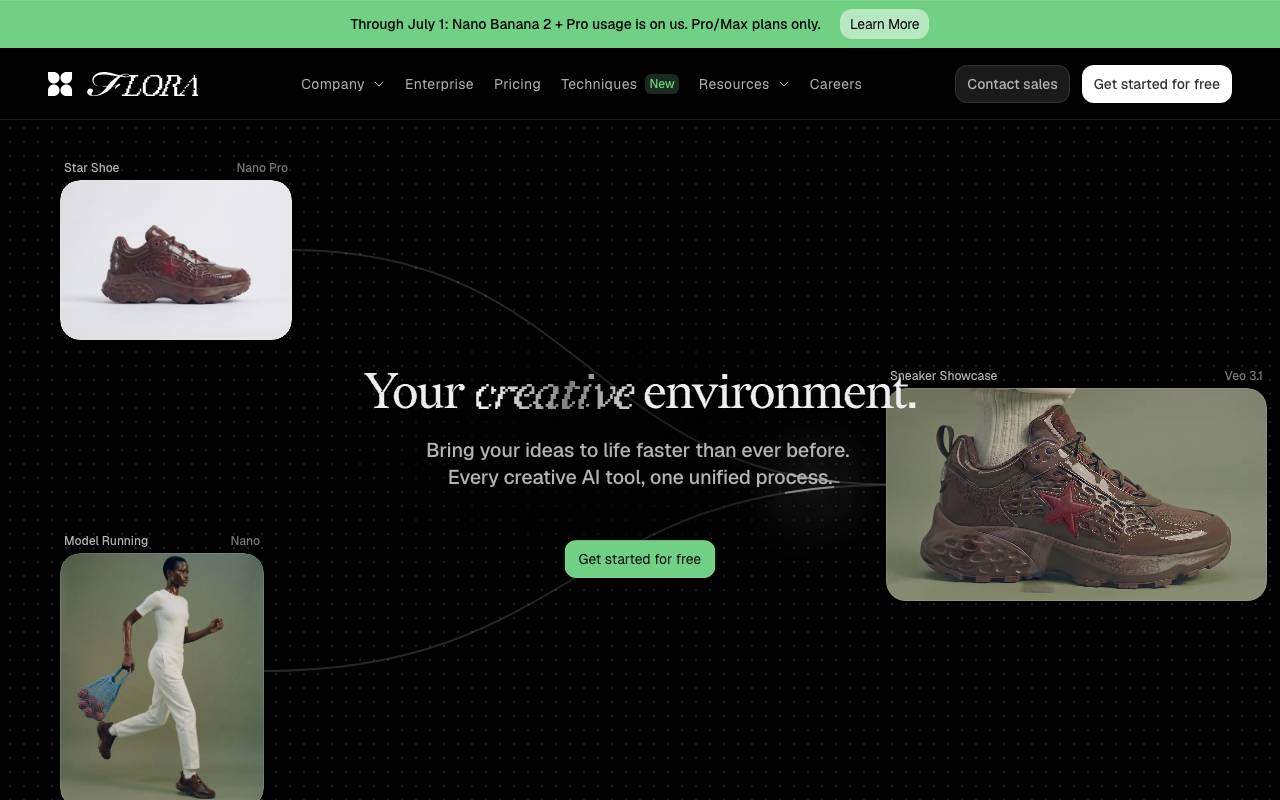
Flora är en kreativ verktyg som kombinerar ett intelligent utformningsyta, en funktionrikt kreativ flöde och återanvändbara tekniker. Verktyget hjälper team att hamna i linje kring en delad riktning och utforska ett logotyp eller stämningsskissa från en bild, karaktärslås och Seedance 2.0 Kompatibilitetsknep (Mänsklig ansiktsgennytta). Plattformen integreras med godkända AI-partners, inklusive Wonder, LLM och Mint. Anslut dig till Flora's kreativa ekosystem och skapa enkelt ett stämningsskissa, mänsklig ansiktsgennytta-knep, karaktärslås eller logotypslut från en foto. Utnyttja den varierade räckvidden av AIs från Flora: LLM, Mint och Wonder. Redigera, rendera och experimentera ännu bättre med Flora's intuitiva arbetsyta. Engagera, inspirera och arbeta snabbare. Plattformen välkomnar både byråer och fritidsläggare.
- Obegränsad duk med anslutbara noder
- Integrerat text, bild- och video-AI-verktyg
- Fogande och remixande av utmatning
- Visuell anmodan och tillgångsorganisation
- Arbetsflödesdela och samarbete
- Iterativt redigering över länkade steg

Pinecone AI
Hanterat vektoravsnitt för snabb och skalbar semantisk sökning och RAG-åtgärder.
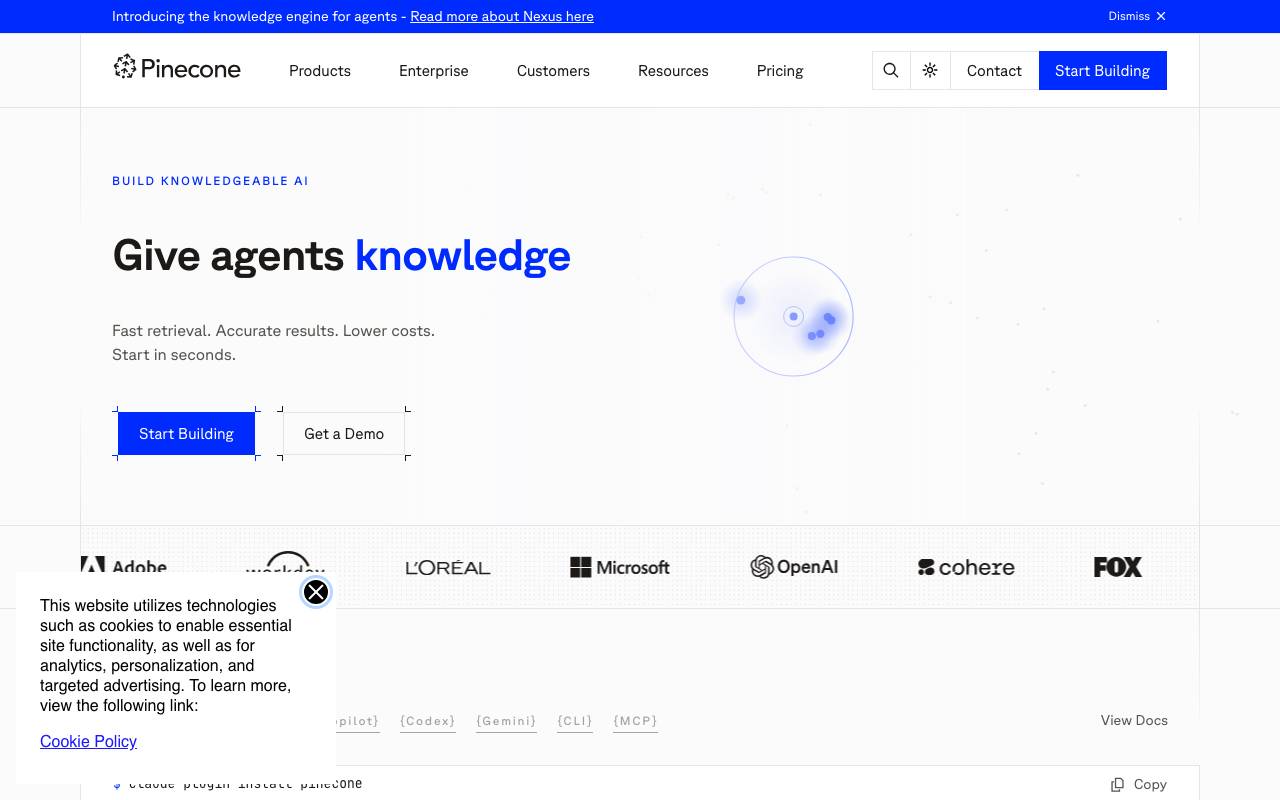
Pinecone är en hanterad vektor-databas designad för att göra AI-användningar möjliga som beroende av semantisk sökning, rekommendationer och retrieval-augmenterad generering (RAG). Den lagrar högdimensionella innehållsanpassningar och låter utvecklare fråga dem med låg latency på stor skala, utan att hantera infrastruktur. Plattformen integrerar med populära inbyggda modeller och ramverk som LangChain och LlamaIndex, vilket gör det lätt att lägga till långtidsminne och kunskapsanknytning till appar som baseras på LLM. Funktioner som metadatafiltering, hybrid-sökning och namnrymder hjälper teamen att bygga produktionsgrad-system för chattbots, sökning och personalisering.
- Hanterat vektorindexering och lagring
- Hybrid (täthet + sparsitet) sökning
- Metadata-filtering och namnområden
- Real-time uppsättningar och frågor
- Integreringar med LangChain, LlamaIndex, OpenAI

Openfabric
Omvärldsramverk för att bygga, ansluta och köra AI-agenter med kraft och lagring på kedjan.
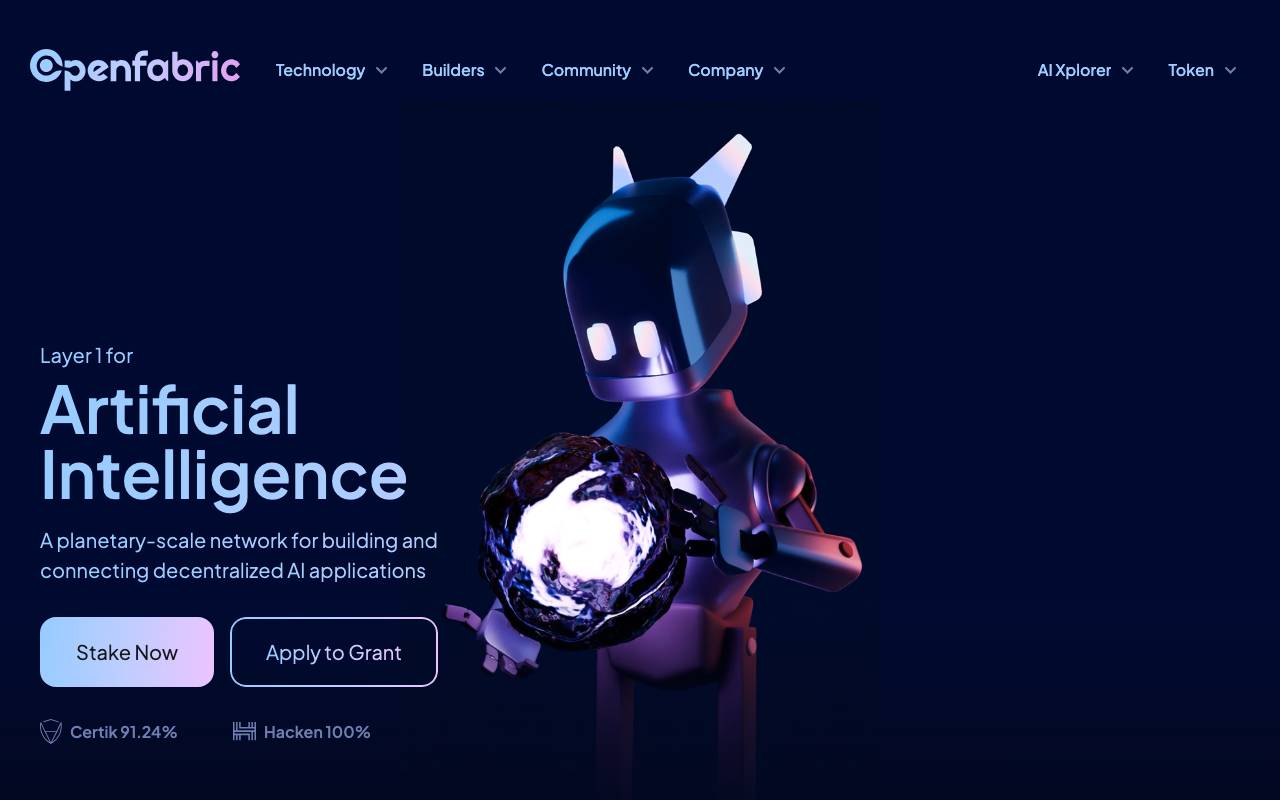
Openfabric är en öppen infrastruktur för att utveckla och distribuera kompatibla AI-agenter i ett decentraliserat miljö. Den erbjuder de nödvändiga verktygen, körrutin och protokoll som krävs för att agenter ska kunna upptäcka varandra, byta data och koordinera uppgifter utan att tilltron ligger på en enda centralt placerad tillhandahållare. Plattformen kombineras distribuerade lagring, identitet och körningslager så att utvecklare kan publicera AI-tjänster som fortfarande är verifierbara, sammanbyggliga och robusta. Byggare kan låsa samman modeller och datakällor i pipeliner, medan slutanvändare tillgår dem via en enhetlig marknad av agenter. Verktyget riktas till utvecklare, datavetare och organisationer som undersöker Web3-inbyggd AI-applikationer, agentermarknader eller användningsfall som kräver transparent och minimera-förtroende AI-execution.
- Omvärlds AI-agent Runtime
- Fördelad data- och modell lagring
- Agentupptäckt och marknad
- SDK för byggnad och anslutning av agenter
- Kedjan identitet och verifiering
- Pipeline orchestration över flera agenter

Milvus AI
Öppen källkods-baserad vektorbas som är konfigurerad för skalbar likhetsåtkomst och AI-appar.
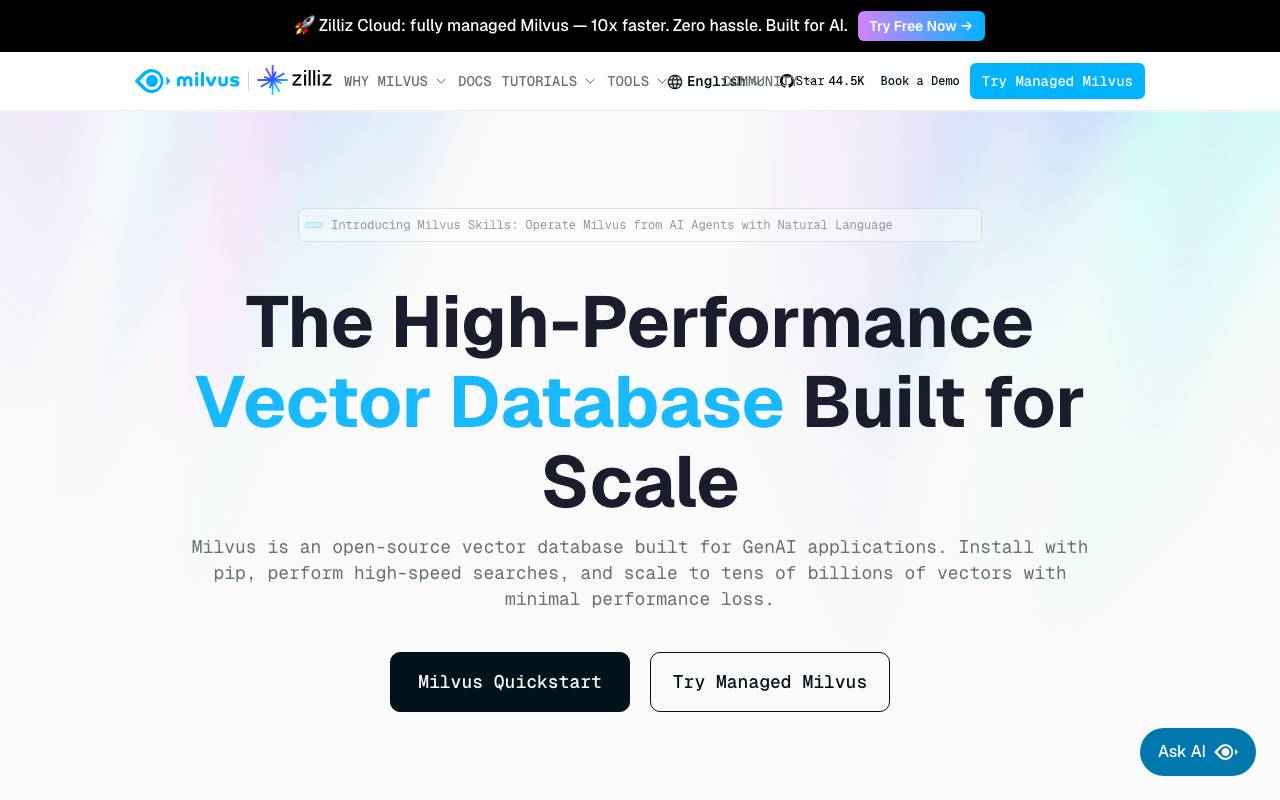
Milvus AI är en öppen källkod tillgångsdatabas för vektorer som är utformad för att lagra, indexera och söka stora samlingar av högdimensionella vektoruttryck. Den driver användningsfall som semantisk sökning, rekommendationssystem, retrieval-augmenterat genererade innehåll (RAG), bild-och videorätsökning samt anomalidetektering. Byggt med en molnburen, distribuerad arkitektur, stödjer Milvus miljarder vektorer med låg latensfrågor och erbjuder flera index-typer för att balansera hastighet, noggrannhet och resursanvändning. Det integreras med populära AI-frameworks och inbyggda modeller, vilket gör det till ett vanligt val för team som bygger produktionsdugliga AI-anriktningspipliner. Milvus kan distribueras lokalt, på Kubernetes, eller konsumeras som en hanterad tjänst via Zilliz Cloud, vilket ger utvecklare flexibilitet från prototypning till arbetsbelastningar i stor skala inom företag.
- Fördelad, molnbaserad arkitektur
- Stöd för flera typer av ANN-index
- Hybrid sökning med skalärfiltering
- SDK för Python, Java, Go och Node.js
- Kubernetes och Docker-deployingsalternativ
- Integrering med LangChain, LlamaIndex och stora utvinklingsmodeller
Bläddra bland alla 4 Storage-verktyg
Den kompletta, sökbara katalogen — rankad efter riktiga användarrecensioner.



