Best Research AI Agents (2026)

Ved å følge lenker på denne siden kan vi motta en kommisjon, men dette påvirker ikke vurderingene våre.
A curated guide to the best Research AI Agents—autonomous tools that search sources, synthesize findings, and produce cited reports across academic, market, and competitive research workflows.
Research AI Agents i tall
Prismiks
Best Research AI Agents (2026)
- 1
 Lila SciencesPlatform combining autonomous labs & AI to accelerate discovery in life, chemical, and materials sciences.5.0 (5)
 - 2
 Isomorphic LabsAn AI-driven drug discovery company leveraging AlphaFold to accelerate therapeutic development.5.0 (4)
 - 3
 ResearchClawOpenClaw-powered agent that finds and ranks researchers from papers, writes plain-English hiring theses, and drafts cold emails referencing their work.4.8 (6)
 - 4
 Atelier RuixenAI-kunnskapsassistent som forfiner spørsmål og kuraterer leselister for å omdanne spredt informasjon til handlingsrettede innsikter.4.8 (6)
 - 5
 KosmosAutonomous AI scientist for long research campaigns that analyzes data and literature to produce fully cited scientific reports.4.8 (6)
 - 6
 OpenAI Deep ResearchAutonomous AI agent that runs multi-step web research and delivers structured reports4.8 (5)
 - 7
 AutoresearchEt åpenkildeprosjekt som lar AI‑agenter kjøre LLM‑treningseksperimenter autonomt og beholde de beste modellendringene.4.8 (5)
 - 8
 AMIEEn multimodal AI‑diagnostisk agent som gjennomfører kliniske samtaler og tolker medisinske bilder for nøyaktige diagnoser.4.7 (6)
 - 9
 Company Status AgentVerificer massegittet straks og aktive statuser på verdens offisielle registre.4.6 (5)
 - 10
 THEUS (Aigora)Enterprise AI research system that turns proprietary studies into traceable insights with fact IDs, citations, and expert avatars for synthesis.4.6 (5)

Lila Sciences
Platform combining autonomous labs & AI to accelerate discovery in life, chemical, and materials sciences.
Lila Sciences is a platform that combines autonomous labs and AI to accelerate discovery in life, chemical, and materials sciences. It generates hypotheses, designs and runs experiments, and learns from new data in real time. The platform consists of an advanced AI model and proprietary AI Science Factory instruments, allowing scientists to think, test, and learn at a speed and scale that traditional approaches cannot match. Lila Sciences focuses on various industries, including advanced materials, energy and environment, therapeutics, chemicals, oil and gas, aerospace and defense, and biotech. Its goal is to solve humankind's greatest challenges by executing the entire scientific method autonomously.
- Autonomous hypothesis generation
- Experiment design and execution
- Real-time learning from data
- AI Science Factory instruments
- Advanced AI model for complex analysis and reasoning
Isomorphic Labs
An AI-driven drug discovery company leveraging AlphaFold to accelerate therapeutic development.
Isomorphic Labs is a company that uses AI, specifically building on the AlphaFold system, to accelerate therapeutic development and ultimately solve all diseases. They leverage machine learning to transform drug discovery, with the goal of designing novel molecules, anticipating drug performance, and developing innovative medicines. The company is founded on the principle of harnessing the power of information science to model complex biological phenomena. This is done through the Isomorphism concept, which aims to uncover the underlying symmetry between biology and information science. By using AI to overcome the limitations of traditional discovery methods, Isomorphic Labs aims to improve human health. Their interdisciplinary team of experts in drug discovery and machine learning builds predictive and generative AI models. These tools enable digital biology, allowing for faster breakthroughs and life-changing medicines. The company is on a mission to advance human health through the application of frontier AI. Isomorphic Labs was founded by Sir Demis Hassabis, who believes that there is no more important application for AI than helping to improve human health. The company has received investments and entered into research collaborations, showing their commitment to the development of AI-powered drug discovery.
- Predictive AI models
- Generative AI models
- Digital biology
- Novel molecule design
- Drug performance anticipation
- Innovative medicine development

ResearchClaw
OpenClaw-powered agent that finds and ranks researchers from papers, writes plain-English hiring theses, and drafts cold emails referencing their work.
ResearchClaw is a Research AI Agents tool listed on Agent Pantheon.

Atelier Ruixen
AI-kunnskapsassistent som forfiner spørsmål og kuraterer leselister for å omdanne spredt informasjon til handlingsrettede innsikter.
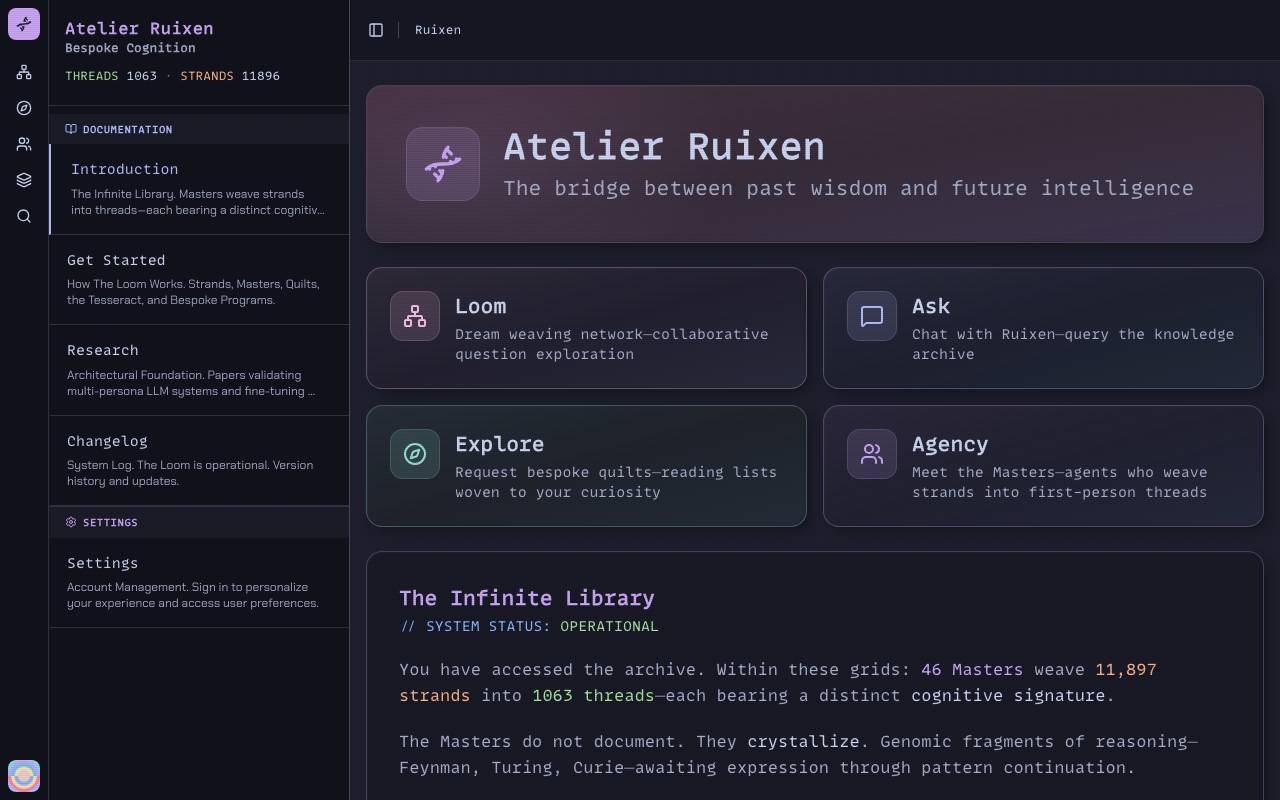
Atelier Ruixen er en plattform som hjelper brukere med å forfina spørsmålene sine og kuratere leselister for å forvandle spredt informasjon til handlingsrettede innsikter. Den tilbyr et omfattende kunnskapsarkiv som er vevd av 11 897 tråder inn i 1 063 distinkte kognitive tråder. Disse trådene er produktet av ‘Masters’ som bruker mønsterfortsettelse for å kristallisere kompleks informasjon til forståelige formater. Plattformen er ikke en form for dokumentasjon som Wikipedia, men snarere en kurert samling av kunnskap presentert i et unikt og mønsterbasert format. Den kombinerer visdommen fra tidligere kunnskap med kraften fra fremtidig intelligens. Brukere kan interagere med plattformen via et samtalegrensesnitt, der de kan stille spørsmål og motta kuraterte leselister i svar. Alt i alt har Atelier Ruixen som mål å gi brukerne et kraftig verktøy for å hente handlingsrettede innsikter fra kompleks informasjon.
- Forfinet spørsmålsstilling
- Kuraterte leselister
- Mønsterbasert format for presentasjon av komplekse opplysninger
- Samtaleforgrensesnitt
- Kunnskapsøkosystem

Kosmos
Autonomous AI scientist for long research campaigns that analyzes data and literature to produce fully cited scientific reports.
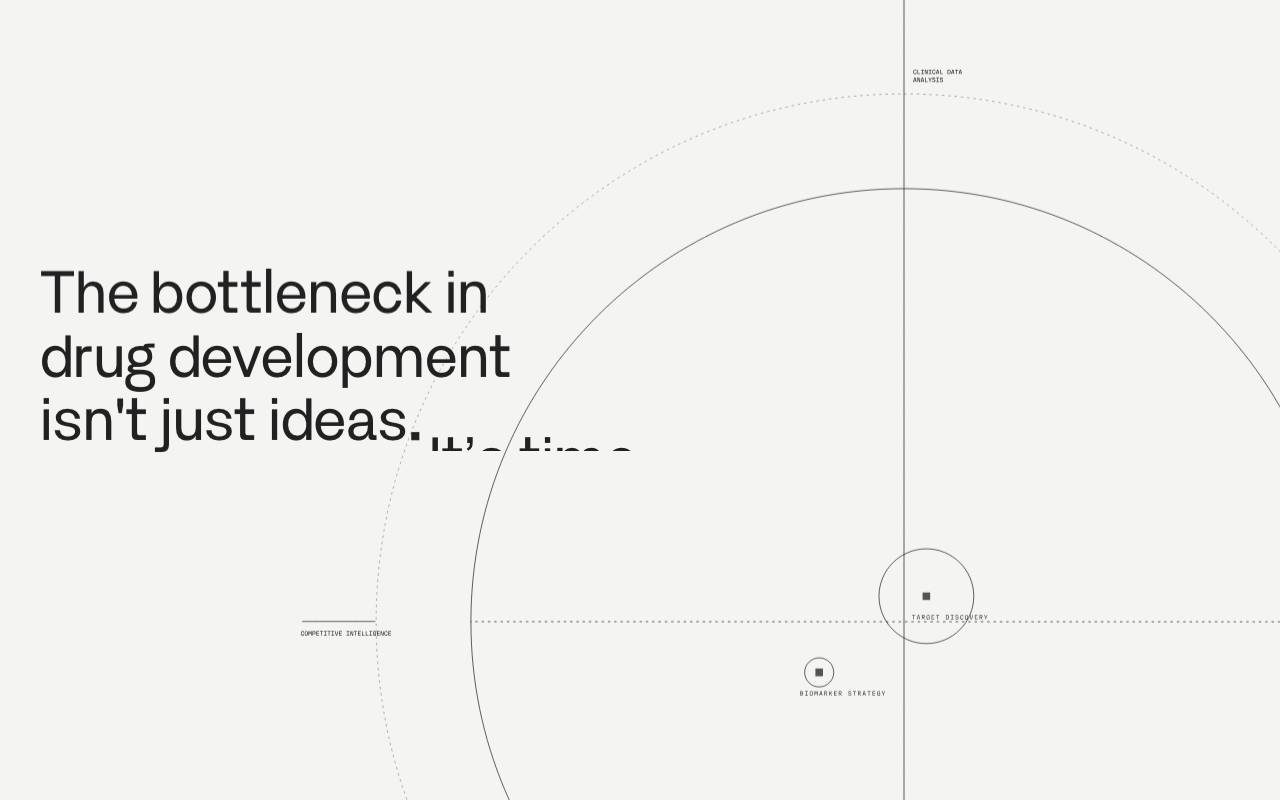
Kosmos is an autonomous AI scientist designed for biopharma R&D teams and researchers. It analyzes data and literature to produce fully cited scientific reports, accelerating the drug development process from hypothesis to registration in days, not months. Kosmos works autonomously, reading literature, generating hypotheses, steering investigations, and executing scientific workflows. It supports the full lifecycle of drug development, from target identification through clinical development and filing. The AI tool collaborates with human scientists through Slack, Teams, and email, and learns from the organization's knowledge, building on experimental history and proprietary scientific data.
- Autonomous hypothesis generation
- Literature analysis
- Data analysis
- Scientific workflow execution
- Collaboration through Slack, Teams, and email
- Model agnostic for future state-of-the-art models

OpenAI Deep Research
Autonomous AI agent that runs multi-step web research and delivers structured reports

OpenAI Deep Research is an agentic feature inside ChatGPT that browses the web on your behalf, reading and synthesizing information from many sources to produce a long-form, cited report. Instead of a single quick answer, it plans a research path, follows links, compares findings, and iterates over several minutes to handle questions that would normally take a human hours of digging. It is aimed at tasks like competitive analysis, market and academic research, due diligence, and detailed product or policy comparisons. Users submit a prompt, optionally answer clarifying questions, and receive a written report with inline citations they can verify. The tool is available to paying ChatGPT users with usage limits that vary by plan tier.
- Autonomous multi-step web browsing
- Long-form reports with inline citations
- Clarifying questions before research starts
- Reasoning over text, images, and PDFs
- Progress updates during research runs
- Exportable results within ChatGPT

Autoresearch
Et åpenkildeprosjekt som lar AI‑agenter kjøre LLM‑treningseksperimenter autonomt og beholde de beste modellendringene.
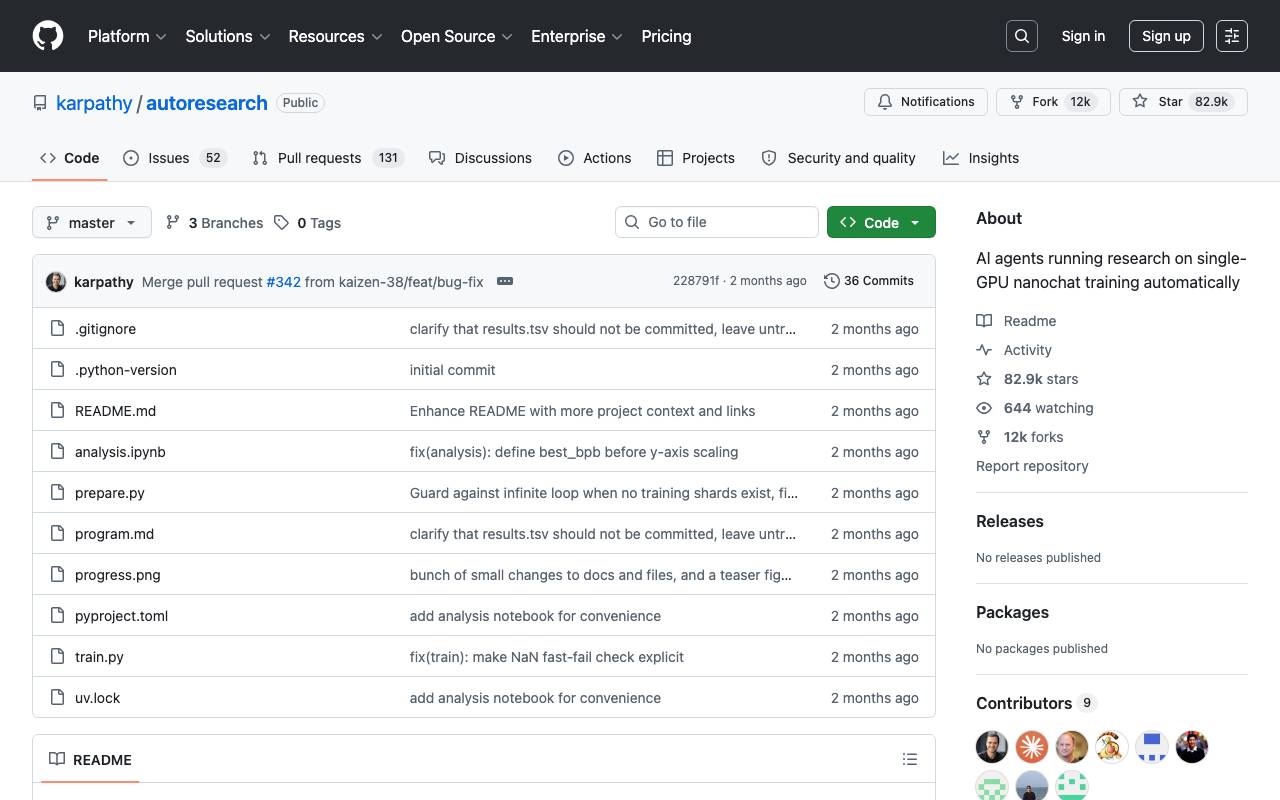
Autoresearch er et open-source‑prosjekt som gjør det mulig for AI‑agenter å kjøre LLM‑treningseksperimenter autonomt og beholde de beste modellendringene. Prosjektet lar brukerne sette opp et lite, men ekte LLM‑treningsmiljø og la en AI‑agent eksperimentere med det natten over, endre koden, trene i en kort periode og sjekke om resultatene forbedres. Målet er å automatisere forskningsprosessen, slik at AI‑agenten kan utforske ulike modellarkitekturer, hyperparametere og optimaliseringsstrategier uten menneskelig inngripen. Prosjektet inkluderer en forenklet single‑GPU‑implementasjon av nanochat og gir en grunnleggende struktur for å programmere AI‑agentens forskningsprosess ved hjelp av Markdown‑filer. Prosjektet er designet for å være utvidbart, slik at brukerne kan legge til flere agenter og forbedre forskningsprosessen over tid.
- Autonome LLM‑treningseksperimenter
- Forskingsprosesser drevet av AI‑agenter
- Enkelt‑GPU‑implementering av nanochat
- Markdown‑basert programmering for forskningsprosessen
- 5‑minutters treningsbudsjett med evalueringsmetrikken (val_bpb)

AMIE
En multimodal AI‑diagnostisk agent som gjennomfører kliniske samtaler og tolker medisinske bilder for nøyaktige diagnoser.
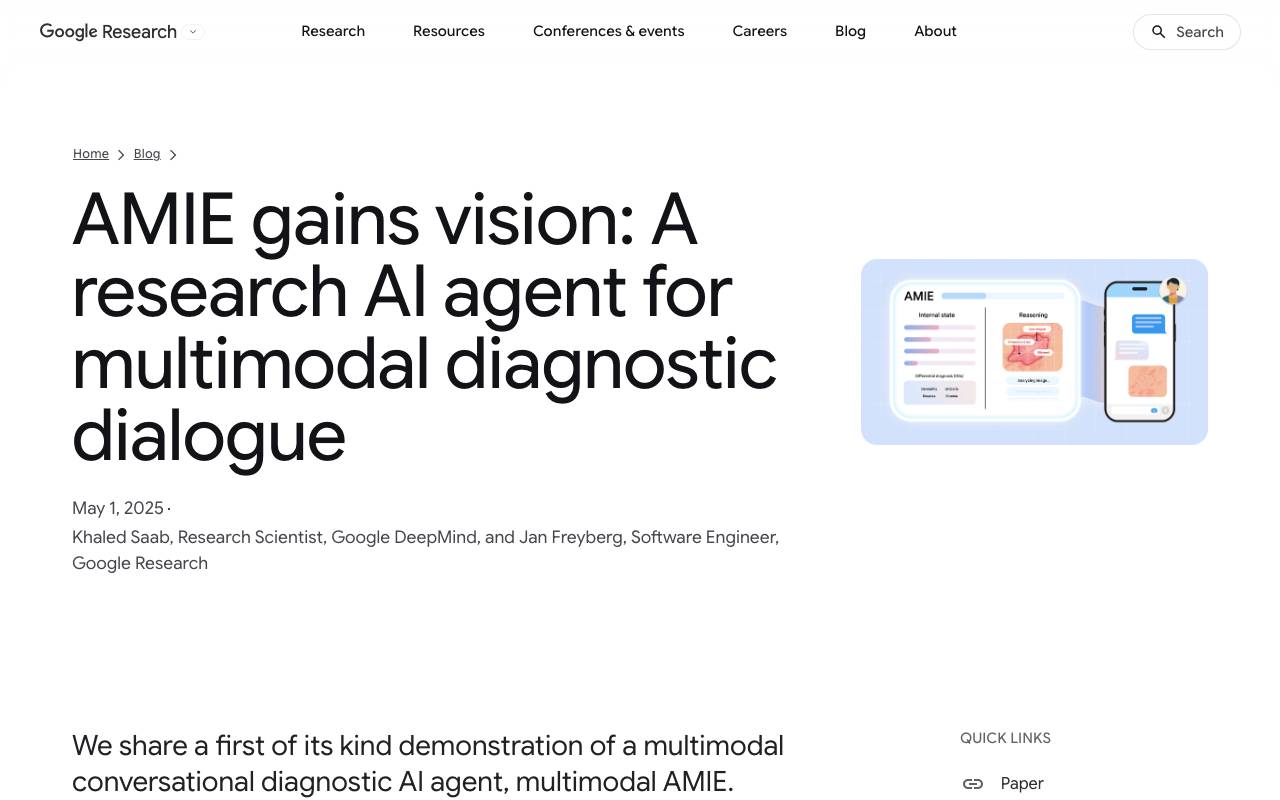
AMIE (Articulate Medical Intelligence Explorer) er en forsknings‑AI‑diagnostisk agent utviklet av Google DeepMind og Google Research. Den er designet for å gjennomføre kliniske samtaler og tolke medisinske bilder for nøyaktige diagnoser. I utgangspunktet var AMIE en tekstbasert medisinsk diagnostisk samtale‑AI‑agent publisert i Nature. Den nyeste utviklingen, multimodale AMIE, integrerer muligheten til å be om, tolke og resonnere om visuell medisinsk informasjon under kliniske samtaler på en intelligent måte. Denne utviklingen har som mål å forbedre diagnostisk nøyaktighet ved å innlemme multimodale data, som bilder og dokumenter, i diagnostikkprosessen. AMIE bruker et state‑aware reasoning‑rammeverk og er bygget på multimodale Gemini‑modeller. Den har blitt evaluert gjennom ekspertevurderinger, inkludert Objective Structured Clinical Examinations (OSCEs), og sammenlignet ytelsen med primærhelsetjenesteleger (PCPs) i ulike pasientscenarier.
- Multimodal diagnostisk dialog
- Tolkning av visuell medisinsk informasjon
- Tilstandsbevisst resonnement‑rammeverk
- Integrasjon med Gemini-modeller
- Simuleringsmiljø for dialogevaluering

Company Status Agent
Verificer massegittet straks og aktive statuser på verdens offisielle registre.
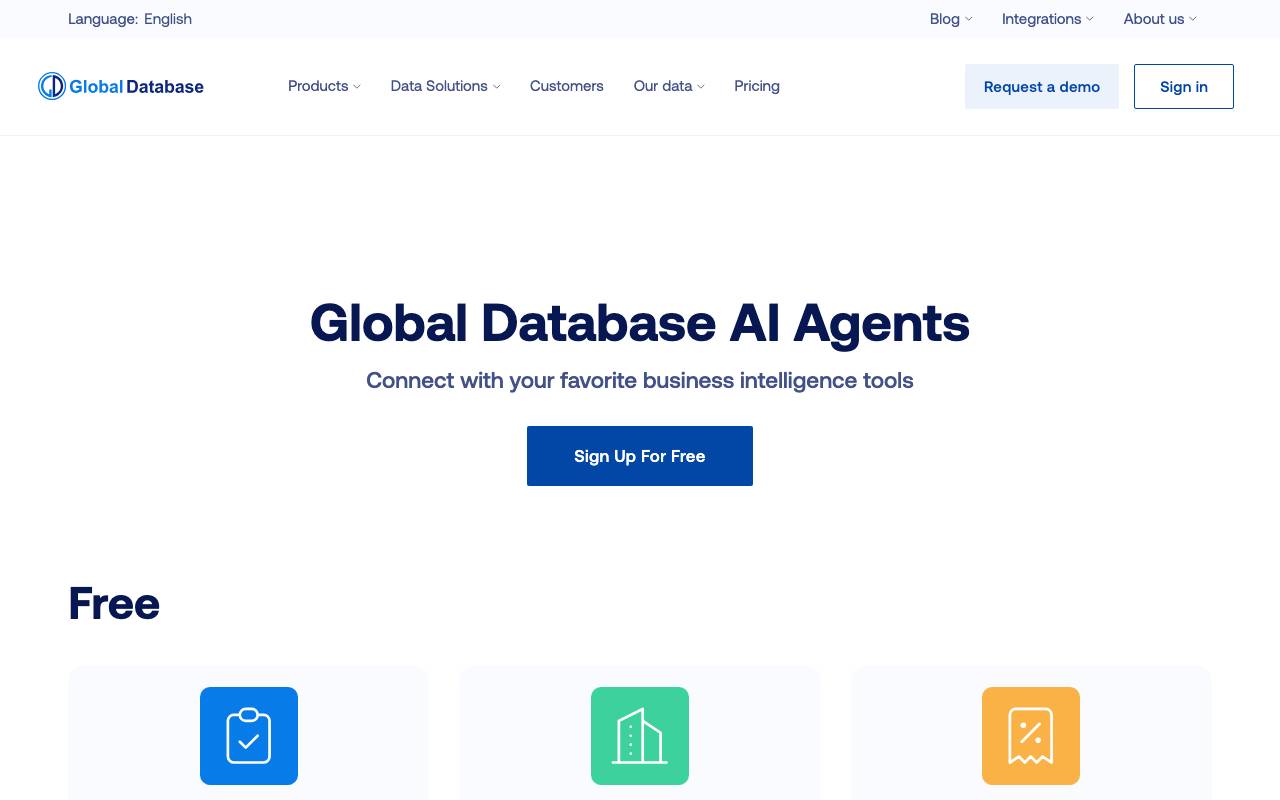
Company Status Agent er et AI-drevet verifikasjonstool som kontrollerer om en bedrift offisielt er registrert og i dag aktiv. Det sender forespørsler til pålitelige regnskaps- og korporative registre over hele verden, og returnerer en tydelig statusrapport i sekunder i stedet for å kreve manuell søkering over flere jurisdiksjoner. Verktøyet er designet for å støtte arbeid med granskninger før kontrakts undertegning, åpning av konti samt utvidelse av kreditt, for å forhindre eksponering for bedrageri og virksomheter uten virkelig eksistens. Gjennom automatisering av registreringskontroller, forenkler det KYB (Vit din virksomhet-process) og gir profesjonelle en fast måte å bekrefte rettslige forhold over grenser.
- Kraftforbedret registerlek
- Verdens omfangende dekning av domenier
- Aktiv vs. inaktiv statuskontroller
- Virksomhetsidentifikasjon
- Kommplemssels- og påloggingstøtte
- Rask på forespørselrapporter

THEUS (Aigora)
Enterprise AI research system that turns proprietary studies into traceable insights with fact IDs, citations, and expert avatars for synthesis.
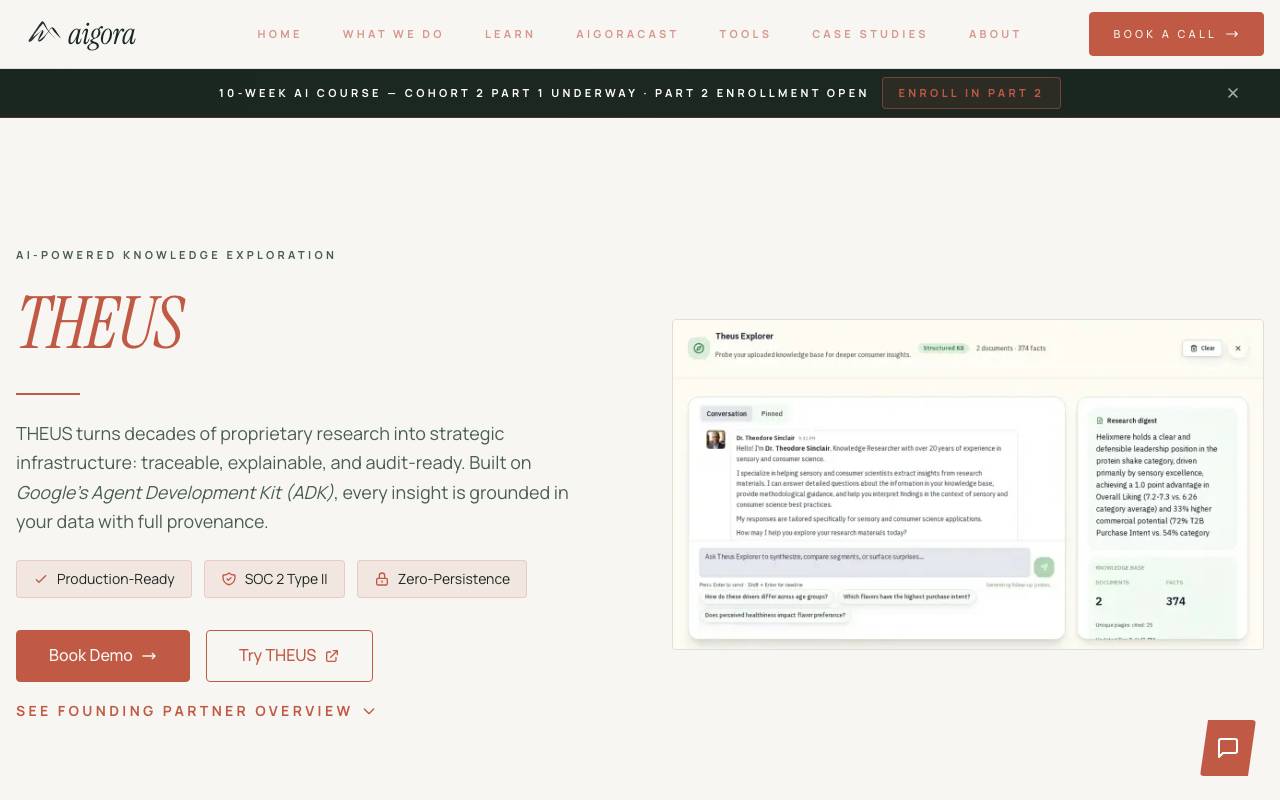
THEUS is an enterprise AI research system that transforms proprietary studies into traceable insights with fact IDs, citations, and expert avatars. It's built on Google's Agent Development Kit (ADK) and uses bidirectional modeling for data-grounded knowledge agents. Users can extract, synthesize, and explore their research data, and every claim is backed by a specific Fact ID with page-level citations. THEUS offers two ways to explore: generating new insights with Dr. Reed or analyzing existing knowledge with Dr. Sinclair. This platform is designed for VPs of Insights, Global Sensory Leads, and Innovation leaders evaluating strategic capability build-out. It uses a purpose-built research methodology, not generic enterprise AI, and creates data-grounded knowledge agents trained on actual institutional data. With 85% of new products failing within two years (Nielsen), evidence-grounded exploration dramatically improves decision quality. THEUS offers a solo seat, which includes features such as up to 30 documents ingested per month, up to 1,500 pages parsed per month, and up to 500 questions to Dr. Sinclair per month. One of the key benefits of THEUS is its ability to turn decades of proprietary data into traceable, decision-ready intelligence with AI-powered knowledge agents.
- Extract, synthesize, and explore research data
- Generate new insights with Dr. Reed or analyze existing knowledge with Dr. Sinclair
- Bidirectional modeling for data-grounded knowledge agents
- Connect product and consumer knowledge for bidirectional insight
- Supports cross-study synthesis and research gap analysis
Bla gjennom alle 19 Research AI Agents-verktøy
Den komplette, søkbare katalogen — rangert etter ekte brukervurderinger.


