Best MCP Servers (2026)

Ved å følge lenker på denne siden kan vi motta en kommisjon, men dette påvirker ikke vurderingene våre.
Vi sporet, testet og sammenlignet hvert MCP Servers-verktøy på Agent Pantheon for å rangere de 10 beste for 2026. Nedenfor er den korte listen med vår vurdering av hver, etterfulgt av hele, søkbare katalogen.
MCP Servers i tall
Prismiks
Best MCP Servers (2026)
- 1
 Playwright MCPOpen-source MCP server that lets LLMs drive real browsers via Playwright and accessibility snapshots.4.8 (6)
 - 2PPydantic AIPython agent framework from the Pydantic team for building type-safe GenAI apps.4.8 (6)
- 3CCogneeEn tilpassende minnemodul at hjelpe maskinvarede intelligensagenter å lære fra kontekst over tid.4.8 (5)
- 4
 Inbox ZeroAI email assistant that organizes, drafts replies, and helps you reach inbox zero faster.4.8 (4)
 - 5
 ScreenpipeOpen-source 24/7 local screen and audio recording for building context-aware AI apps4.8 (4)
 - 6
 AgentKitTypeScript-bibliotek for å bygge og orkestrere AI-agenter med verktøy, minne og multi-agent arbeidsflyter.4.5 (4)
 - 7
 onchain-mcpBringing the bankless onchain API to MCP
 - 8
 markitdownPython tool for converting files and office documents to Markdown.
 - 9
 mcp-clickhousemcp-clickhouse MCP server
 - 10qqasphere-mcpMCP Server for QA Sphere TMS

Playwright MCP
Open-source MCP server that lets LLMs drive real browsers via Playwright and accessibility snapshots.
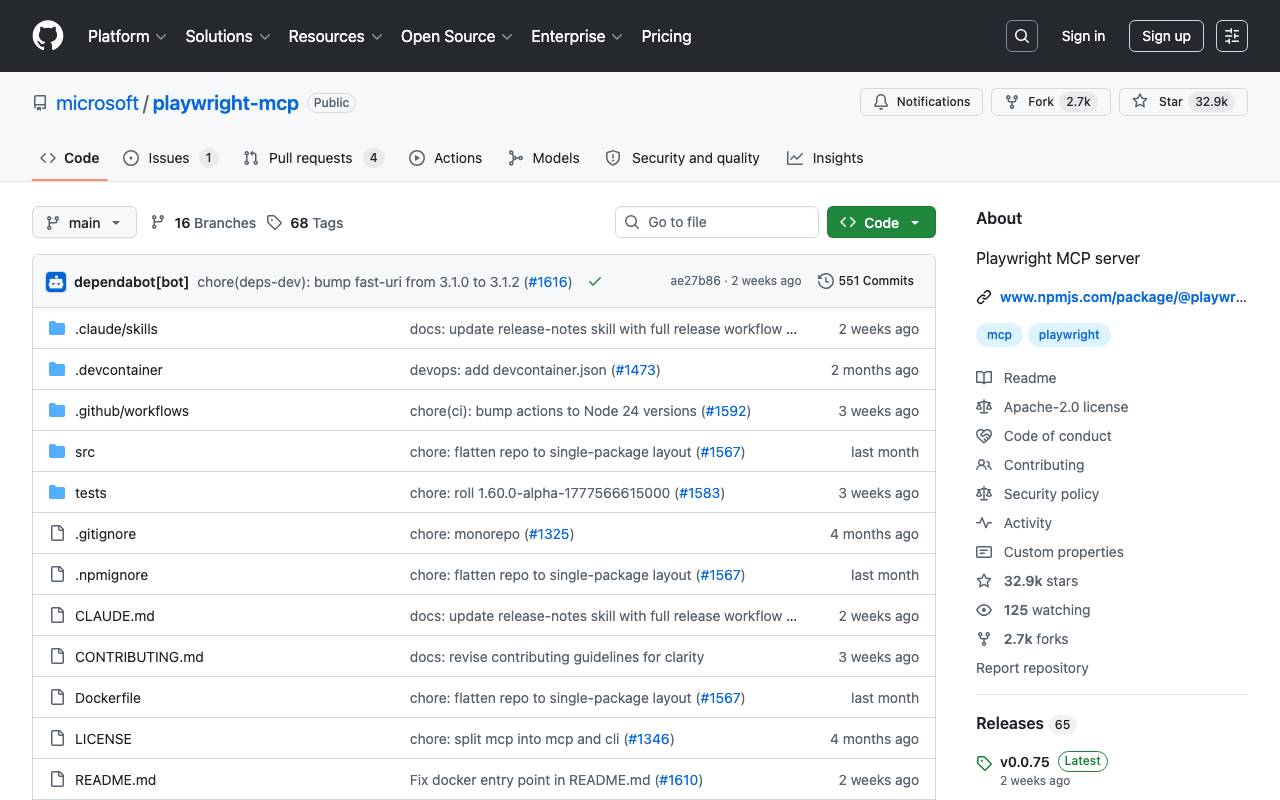
Playwright MCP is an open-source Model Context Protocol server that exposes Playwright's browser automation capabilities to large language models. Instead of relying on screenshots and vision models, it surfaces structured accessibility snapshots of web pages, giving agents a fast, deterministic view of the DOM that they can reason over and act on. It lets LLM-powered agents navigate sites, click elements, fill forms, extract data, and run end-to-end workflows across Chromium, Firefox, and WebKit. Because it speaks MCP, it plugs into any compatible client such as Claude Desktop, Cursor, or custom agent frameworks, making real-world browser tasks accessible to autonomous and assisted workflows.
- MCP server interface for LLM agents
- Structured accessibility tree snapshots
- Cross-browser support via Playwright
- Click, type, navigate, and form-filling actions
- Headless or headed browser modes
- Integration with Claude, Cursor, and custom clients
Pydantic AI
Python agent framework from the Pydantic team for building type-safe GenAI apps.
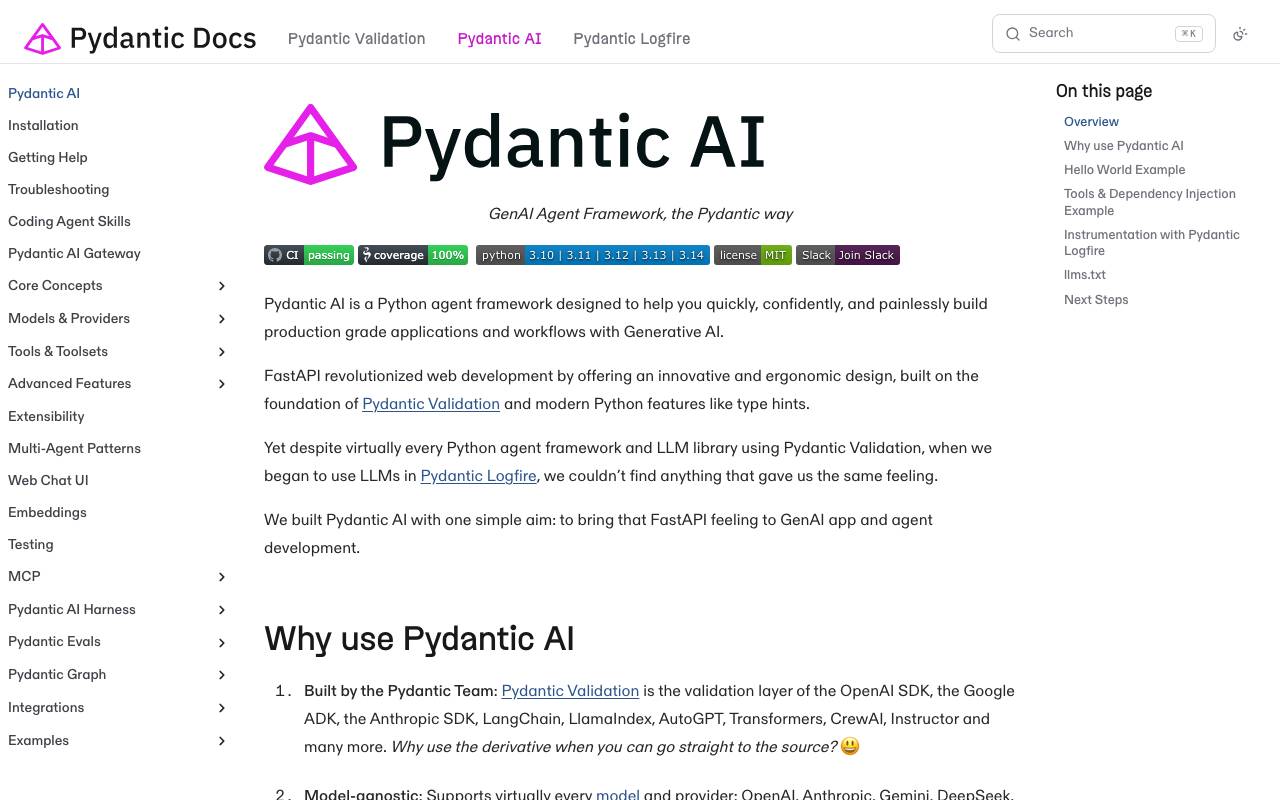
Pydantic AI is an open-source Python framework for building applications powered by large language models. Created by the team behind Pydantic, it brings the same focus on type safety, validation, and developer ergonomics to agent development, making LLM outputs predictable and easier to integrate into production code. The framework supports multiple model providers, structured responses validated through Pydantic models, tool calling, dependency injection, and streaming. It is designed to feel familiar to Python developers and works well alongside existing stacks like FastAPI, making it suitable for everything from quick prototypes to production-grade GenAI services.
- Typed agents with Pydantic-validated outputs
- Support for OpenAI, Anthropic, Gemini, and more
- Tool and function calling with dependency injection
- Streaming responses and async-first design
- Integration with FastAPI and observability tools
- Testing utilities for deterministic agent behavior
Cognee
En tilpassende minnemodul at hjelpe maskinvarede intelligensagenter å lære fra kontekst over tid.
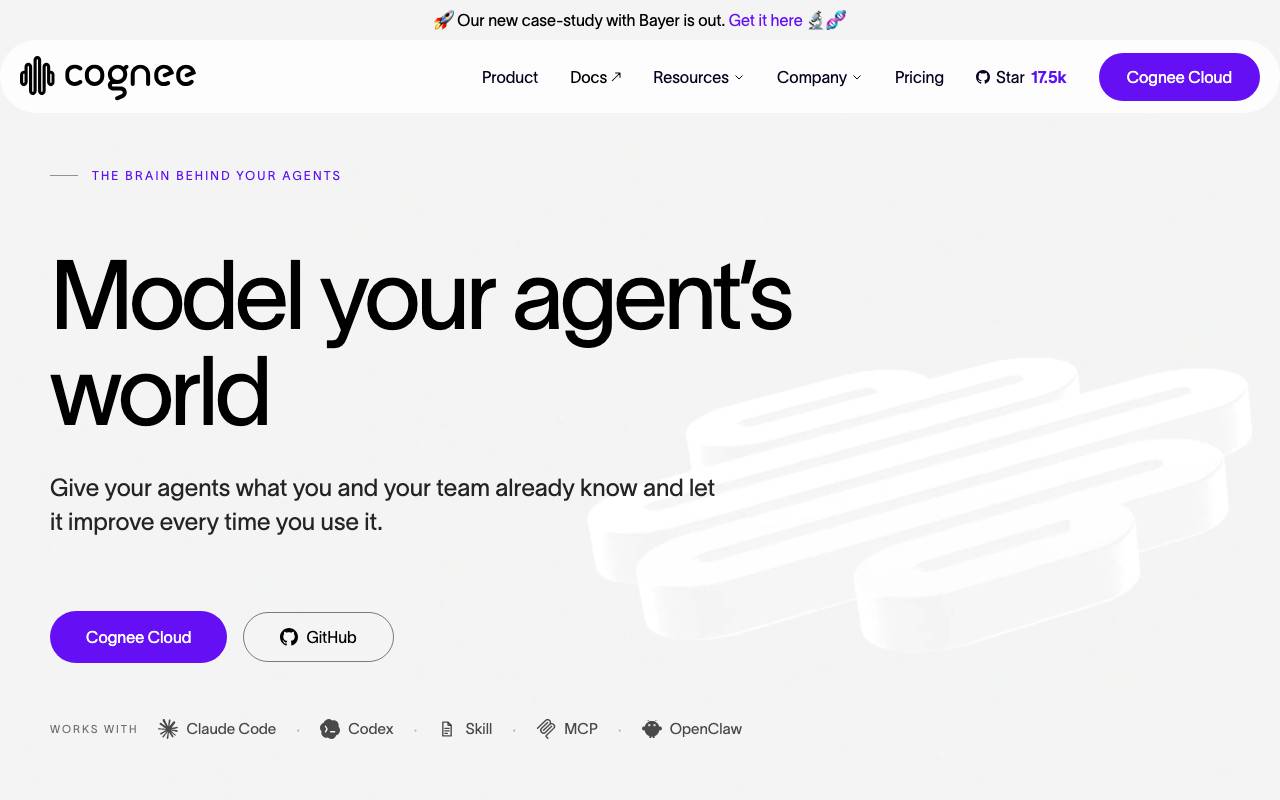
Cognee er en åpen kilde-AI-hukommelsesplattform designet for AI-agenter. Den leverer en persistent langtidsminne gjennom sesjoner ved å opptre data i noen format og bygge seg selv-virket kunnskapsgraf. Cognee kombinerer vektorembeddinger, grafreaksjon og kognitivvitenskapsgrunnlagte ontologiforming, hvila gjør dokumenter søkerbare etter mening og forbundet ved evoluerende relasjoner. Dette plattformen er egnet for utviklere og organisasjoner som søker å forene data fra ulike kilder, aktivere domenedomene i agenter og skape tillit og pålitelige agenter. Cognee tilbyr funksjoner som forent opphav, graf og vektor søker, lokal operasjon, ontologisk grunnleggelse, multimodale evne, læring fra retrofed, kontekstbehandling, og tvilling kunnskapsdeling. Den tilbyr også agensert bruker/tenant isolasjon, sporetabilitet og audit-eprenger. Plattformen svinger flere kunder, inkludert Python, Rust og TypeScript, og er tilgjengelig som plugins for OpenClaw og Claude Code.
- En kunnskapsgraf-basert minnesystem for agenter
- Semantisk og strukturert datainngang
- Python-SDK for agent-integrering
- Manglende LLM og lagringsleverandører
- Spørring i tidligere sesjoner og dokumenter
- Selvadministrert eller håndtert deployeringsmuligheter

Inbox Zero
AI email assistant that organizes, drafts replies, and helps you reach inbox zero faster.
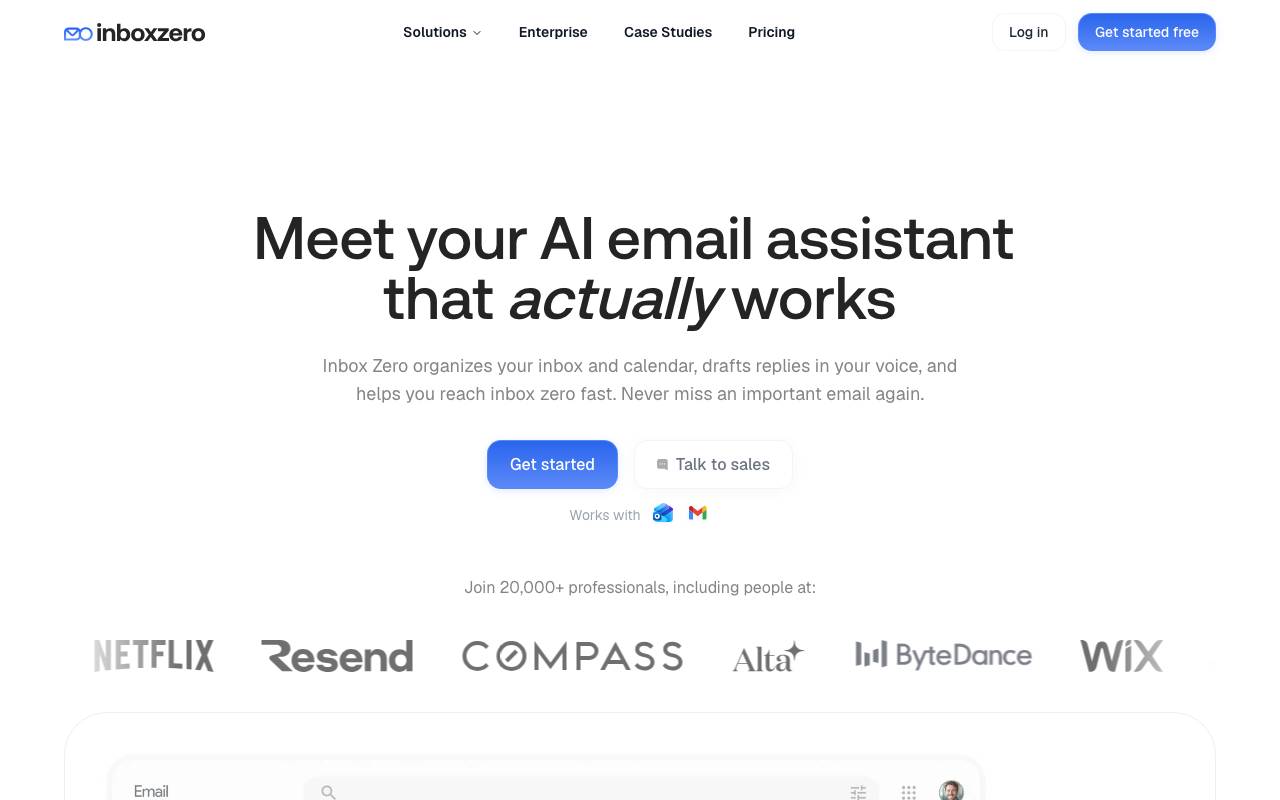
Inbox Zero is an AI-powered email assistant designed to help users manage their inbox more efficiently. It organizes emails, drafts replies, and manages calendars, with the goal of helping users reach "inbox zero" faster. The tool is accessible via a web interface and can also be interacted with through Slack or Telegram for on-the-go management. Inbox Zero is an open-source alternative to similar tools like Fyxer, offering more customization options and enhanced security features. Key features include an AI personal assistant that learns the user's tone and style to pre-draft replies, AI-driven rules for handling emails based on plain English instructions, and tools for tracking emails that require a reply or are awaiting responses. It also offers bulk unsubscription and archiving capabilities, blocks cold emails, and provides email analytics. Additionally, Inbox Zero can generate meeting briefs by pulling context from both email and calendar events and automatically save email attachments to cloud storage services like Google Drive or OneDrive. The tool is built using a range of technologies including Next.js, Tailwind CSS, and Prisma, and is hosted on GitHub. Users can choose between a hosted version available at getinboxzero.com or self-hosting using a CLI setup that requires Docker and Node.js. The project is active, with a community that contributes to its development and feature requests can be made via GitHub issues or the project's Discord channel. Inbox Zero aims to reduce the time users spend in their inbox, allowing them to focus on more important tasks. While it offers a comprehensive set of features for email management, the extent of customization and the learning curve for setting up and fully leveraging the AI capabilities may vary. Overall, Inbox Zero presents itself as a flexible and secure solution for individuals looking to automate and streamline their email and calendar management tasks.
- AI-generated reply drafts
- Automatic email categorization and prioritization
- Bulk unsubscribe from newsletters
- Custom automation rules
- Inbox analytics and cleanup tools
- Smart reminders for unanswered emails

Screenpipe
Open-source 24/7 local screen and audio recording for building context-aware AI apps
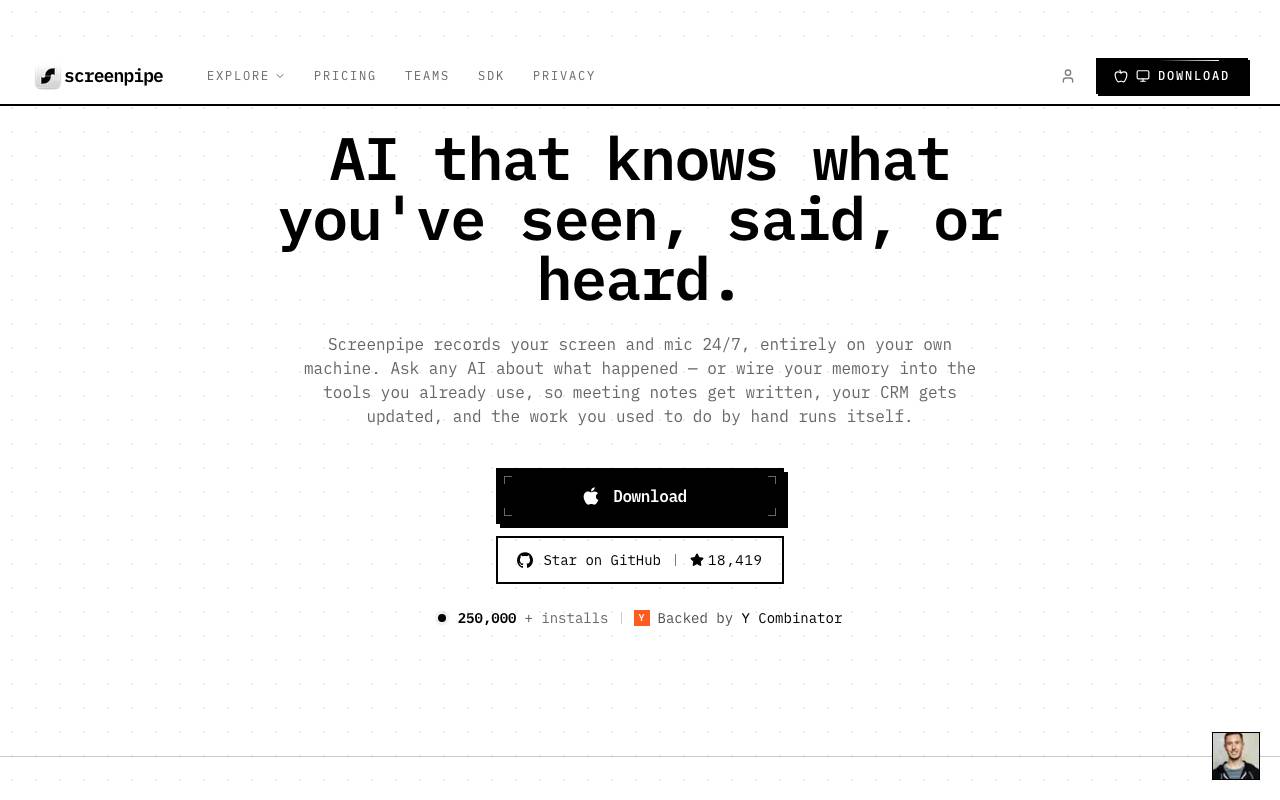
Screenpipe is an open-source platform that continuously captures screen activity and audio on your device, storing everything locally so developers can build AI applications grounded in real user context. By indexing what you see, hear, and do, it provides a rich personal data layer that apps and agents can query without sending information to the cloud. The project targets developers creating productivity tools, memory assistants, meeting summarizers, and personalized agents. It exposes APIs and a plugin system so custom pipelines can transform raw recordings into searchable text, transcripts, and structured events that feed downstream LLM workflows. Because all processing happens on the user's machine, Screenpipe emphasizes privacy and ownership of data while remaining extensible through community-built integrations.
- 24/7 screen and audio capture
- Local storage and on-device processing
- OCR and speech-to-text indexing
- Plugin and pipeline architecture
- APIs for querying captured context
- Cross-platform desktop support

AgentKit
TypeScript-bibliotek for å bygge og orkestrere AI-agenter med verktøy, minne og multi-agent arbeidsflyter.
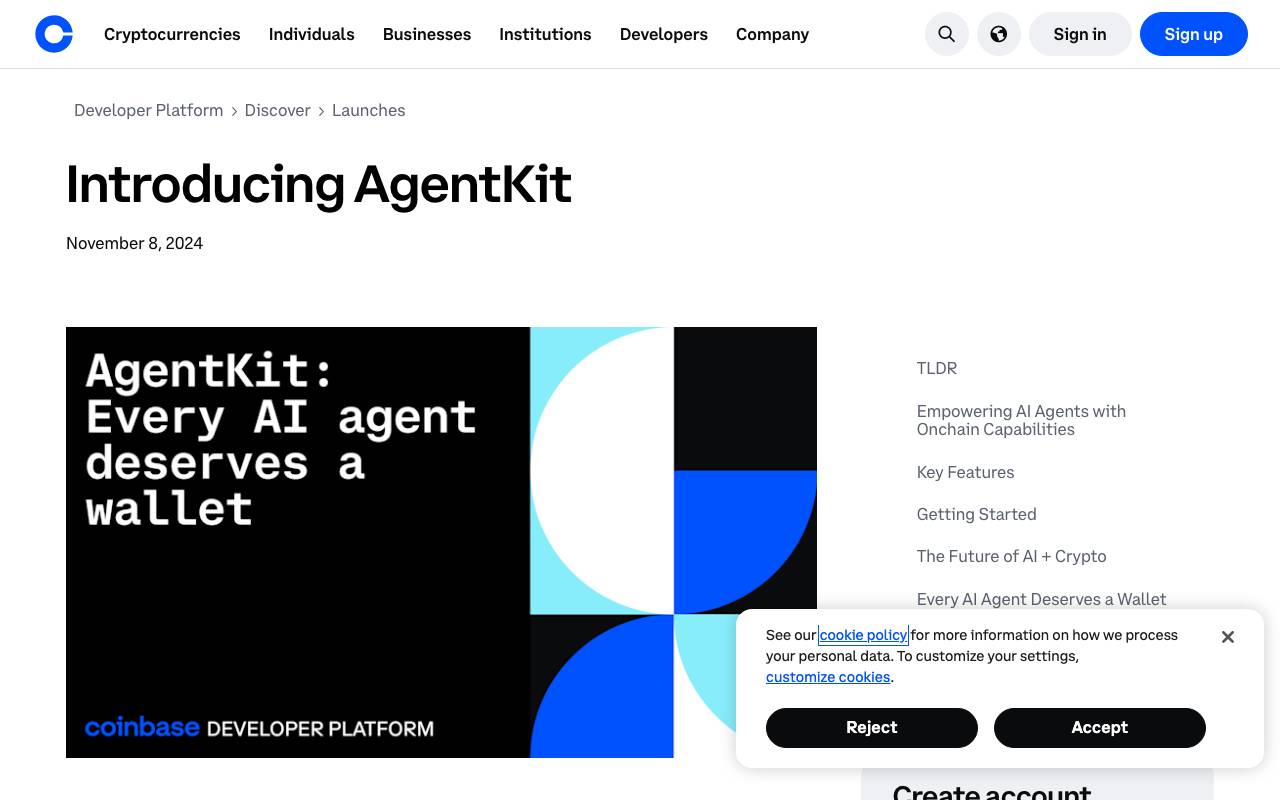
AgentKit er et åpen kildekode TypeScript-rammeverk designet for utviklere som ønsker å bygge produksjonsklare AI-agenter uten å gjenoppfinne kjerneorkestrasjonslogikk. Det tilbyr primitiv funksjonalitet for å definere agenter, legge til verktøy, administrere tilstand og koordinere multi-agent arbeidsflyter på en type-sikker måte. Biblioteket fokuserer på komposisjon, slik at du kan kjede agenter, rute oppgaver mellom spesialister og integrere med eksisterende modellleverandører og API-er. Den passer naturlig inn i Node.js og serverløse miljøer, noe som gjør den egnet for backend-tjenester, intern automatisering og kundeorienterte AI-funksjoner. Ettersom den er kode‑first og uten faste preferanser for UI, er AgentKit best egnet for ingeniørteam som er komfortable med å jobbe i TypeScript og som ønsker detaljert kontroll over hvordan deres agenter tenker, kaller verktøy og håndterer langvarige oppgaver.
- Agent- og verktøyabstraksjoner
- Multi-agent rutelegging og overlevering
- Tilstand- og minneadministrasjon
- Modellagnostisk leverandørstøtte
- Type-sikre API-er for innganger og utganger
- Fungerer i Node.js og serverløse miljøer
The Bankless Onchain MCP Server is a framework for interacting with on-chain data via the Bankless API. It implements the Model Context Protocol (MCP) to allow AI models to access blockchain state and event data in a structured way. The server provides various data operations, including contract state reading, event logs fetching, and transaction history retrieval. It caters to developers and researchers who need to interact with blockchain data in a structured manner. This project is no longer receiving updates, and its maintenance status might affect its stability and feature availability.
- Contract operations (read contract state, get proxy, get ABI, get source)
- Event operations (get events, build event topic)
- Transaction operations (get transaction history, get transaction info)

MarkItDown is a lightweight Python utility for converting various files to Markdown for use with LLMs and related text analysis pipelines. It is most comparable to textract, but with a focus on preserving important document structure and content as Markdown, including headings, lists, tables, links, etc. The output is often reasonably presentable and human-friendly, but it is meant to be consumed by text analysis tools, and may not be the best option for high-fidelity document conversions for human consumption. MarkItDown currently supports the conversion from PDF, PowerPoint, Word, Excel, Images (EXIF metadata and OCR), Audio (EXIF metadata and speech transcription), HTML, Text-based formats (CSV, JSON, XML), ZIP files, Youtube URLs, EPubs, and more. It is recommended to use a virtual environment to avoid dependency conflicts. With Python 3.10 or higher, you can install MarkItDown using pip: pip install 'markitdown[all]' or from the source with: git clone git@github.com:microsoft/markitdown.git, then pip install -e 'packages/markitdown[all]'. The usage of MarkItDown involves command-line invocation, either by specifying the output file, piping content, or using the narrowest convert_* function for specific use cases.
- Conversion of PDF, PowerPoint, Word, Excel
- Support for Images (EXIF metadata and OCR)
- Support for Audio (EXIF metadata and speech transcription)
- Support for HTML, Text-based formats (CSV, JSON, XML)
- Support for ZIP files, Youtube URLs, EPubs
- Optional dependencies for activating various file formats
The mcp-clickhouse MCP server is an An MCP server for ClickHouse. It features ClickHouse Tools, including run_query to execute SQL queries on your ClickHouse cluster, list_databases to list all databases on your ClickHouse cluster, and list_tables to list tables in a database with pagination. Additionally, it includes chDB Tools, like run_chdb_select_query, to execute SQL queries using chDB's embedded ClickHouse engine. It also provides a Health Check Endpoint to check the server's health and a Security mechanism for authentication. The server can be set up for internal services, local development, or with OAuth / OIDC authentication providers through FastMCP.
- run_query to execute SQL queries on ClickHouse cluster
- list_databases to list all databases on ClickHouse cluster
- list_tables to list tables in a database with pagination
- run_chdb_select_query to execute SQL queries using chDB's embedded ClickHouse engine
- Health Check Endpoint for server monitoring
- Multiple authentication modes, including OAuth and OIDC through FastMCP
MCP Server for QA Sphere TMS is a client used for integrating Large Language Models (LLMs) with QA Sphere (QSP) to boost test script creation capabilities. After configuring the server (details available on GitHub), LLMs can interact with QA Sphere's automated test cases. By leveraging the MCP (Model Callback Protocol), it enables developers and testers to quickly create AI-based test cases, automate tasks, and run test suites integrated with QAS Sphere. The MCP-based solution is user-backed, allowing a wide range of QA tasks to be automated, including test-case discovery and execution. Additionally, you can reference large language models, automate tasks, and run test suites integrated with the QA Sphere Test Management System.
Bla gjennom alle 593 MCP Servers-verktøy
Den komplette, søkbare katalogen — rangert etter ekte brukervurderinger.


