
Unitree R1Compacte 26-gewrichtige humanoïde robot met multimodale AI voor onderzoek en onderwijs

Overzicht
Belangrijkste functies
- 26 bewegende gewrichten
- Ultralicht humanoïde vormfactor
- Multimodale AI-verwerking
- Onderzoeks- en onderwijsgerichte prijzen
- ProgrammeerbARE beweging en gedrag
- Ondersteuning voor embodied AI-experimenten
Prijs
- Model
- Paid
- Categorie
- AI Robotics
- Beoordeling
- 4.5 / 5 (4)
Toepassingen
Onderwijs in robotica fundamentals
Gebruik R1 in universitaire of klaslokale omgevingen om humanoïde beweging, kinematica en controleconcepten te demonstreren met een draagbaar, betaalbaar platform.
Onderzoek naar embodied AI
Maak gebruik van de 26 bewegende gewrichten en multimodale AI-invoer om embodied leeralgoritmen te prototypen en te testen in een real-world fysiek agent.
Studie van beweging en manipulatie
Ontwikkel en benchmark loop-, evenwichts- en bewegingsplanningsalgoritmen op een lichtgewicht humanoïde vormfactor die geschikt is voor laboratoriumexperimenten.
Prototyping van mens-robot interactie
Bouw interactieve demos die visuele, auditieve en contextuele verwerking combineren om multimodale communicatie tussen mensen en robots te verkennen.
Pluspunten & minpunten
Pluspunten
- Betaalbaar toegangspunt voor humanoïde robotica
- Lichtgewicht en draagbaar ontwerp
- 26 gewrichten maken diverse bewegingsstudies mogelijk
- Ingebouwde multimodale AI-mogelijkheden
- Goed geschikt voor academisch en onderzoeksgebruik
Minpunten
- Beperkte belasting in vergelijking met industriële humanoïden
- Kleinere schaal kan sommige real-world taken beperken
- Verlangt technische expertise om volledig te gebruiken
- Ecosysteem is nog volop in ontwikkeling
Recensies
Gemiddelde van 4 beoordelingen.
Log in om een review te schrijven.
Compared a few options
Evaluated this against two competitors. Where it wins: 26 articulated joints and built-in multimodal AI capabilities. Where it lags: smaller scale may restrict some real-world tasks. On balance the feature set — especially multimodal AI processing — justifies the 4 stars for our use case.
Solid for our team
We rolled this out across the team last quarter and 26 joints enable diverse motion studies. Multimodal AI processing fits neatly into how we already work, and research- and education-focused pricing removed a step we used to do by hand. Requires technical expertise to fully utilize, which is the main caveat, but it has held up under daily use.
Years in this space
I've evaluated a lot of these over the years. What stands out here is research- and education-focused pricing — handled better than most — and affordable entry point for humanoid robotics. Requires technical expertise to fully utilize is my one real gripe. Worth the time if this is your use case.
Use it every day
Honestly didn't expect to like it this much. 26 articulated joints is exactly what I needed, and lightweight and portable design. but I reach for it almost every day now and it just clicks.
Vragen
Who is the Unitree R1 best suited for, and what use cases does it support?
The R1 is designed for researchers, educators, and developers working on locomotion, manipulation, computer vision, human-robot interaction, and embodied AI. It fits well into university curricula, lab research, and algorithm prototyping rather than industrial deployment.
What are the main limitations of the Unitree R1 compared to industrial humanoids?
The R1 has limited payload capacity and a smaller scale that may restrict certain real-world tasks. Its ecosystem is still maturing, and fully leveraging its 26 joints and multimodal AI requires meaningful technical expertise in robotics and programming.
What AI and motion capabilities are built into the R1?
The R1 features 26 articulated joints for dynamic movement studies, plus multimodal AI that processes visual, auditory, and contextual inputs. It supports programmable motion and behavior, making it a hands-on platform for embodied AI experimentation.
Stel een vraag
Alternatieven voor AI Robotics
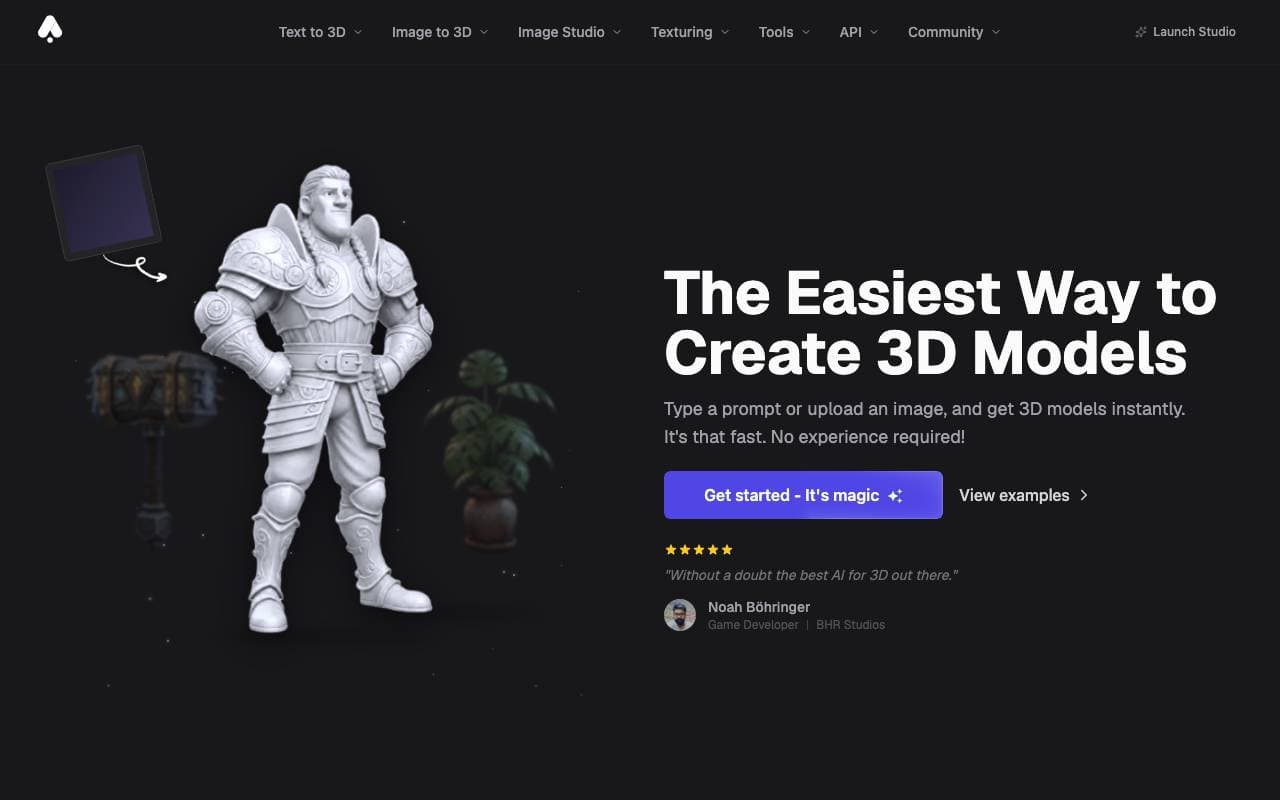

3D AI Studio
AI Robotics
Genereer hoogwaardige 3D-modellen uit tekst of afbeeldingen met AI-tools in enkele seconden.

NVIDIA Cosmos
AI Robotics
Generatieve wereldmodellen voor het bouwen van fysieke AI-systemen zoals robots en autonome voertuigen.

Figure AI
AI Robotics
Bedrijf dat algemene AI-aangedreven humanoïde robots ontwikkelt voor thuis en industrie


Aurora Innovation
AI Robotics
Self-driving technologieplatform dat autonome vrachtwagens en ritdeelservices op grote schaal aandrijft.
Trending now

Doozer Ai
Sales Agent
Digitale collega's die operationele workflows automatiseren om de team efficiëntie te vergroten.


Claude
AI Agents & Chatbots
Conversational AI-assistent van Anthropic voor schrijven, analyse, coderen en documenttaken

Consistent Character AI
Images
Genereer consistente AI‑personages over scènes vanuit één referentiefoto


Pin AI
Workflow automation
AI-recruiter die sourcing, screening en outreach automatiseert om het inhuren te versnellen.