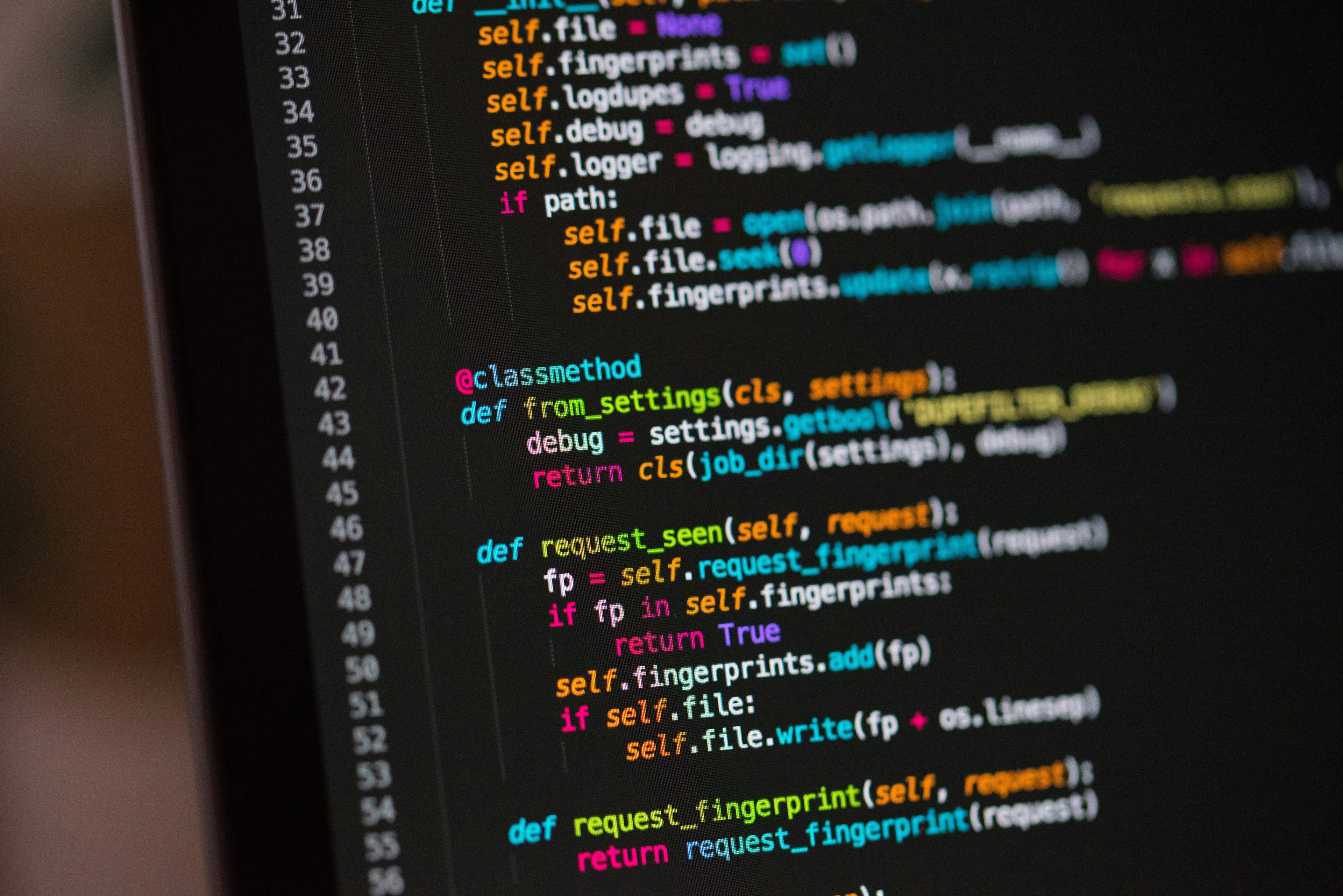
Best Coding assistant (2026)

Šīs lapas saites caur reģistrēšanos var sniegt komisiju, taču tas neietekmē mūsu novērtējumus.
A curated guide to the best AI coding assistants, covering tools that help developers write, refactor, debug, and review code across editors, terminals, and CI workflows.
Coding assistant skaitļos
Cenu struktūra
Best Coding assistant (2026)
- 1
 Gemini Code AssistGoogle AI programmēšanas asistents, kas balstīts uz Gemini modeļiem, lai ātrāk un prātīgāk izstrādātu5.0 (4)
 - 2
 Sourcegraph Cody AIAI kodēšanas asistents, kas saprot visu jūsu kodu bāzi kontekstuālai palīdzībai4.8 (6)
 - 3
 OpenHandsAtvērtā koda platforma mākslīgā intelekta aģentiem, kas veido, atkļūdo un izvieto kodu kā izstrādātāji.4.8 (6)
 - 4
 DevArchitectAI atbalstīts kodēšanas palīgs plānošanai, izstrādei un uzlabošanai programmatūras projektos.4.8 (5)
 - 5
 CodeGPTPielāgojams AI kodēšanas asistents ģenerēšanai, pabeigšanai un skaidrošanai jūsu IDE4.8 (4)
 - 6
 BazAI kodu pārskats, ko programmētāji vārdā neizpildītos defektu atslēgas, reģresijas un dizaina problēmas.4.8 (4)
 - 7
 MaigeAtvērtā pirmkoda AI rīks, kas automatizē dabas valodas darba plūsmas jūsu kodbase, bezrūpīgi integrējoties ar GitHub.4.8 (4)
 - 8
 Sweep AIAI balstīts juniora izstrādātājs, kas pārveido kļūdu ziņojumus un funkciju pieprasījumus par koda izmaiņām, uzlabojot programmatūras izstrādes procesu.4.7 (6)
 - 9
 GPTEngineerPārvēršiet dabiskās valodas pieprasījumus par darbināmiem kodu un lietotnēm ātri.4.7 (6)
 - 10
 TabbyAtvērtā koda, pašinstalēts AI programmēšanas asistents ar reāllaika autoiegais4.6 (5)

Gemini Code Assist
Google AI programmēšanas asistents, kas balstīts uz Gemini modeļiem, lai ātrāk un prātīgāk izstrādātu
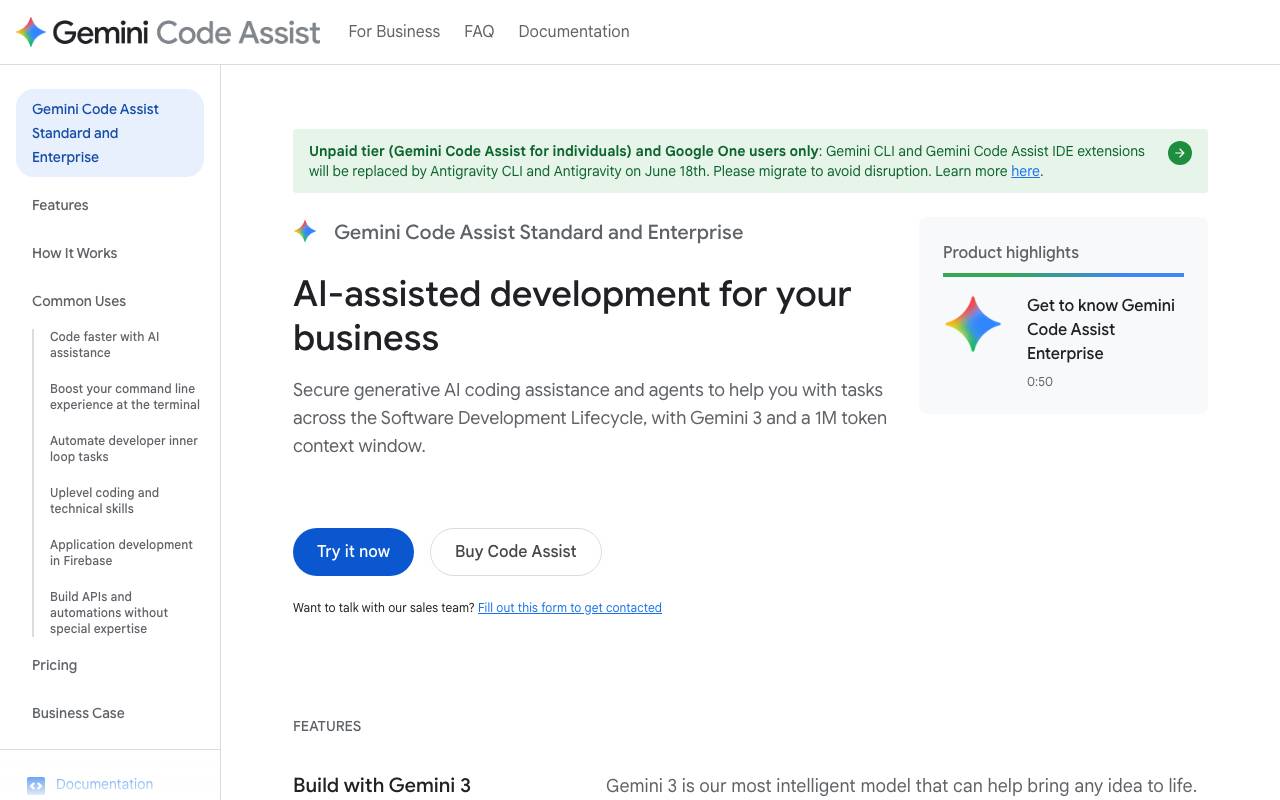
Gemini Code Assist ir Google AI-iem pusotnīgs kodu palīgs, kurš palīdz programmētājiem rakstīt, saprast un sargāt programmatūru vieglāk. Iegūts uz Google Gemini saimes lielo tekstu modelu pamata, tas integrirodies ar populāro IDE, tostarp VS Code un JetBrains, kā arī ar Google Cloud vidiem, lai sniegtu kontekstuslēdzus kodu ieteikumus, terminātu un skaidrošanu. Instrumenta atbalsta plašu ierīču valodu spektru un palīdz ar uzdevumiem, kā piemēram, jaunu kodu izveidošanu, esošo funkciju paplašināto apstrādi, vienittēju testu rakstīšanu, un nepazīstamā koda pamatprojektu izklašušanu. Tā arī piedāvā chat-bazetu dialogu, atļaujot dezignērušu jautāt par savu projektā notiekošo vai saņemt padomus par labākajām metodēm bez atstājot redaktoru. Gemerija Code Assist piedāvā uzņēmētājiem piedāvā funkcionalitāti, tai skaitā kodbase apziņotas speciālistiskās paplašinājums, avota citātveida norādījums, un IP aizsardzības garantija, tādējādi padarot to piemērotu organizācijām ar drošības un komplianso prasībām.
- AI kodēšanas pabeigšana un ģenerēšana
- In-IDE čats kodējuma jautājumiem
- Koda paskaidrošana un refaktoringa palīdzība
- Vienību testēšanas ģenerēšana
- Koda bāzes apzināta pielāgošana komandām
- Integrācija ar Google Cloud un populāriem IDE

Sourcegraph Cody AI
AI kodēšanas asistents, kas saprot visu jūsu kodu bāzi kontekstuālai palīdzībai
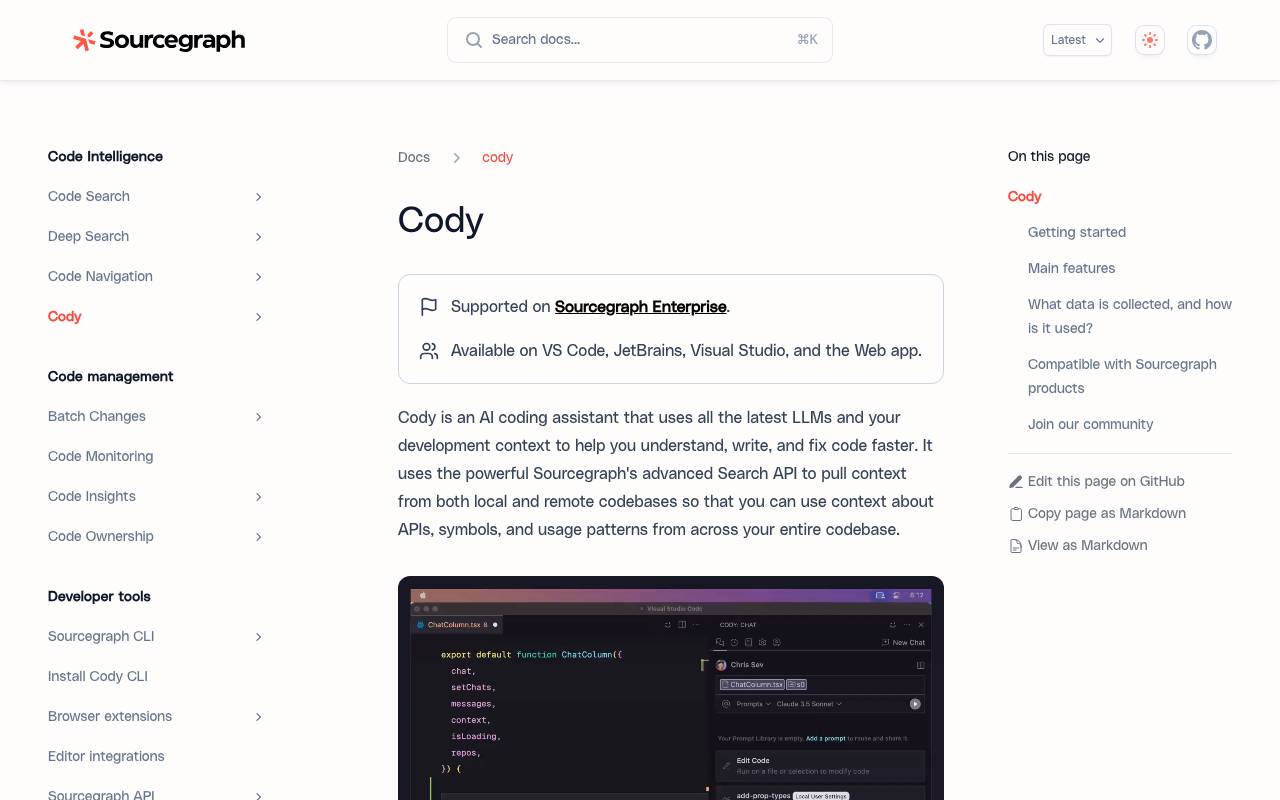
Sourcegraph Cody AI ir kodēšanas asistents, kas izstrādāts darbam ar jūsu reālo kodu bāzi, ne tikai ar failu, kuru jūs rediģējat. Izmantojot Sourcegraph kodu meklēšanas un indeksēšanas iespējas, tas iegūst atbilstošu kontekstu no visu jūsu krātuves, lai atbildētu uz jautājumiem, ģenerētu kodu un skaidrotu nesaprotamu loģiku ar lielāku precizitāti. Cody integrējas populārās redaktoros, piemēram, VS Code un JetBrains IDE, piedāvājot tērzēšanu, automātisko pabeigšanu un iekšējās rediģēšanas. Tas atbalsta vairākus pamatā esošos LLM un ir paredzēts komandām, kas darbojas lielās, sarežģītās kodu bāzēs, kur virspusējas AI ieteikumi bieži vien ir nepietiekami. Ar gan bezmaksas, gan uzņēmumu līmeņiem Cody mērķis ir individuāli izstrādātāji, kā arī organizācijas, kurām ir nepieciešama kontrole pār kodu privātumu, modeļu izvēli un integrāciju ar iekšējām krātuvēm.
- Kontekstuāli apzināta tērzēšana un koda ģenerēšana
- Automātiskas pabeigšanas ieteikumi
- Kodu bāzes meklēšanas integrācija
- Daudz LLM atbalsts
- IDE spraudņi VS Code un JetBrains
- Pasūtījuma komandas un uzvednes

OpenHands
Atvērtā koda platforma mākslīgā intelekta aģentiem, kas veido, atkļūdo un izvieto kodu kā izstrādātāji.
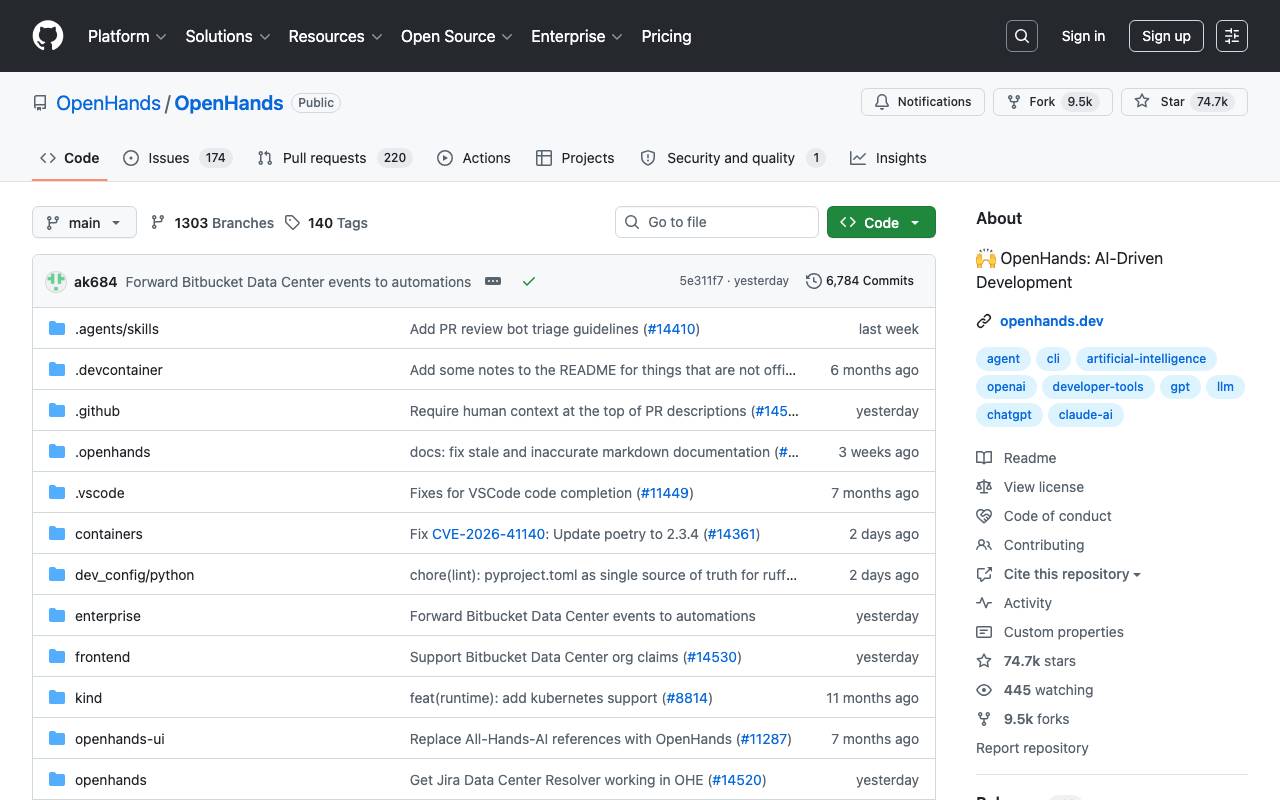
OpenHands ir atvērtā koda sistēma mākslīgā intelekta aģentiem, kas spēj veikt pilnvērtīgus programmatūras izstrādes uzdevumus. Aģenti var lasīt un modificēt kodu, izpildīt komandas čaulas, pārlūkot internetu un mijiedarboties ar API — darbojoties līdzīgi kā cilvēka izstrādātājs, kas strādā drošā vidē. Sistēma ir izstrādāta gan pētniekiem, gan speciālistiem un atbalsta vairākus LLM (Large Language Model) pakalpojumus, kā arī piedāvā elastīgu arhitektūru aģentu darbības, rīku un darba procesu pielāgošanai. To var izmantot kā pašhostētu pakalpojumu, izmantojot Docker, vai piekļūt caur tīmekļa lietotāja saskarni, vai integrēt esošajos izstrādes procesos, lai automatizētu kodēšanas, testēšanas un DevOps uzdevumus.
- Autonomi kodēšanas un atkļūdošanas aģenti
- Droši čaulas un failu sistēmas piekļuves
- Rīki interneta pārlūkošanai un API mijiedarbībai
- Vietējā izvietošana, izmantojot Docker
- Atbalsts dažādiem LLM pakalpojumiem
- Tīmekļa lietotāja saskarne

DevArchitect
AI atbalstīts kodēšanas palīgs plānošanai, izstrādei un uzlabošanai programmatūras projektos.
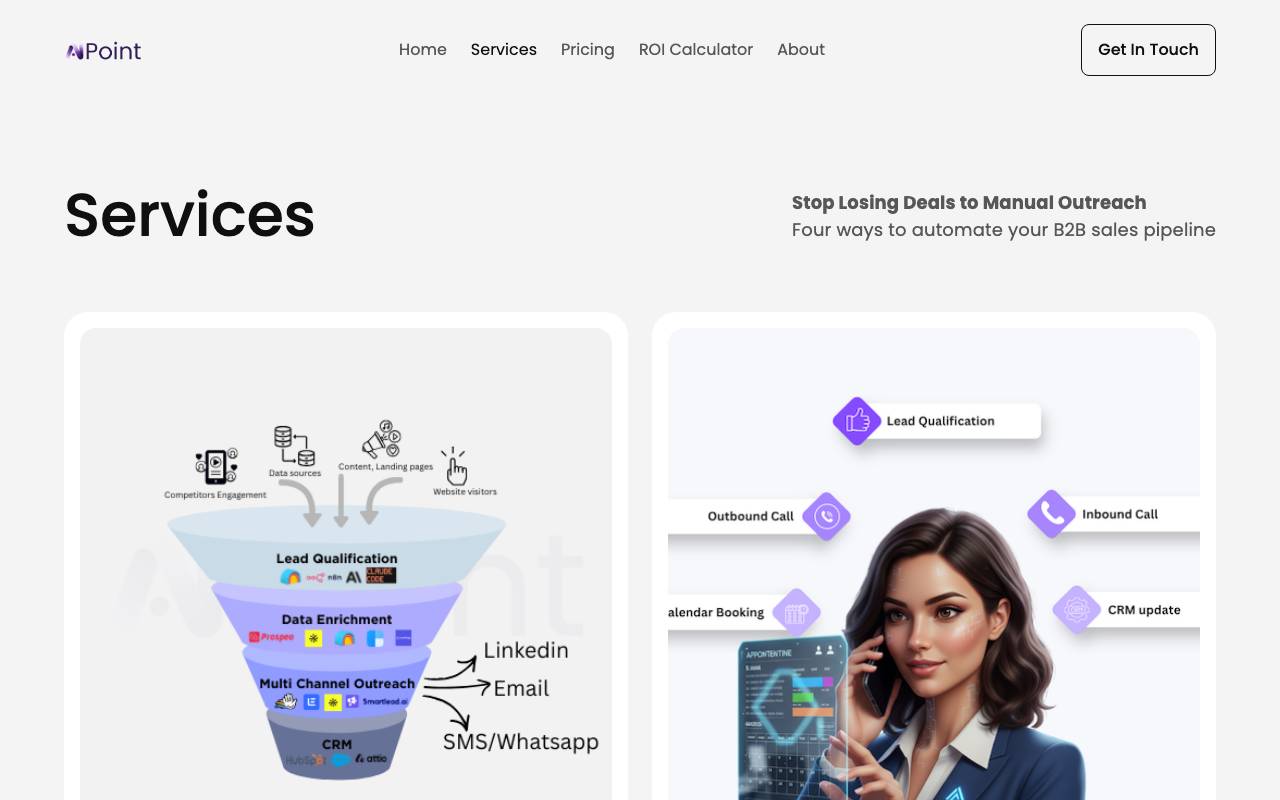
DevArchitect ir ar intelligences resursu aprīkojums, kas ir dizainētājs, lai palīdz inženieriem attīstīt idejas no pamatiem līdz pamatiem ātrāk. Tā atbalsta uzdevumus, kāda ir kodu ģenerēšana, proģektu architektūras izvietošana, kodu fragmentu pārskats, kā arī ieteikumi uzlabojumiem dažādos programmēšanas valodās un ramatu tipos. DevArchitect izvērsies kā collābioņieris izstrādes cykla laikā, piedāvājot kontekstu pierādījumu, kad jāmēģina pamatu veidot jaunu aplikāciju, nolasīt veidojamo kodu pamateju vai izpētīt dizaina modeļu paraugus. Ar koda sagatavošanas kombinēšanu ar arhitektūru pamatošanos, tas ir mēģinājis atbalstīt gan vienības, gan nelielas komandas, lai tie varētu savienot savu procesu. Lieliski piemērota tas ir tasam tehnoloģiju pielietošanā, kuras var izmantot programmniecības SaaS risinājumi ar ļoti lielu datubāzes saturu. Programmu izstrādes proģekti var izmantot programmniecības LLM, API un programmistes SDK, lai pilnveidotu integrāciju ar DevArchitect.
- AI vadīta koda ģenerēšana un pabeigšana
- Ieteikumi par projekta arhitektūru
- Koda pārskata un uzlabojumu ieteikumi
- Daudzvalodu un ietvaru atbalsts
- Atkļūdošanas un pārstruktūru palīdzība
- Kontekstuāla izstrādes darba plūsma
CodeGPT
Pielāgojams AI kodēšanas asistents ģenerēšanai, pabeigšanai un skaidrošanai jūsu IDE
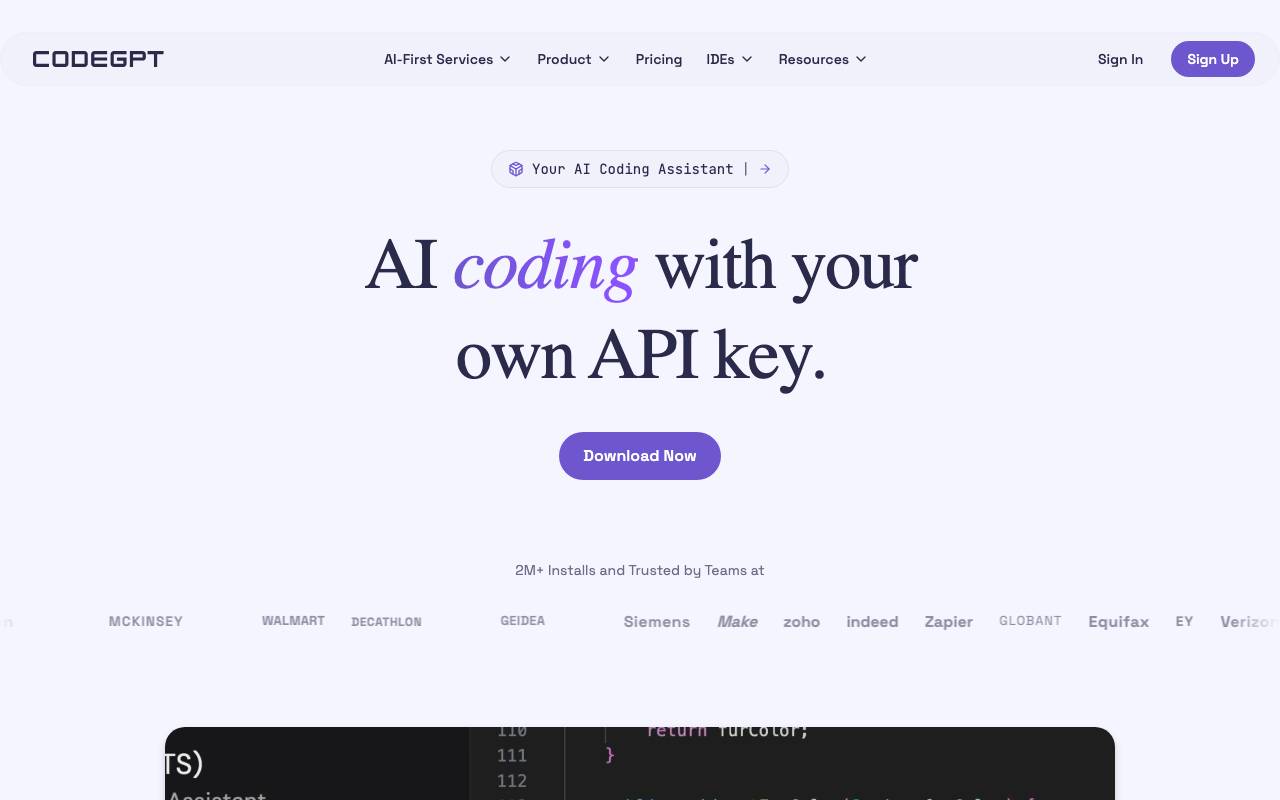
CodeGPT ir AI darbināts kodēšanas asistents, kas tieši integrējas populārās izstrādes vidēs, piemēram, VS Code un JetBrains IDE. Tas palīdz izstrādātājiem rakstīt, pabeigt, pārstrādāt un dokumentēt kodu caur dabiskām valodas uzvednēm un kontekstuālām ieteikumiem. Ārpus standarta automātiskās pabeigšanas CodeGPT ļauj komandām konfigurēt pielāgotus AI aģentus, kas saistīti ar viņu pašu kodu bāzēm, dokumentāciju vai vēlamajiem valodu modeļiem. Tas padara to lietderīgu dažādām darbībām, sākot no ģenerēšanas līdz vienības testu un skaidrošanai nezināmu kodu vai jaunu inženieru iekļaušanai projektā. Tas atbalsta vairākus AI pakalpojumu sniedzējus un piedāvā gan individuālus, gan komandu plānus ar iespējām pašnodarbinātām izvietošanām organizācijām ar stingrām privātuma vai atbilstības vajadzībām.
- In-IDE kodu pabeigšana un čats
- Pielāgoti AI aģenti, kas apmācīti jūsu kontekstā
- Kodu skaidrojums un dokumentācijas ģenerēšana
- Vienības testa un pārstrādes ieteikumi
- Daudzmodeļu atbalsts pāri pakalpojumu sniedzējiem
- Komandu un uzņēmumu izvietošanas iespējas

Baz
AI kodu pārskats, ko programmētāji vārdā neizpildītos defektu atslēgas, reģresijas un dizaina problēmas.
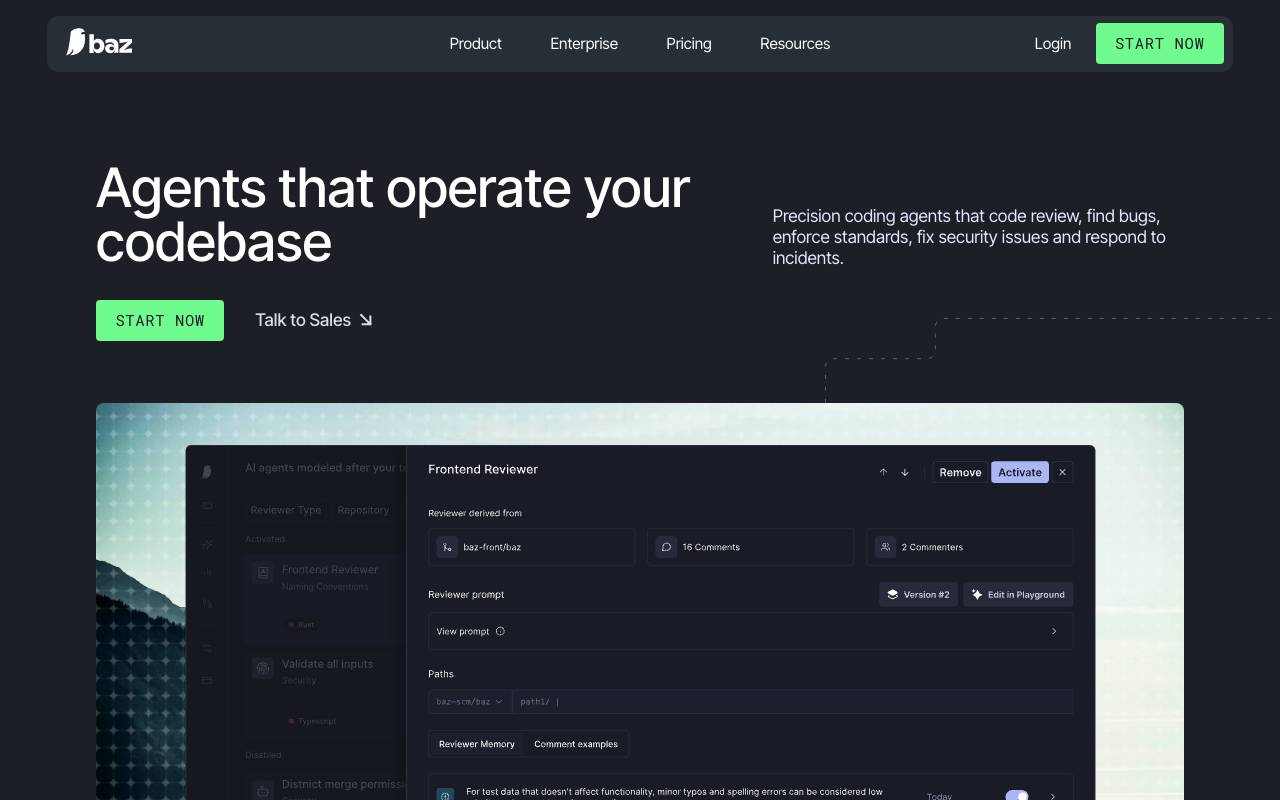
Baz ir AI kodu pārskata ierīce, kas definē defektus, reģresijas un dizaina problēmas kodebās. Tā darbojas vairākā arī arī rīkiem, pieejot kritiskos atsauksmes un mērvērtīgus dati par kā kādi inženieru komandas sadarbojas ar AI pārskati. Baz piekrīt klientu standartem un darbstacības, uzlabojot kodu kvalitāti un palīdzot izdzēst visus klasēs defektus un nabadzības. Tā automātiski apvieno iztīrības, un modificē paskaidrojumus. Bazs AI pārskata kodu pārbaudes ir uzticamas AI-natīvo dev team un tā ir dizainēta uz pilnu kodu kontekstu, lielumu un atkarību neprasmu.
- AI-raidīts pull request pārskati
- Komentāri un ieteikumi ar attiecību pie koda
- Repozitoriju vidēšu konteksta analizēšana
- Defektu un reģresijas iegūšana
- Labas prakses un dzīšanas kontroles pārbaudes
- Git platformas integrācija

Maige
Atvērtā pirmkoda AI rīks, kas automatizē dabas valodas darba plūsmas jūsu kodbase, bezrūpīgi integrējoties ar GitHub.
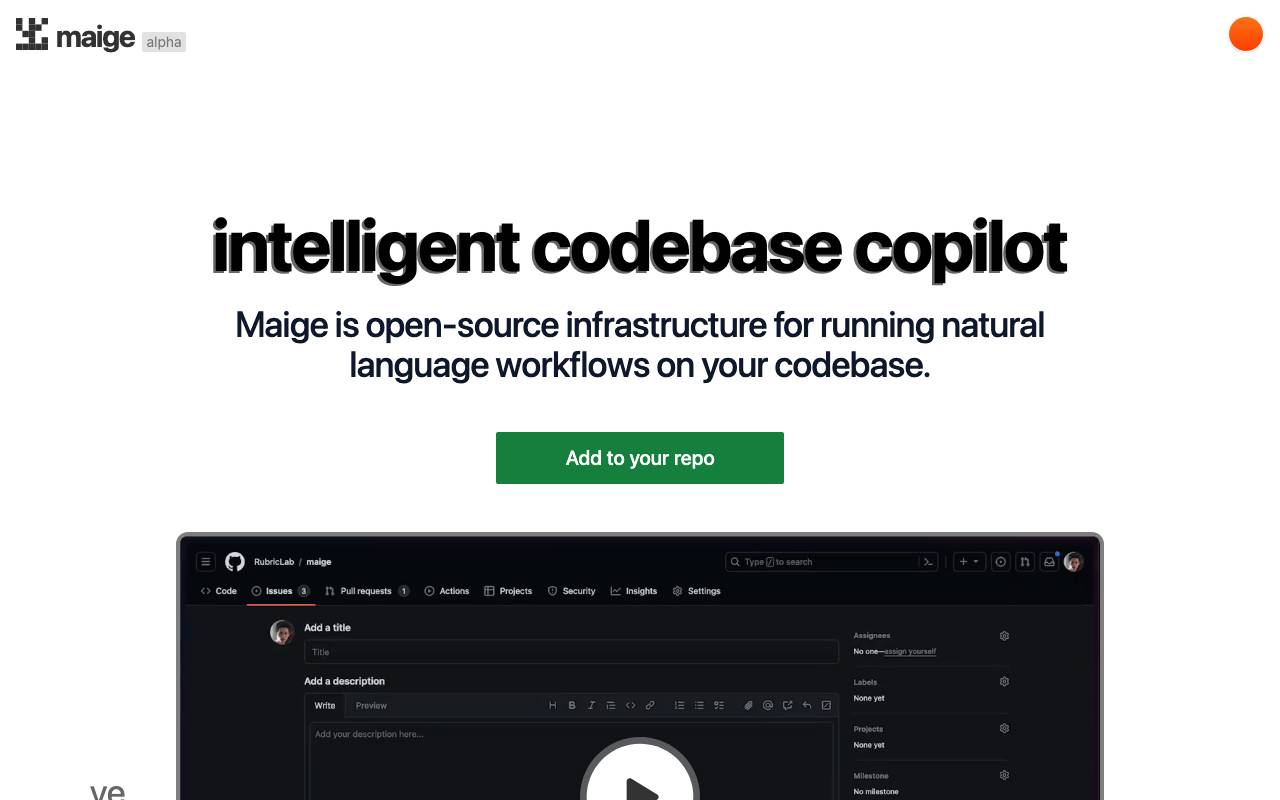
Maige ir atvērtais kodeksis infrastruktūra, ko izmanto pieejamību naturālās valodas procesiem savā koda bāzē. Savienojot to ar Jūsu GitHub repositoriju, tas izveido webhook, kā arī atvasinājumu no visa koda bāzes un sandbox vidi. Varat aprakstīt darbības, kuras jūs vēlētos, ka Maige izpildītu, kad problēmas un pull peticijas tiek atvērtas, piemēram, pieejamību, uzdeva piešķiršanu, komentēšanu, kodu pārskatu un izpildīšanu ļoti simple koda detaļu koda snipsu. Maige darbojas fleksibli ar GitHub API un ļauj Jums monitorēt un sniegt atbildes tajā dashboard. Tā ir AI, kas ir piekļuve GitHub un var izdot dažādu uzdevumu, inklūzīvi arī problēmu piešķiršanu automātiski, instrukciju konfigurēšanu un kodu pārskatu automātizēšanu arī. Maige ir elastīgs un pielietojams līdzeklis, kas atļauj automatizēt prirodīgās valodas darbîbas savas koda bāzes ietvaros. Tas galvenokārt tiek izmantots atvērtas koda izstrādētājiem, lai noviektu savu darbîbas processu un uzlabotu sadarbību. Līdzekli jau izmantojis vairāk nekā 4 300 repositoriem, un tas ļauj lietotājiem monitorēt izpildījumus un sniegt atsauksmes tas lapa.
- Webhook integrācija
- Kodbase integrācijas
- Sandbox vide
- Automātiskā problēmu tagināšana
- Pielāgotas instrukcijas
- Koda pārskatīšana

Sweep AI
AI balstīts juniora izstrādātājs, kas pārveido kļūdu ziņojumus un funkciju pieprasījumus par koda izmaiņām, uzlabojot programmatūras izstrādes procesu.
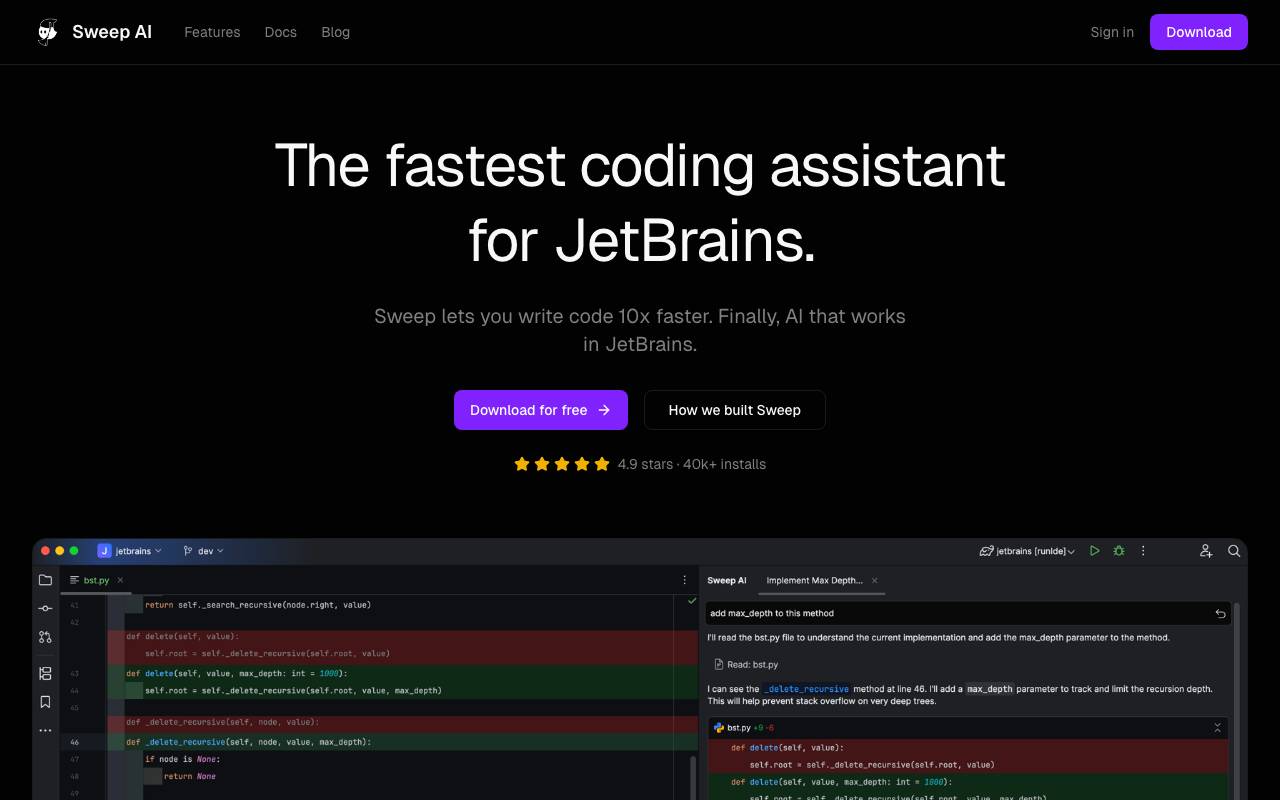
Sweep AI is a Coding assistant tool listed on Agent Pantheon.

GPTEngineer
Pārvēršiet dabiskās valodas pieprasījumus par darbināmiem kodu un lietotnēm ātri.
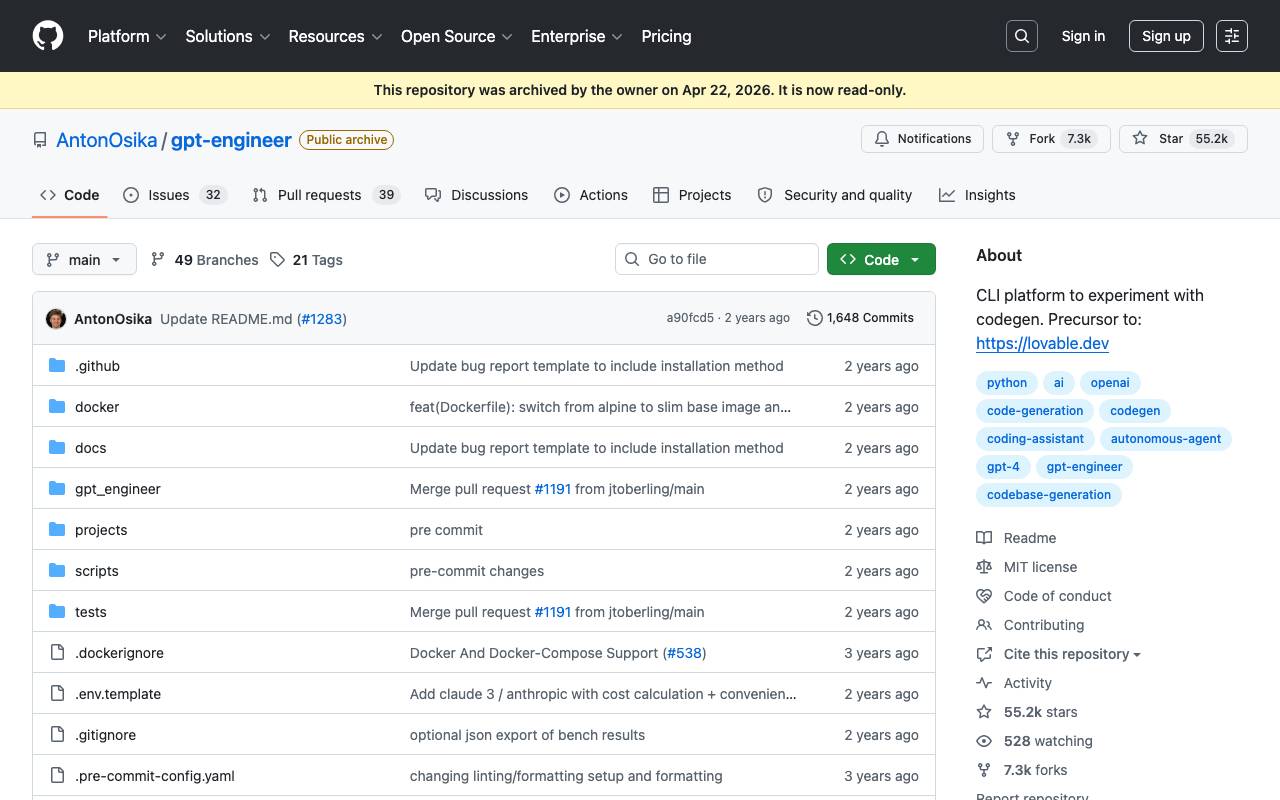
GPT Engineer ir platforma, kas atvērlīgai valodas aicinājumā pārveido darbīgā kodu un programmas ātri. Tā piešķir lietotājiem iespēju norādīt programmveida prasības atvērlīgā valodā, un šo aicinājumu pēc to izpildiemasina ar AI. Platforma arī atbalsta izmantot īpašuma kodu uzlabošanai. Programmu risinājumu izstrādei un lietotājiem, kas vēlas ātri prototipu veidot un izveidot programmu risinājumus, šīs lietas ir piemērots. GPT Engineer darbojas, ņemot pirmavotu failu kā ievadi, kura satur ieteikesanu par to, šādu ieteikumus AI sistēmu izmantot codeam ražošanai vai uzlabošanai. GPT Engineer pamatās nozīmē tās iespējas: kodu sagatavošana, kas balstītās uz priekšnoteikumiem, kas izriet no dabīgās valodas, nodrošināšana, lai uzlabotu esošo kodu, un atbilstības mērīšana, lai paredzētās agentu savietotu ar iecerēto publisku dati kārtuļu. Platforma atbalsta Python 3.10-3.12 un izmanto OpenAI API. Lietotāji var uzstādīt GPT Engineer izmantojot pip, iestatīt API atslēgu, un izmantot izdevumu GPT Engineiera ar Dockeru vai to atbalstījušo pārlūku. Platfoma arī sniedz dokumentāciju un vizionāro plānam atbalsta attīstībai. GPT Engineirs ir atvērtu satura rīks, bet komerciālā versija, sauktā gptengineer.app, piedāvā pārvaldīto dienstu par automatizētu tiešsaistes aplikāciju izveidi. Cits saistīts projekts ir aider, kuras ir labi uzticami izstrādāts CLI, kura var būt uzlabota kādas kodu pārgatavošanas sistēma.
- Dabiskās valodas uz koda ģenerēšanu
- Pilnas lietotnes struktūras izveide no pieprasījumiem
- Iteratīva rediģēšana caur tērzēšanu
- Projekta eksportēšana un koda īpašuma nodrošināšana
- Atbalsts par populārām tīmekļa ietvarstruktūrām
- Ātra prototipu izveide darba plūsma

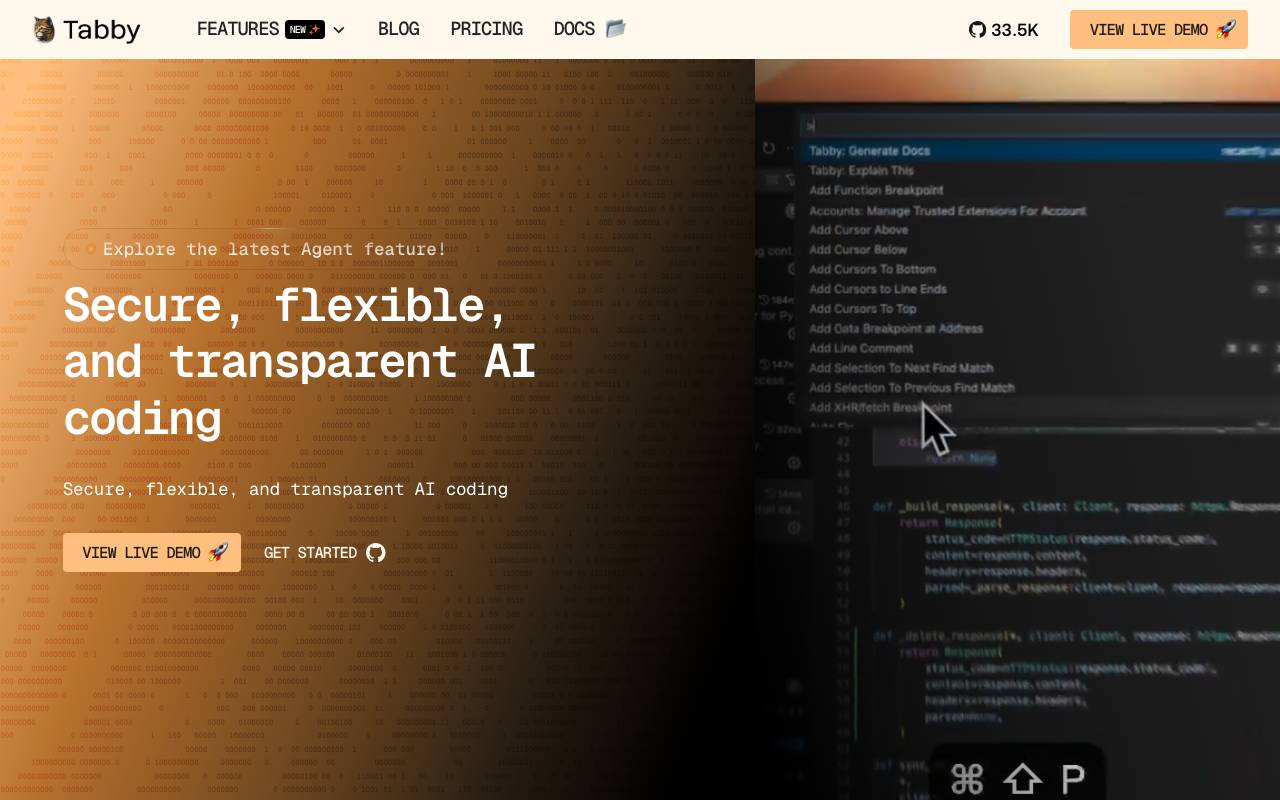
Tabby ir atvērta koda AI programmēšanas asistents, kuru var palaist uz sava infrastruktūras, nodrošinot komandām pašinstalētu alternatīvu mākonī balstītajiem kodēšanas pabeigšanas rīkiem. Tas tiek integrēts populārās redaktoros un piedāvā reāllaika ieteikumus, vairāka rindiņu pabeigšanu un kontekstisko autoiegāšanu vairākos programmēšanas valodās. Tā kā tas darbojas lokāli vai uz privātām serveriem, Tabby saglabā pirmkodu organizācijas vidē, padarot to pievilcīgu uzņēmumiem ar stingriem datu, atbilstības vai intelektuālā īpašuma prasībām. Tas atbalsta patērētāju GPU un dažādus atvērtā koda modeļus, ļaujot komandām pielāgot izmaksas un veiktspēju atbilstoši saviem aparatūras resursiem. Ar redaktora paplašinājumiem VS Code, JetBrains IDE un Vim/Neovim, kā arī caurspīdīgu, kopienas vadītu kodu bāzi, Tabby ir paredzēts izstrādātājiem, kuri vēlas Copilot līdzīgu pieredzi, bez koda nosūtīšanas trešo puses API.
- Reāllaika kodēšanas pabeigšana un ieteikumi
- Pašinstalēta izvietojuma iespēja ar Docker atbalstu
- Paplašinājumi VS Code, JetBrains un Vim
- Atbalsts vairākām atvērtā koda LLM
- GPU paātrināta lokāla inferēšana
- Komandas lietošanas analītika un administratora kontrole
Pārlūkot visus 22 Coding assistant rīkus
Pilns, meklējams katalogs — sarindots pēc reālu lietotāju atsauksmēm.