Best AI Agent Development Frameworks (2026)

이 페이지의 링크를 통해 등록하면 수수료를 받을 수 있지만, 이는 우리의 평가에 영향을 미치지 않습니다.
A buyer's guide to the best AI agent development frameworks—libraries and platforms for building autonomous agents that can reason, use tools, and complete multi-step tasks.
숫자로 보는 AI Agent Development Frameworks
가격 구성
Best AI Agent Development Frameworks (2026)
- 1
 Wildcard AI / agents.jsonOpen spec and platform that lets AI agents discover and call API workflows through an agents.json file.5.0 (6)
 - 2
 Strands AgentsOpen‑source SDK for building and orchestrating single or multi‑agent systems with LLMs and tool integration.5.0 (5)
 - 3
 BabyCatAGI경량 자율형 AI 에이전트 프레임워크로 자동화된 태스크 스트림라이닝을 위한4.8 (6)
 - 4
 Awesome MCP ServersAI 4.8 (5)
 - 5
 Gemma 3An open-source AI model optimized for single-GPU performance, supporting multimodal inputs and over 140 languages.4.8 (5)
 - 6
 RasaOpen-source framework for building production-grade chat and voice assistants4.8 (5)
 - 7
 BabyElfAGISkills 4.8 (4)
 - 8
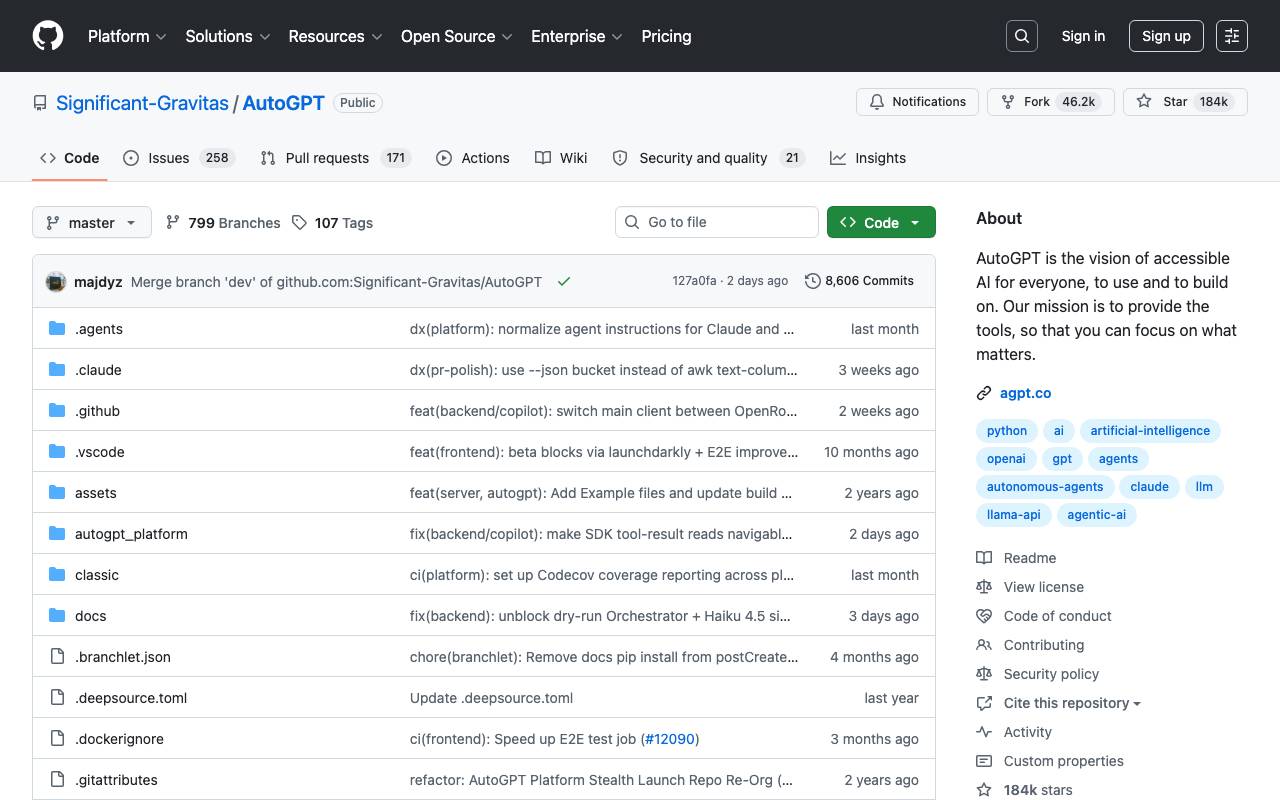
 Auto-GPTGPT 4.8 (4)
 - 9
 memUOpen-source agentic memory framework for 24/7 proactive AI agents with file-system memory, intention prediction, and lower token costs.4.8 (4)
 - 10
 ChromaAn open‑source vector database and embeddings engine for building retrieval‑augmented AI applications.4.8 (4)

Wildcard AI / agents.json
Open spec and platform that lets AI agents discover and call API workflows through an agents.json file.
Wildcard AI maintains agents.json, an open-source specification that describes how AI agents can find and invoke API endpoints and multi-step workflows. Instead of hardcoding tool calls or relying on brittle prompt engineering, developers publish an agents.json file alongside their API so any compatible agent can understand what actions are available and how to chain them. The accompanying platform helps teams author, host, and test these specs, and provides runtime tooling for agents to parse agents.json and execute the described workflows against real APIs. It aims to do for AI agents what OpenAPI did for traditional API clients, making integrations more declarative and reusable. It is well suited to developers building agentic applications, API providers who want their services to be agent-ready, and teams looking for a standard alternative to per-model function calling formats.
- agents.json specification for describing API actions
- Workflow definitions for chaining multiple endpoints
- Runtime libraries for agent-side discovery and execution
- Hosting and authoring tools for agents.json files
- Compatibility with existing REST APIs and auth schemes
- Open-source community and reference implementations

Strands Agents
Open‑source SDK for building and orchestrating single or multi‑agent systems with LLMs and tool integration.
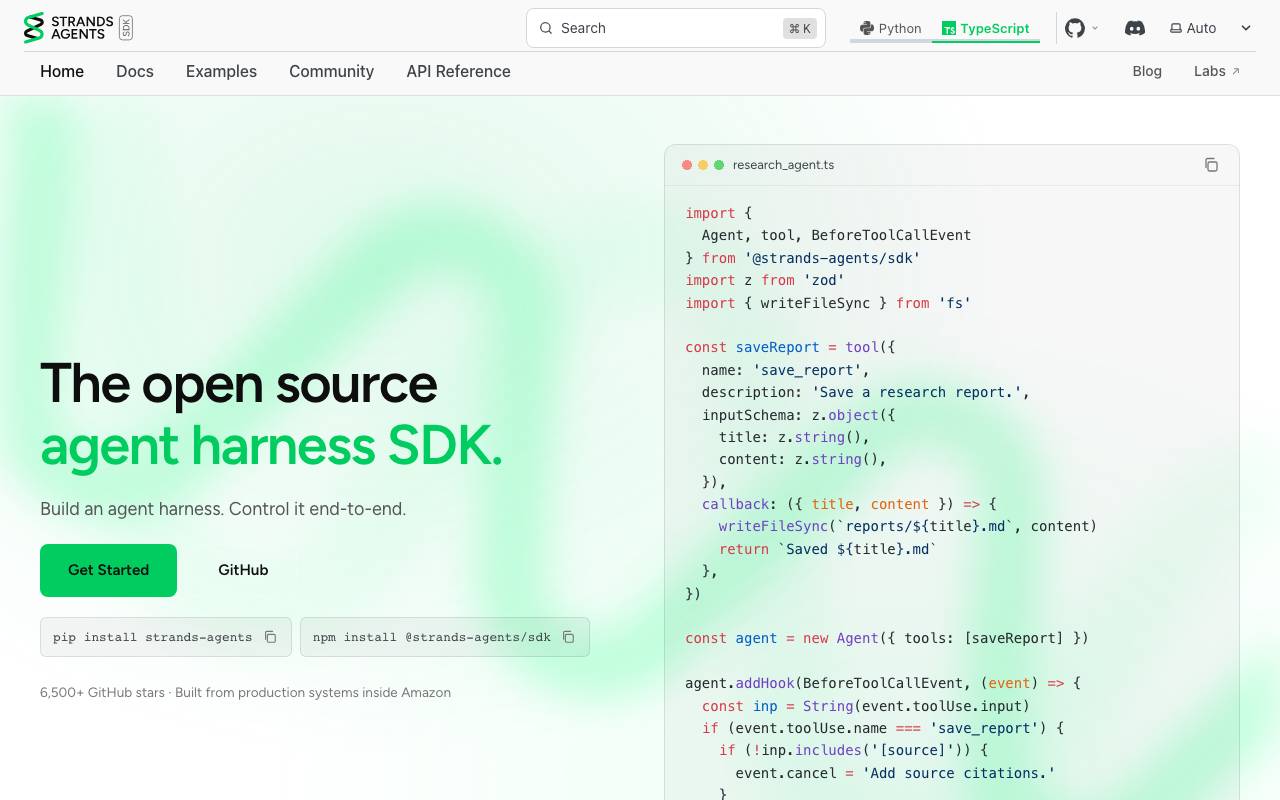
Strands Agents is an open-source SDK for building and orchestrating single or multi-agent systems with Large Language Models (LLMs) and tool integration. It allows developers to create production-ready agents by defining tools and hooks. The SDK supports both Python and TypeScript, with examples provided for each. Strands Agents enables the creation of custom agents that can interact with various tools and models, facilitating complex workflows and applications. The toolkit is designed to be flexible, allowing users to integrate it with different LLMs and cloud services. With over 6,200 GitHub stars, Strands Agents has gained popularity among developers looking to build advanced AI systems.
- Built-in AI model customization and development
- Single codebase support for cloud environments
- Generic output parsers

BabyCatAGI는 복잡한 태스크를 자율형 AI 에이전트를 통해 처리하기 위한 단순화되고 수정된 버전입니다. 높은 수준의 목표를 관리 가능한 하위 태스크로 나누고, 순차적으로 실행하며, 중간 결과에 기반하여 계획을 조정하여 연구, 콘텐츠 생성 및 다단계 문제 해결에 적합합니다. 이 프레임워크는 최소한의 코드와 가독성을 우선하여, 개발자가 대형 오케스트레이션 라이브러리의 오버헤드 없이 에이전틱 AI를 실험하고 싶은 경우에 액세스할 수 있습니다. 언어 모델 및 웹 검색 도구와 통합하여 문제를 해결하고 구조화된 출력을 생성합니다. BabyCatAGI는 오픈 실험 프로젝트로 에이전트 워크플로우 프로토タイ핑, 태스크 기반 자율 시스템 운영 방법 학습 및 특정 자동화 요구 사항에 맞춘 파이프라인 사용자 지정에 최적화되어 있습니다.
- 태스크 목록 생성 및 우선순위 지정
- 자율적 하위 태스크 실행
- 웹 검색 통합을 통한 컨텍스트
- 순차적推論 워크플로
- 경량 파이썬 구현
- 사용자 정의 가능한 목표 및 프롬프트

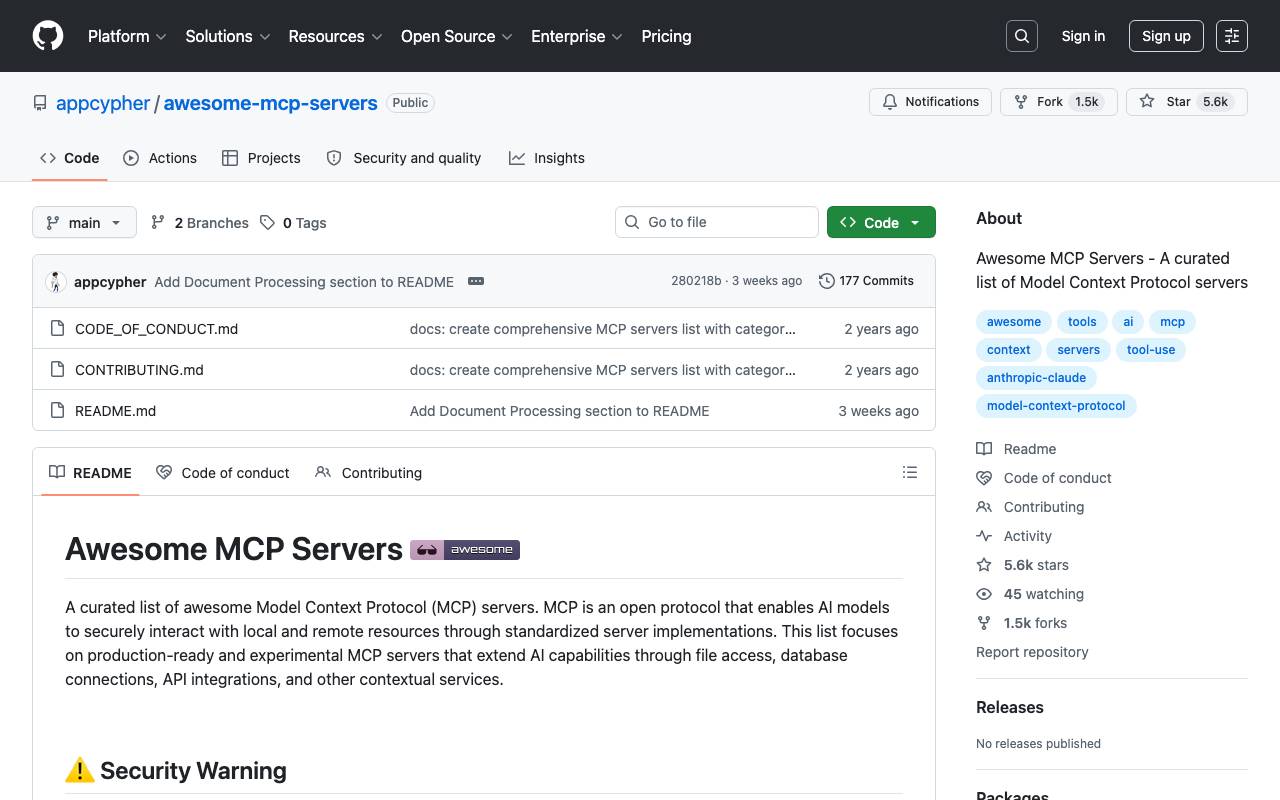
Awesome MCP Servers AI . API, , LLM-based , . , , , , , , . , , , , .
- MCP
- API
- GitHub SDK
- API API
- API
- MCP API

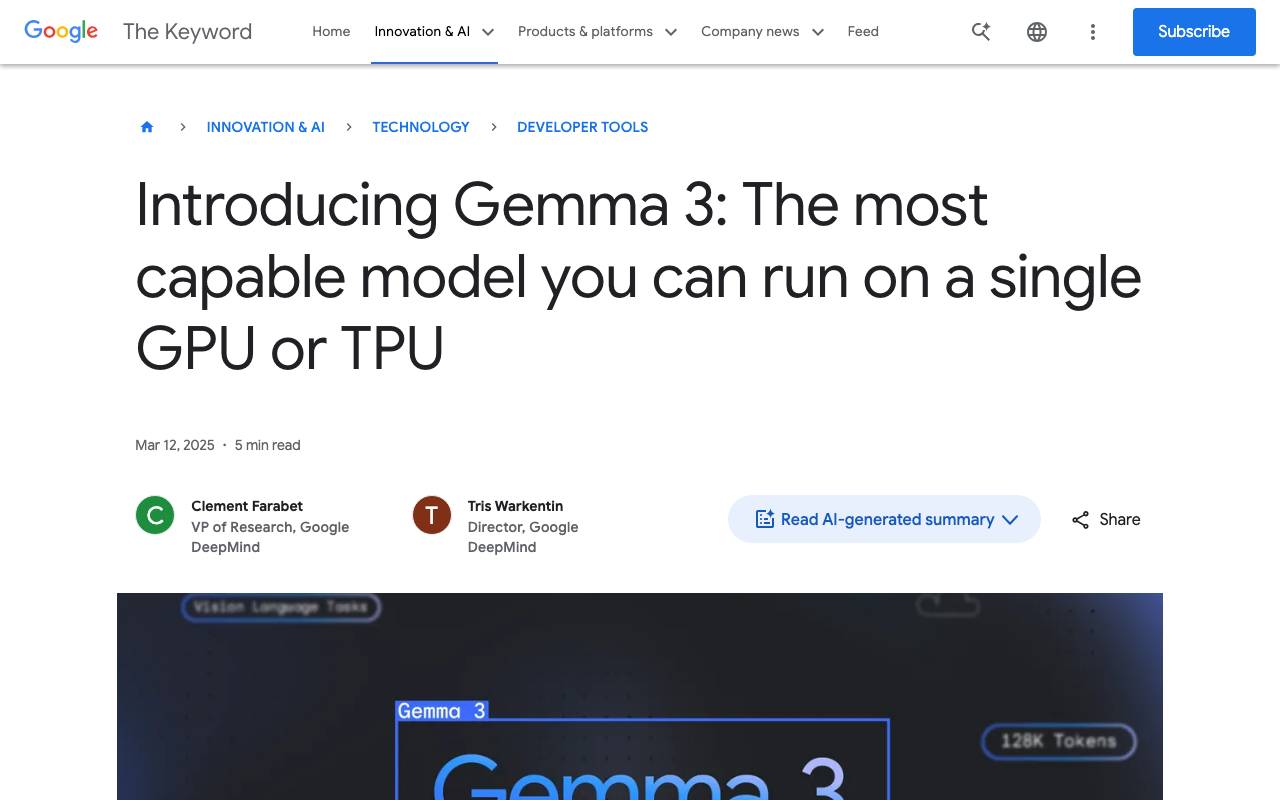
Gemma 3 is a collection of lightweight, state-of-the-art open models designed to run on devices, particularly optimized for single-GPU performance. It supports multimodal inputs and over 140 languages. The model comes in various sizes (1B, 4B, 12B, and 27B), allowing developers to choose the best fit for their hardware and performance needs. Gemma 3 offers advanced text and visual reasoning capabilities, a 128k-token context window, and function calling for complex tasks. It also includes quantized versions for faster performance and reduced computational requirements. The model is part of Google's commitment to making useful AI technology accessible and builds upon the same research and technology that powers their Gemini 2.0 models. Gemma 3 is designed to enable developers to create AI applications that can run directly on devices such as phones, laptops, and workstations. Gemma 3 delivers state-of-the-art performance for its size, outperforming other models like Llama3-405B, DeepSeek-V3, and o3-mini in preliminary human preference evaluations. It allows for global applications with out-of-the-box support for over 35 languages and pretrained support for over 140 languages. The model enables the creation of AI-driven workflows using function calling and structured output. The development of Gemma 3 included rigorous safety protocols, such as extensive data governance, alignment with safety policies via fine-tuning, and robust benchmark evaluations. The Gemma family of open models has seen significant adoption, with over 100 million downloads and a vibrant community that has created more than 60,000 Gemma variants. Gemma 3's capabilities make it suitable for developers looking to create engaging user experiences that can fit on a single GPU or TPU host.
- multimodal AI support
- responsibility-focused development
- extensive fine-tuning
- support for 140 languages
- improved performance

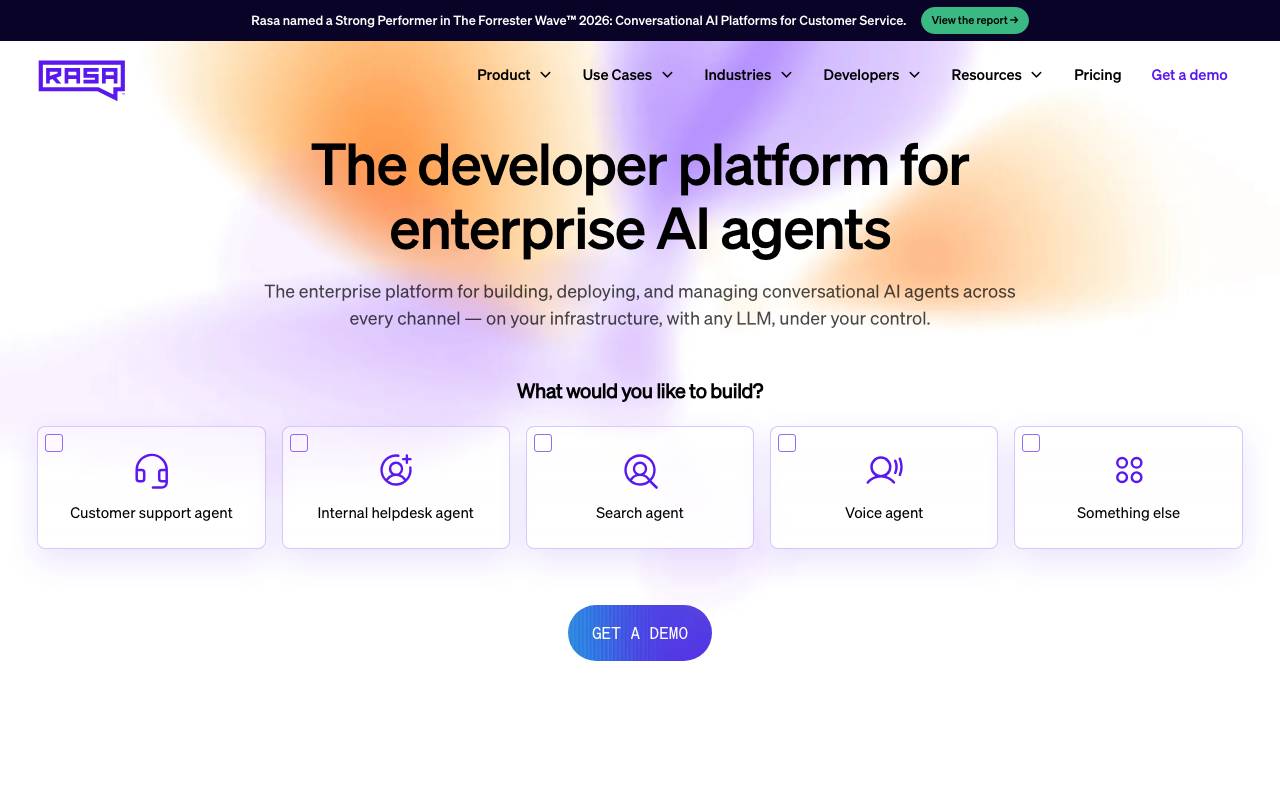
Rasa is a conversational AI platform that helps developers build contextual chat and voice assistants with full control over data, models, and deployment. Its open-source core handles natural language understanding and dialogue management, while Rasa Pro adds enterprise features like analytics, security controls, and scalable infrastructure. Rasa Studio provides a low-code interface for designers and conversation teams to collaborate on training data, flows, and testing without writing code. Together, the tools support hybrid teams shipping assistants across messaging channels, IVR systems, and custom applications. It is commonly used by enterprises in banking, telecom, healthcare, and government where on-premise deployment, compliance, and customization are required.
- Natural language understanding engine
- Dialogue management with custom actions
- Rasa Studio low-code interface
- Voice and multi-channel integrations
- Conversation analytics and testing tools
- Enterprise security and deployment controls

BabyElfAGI BabyAGI , . Skills , , . , , , .
- Skills
- API
- LLM API OpenAI


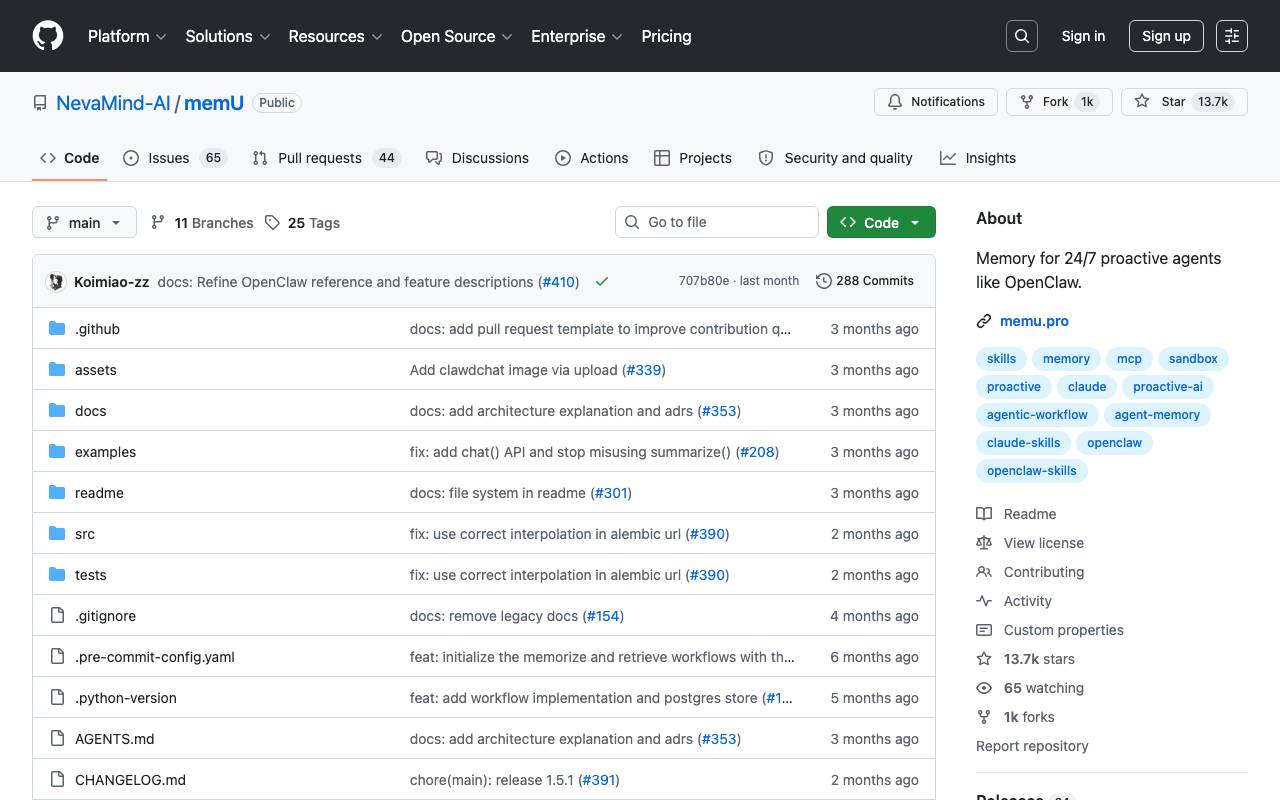
Agentic memory framework that stores human interactions, documents, images, audio, URLs, logs, and local files in memory as Index, Skill, and Memory layers (folders/categories), files (items), source artifacts, links, summaries, and embeddings. Agents traverse this compiled workspace, extracting profile, event, knowledge, behavior, skill, and tool memories from raw sources. Then, auto-build reusable patterns and workflows from tool traces, continuously refining them on every memorize() call instead of relearning. Use in-memory, SQLite, or PostgreSQL as storage backends (referenced URLs: src/tree.py), SQLite, or PostgreSQL as storage backends (default: memory). ASTLib Libraries used: astroid & cProto. Key Features: Multi-memory organization, Agent-specific intent recognition, User-defined skill learning, and multi-track history-aware recall.
- Multimodal ingestion of conversations, documents, images, video, audio, URLs, and logs
- Compiled memory workspace with persistence of Index, Skill, and Memory layers
- Typed memory extraction from raw sources
- Self-evolving skills through auto-extraction of reusable tool patterns and workflows
- Self-organizing folders with auto-building of categories, links, summaries, and embeddings

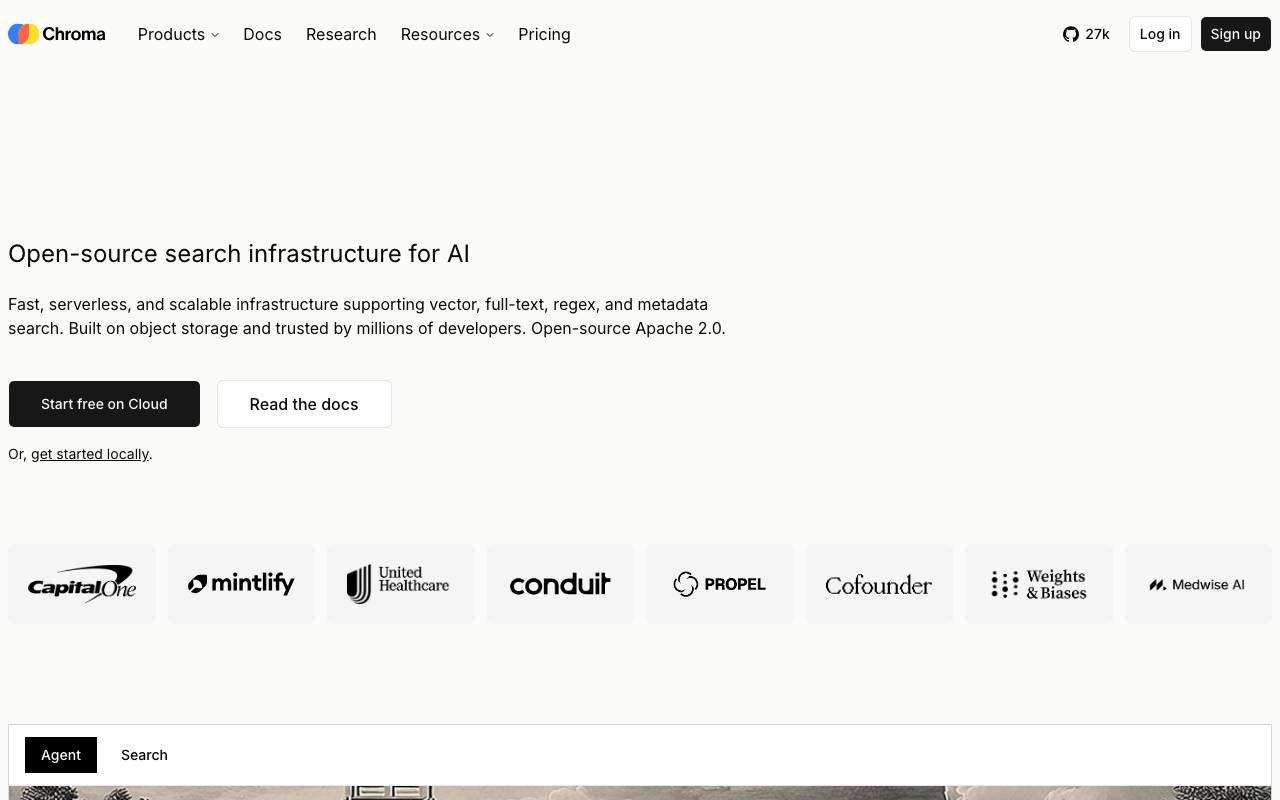
Chroma is an open-source vector database and embeddings engine for building retrieval-augmented AI applications. It is built on object storage and provides a scalable and serverless infrastructure for supporting vector, full-text, regex, and metadata search. Chroma's architecture includes a query layer with a fast memory cache and SSD cache, and a storage layer that utilizes object storage with automatic data tiering. It supports various features such as sparse vector search, lexical search, full-text search, and metadata search. Chroma is designed to take full advantage of object storage, with automatic query-aware data tiering and caching. This approach enables it to provide low latency search and scales with usage. Chroma is also designed for enterprises, providing a secure, compliant, and scalable search system with a 0-ops story. It supports BYOC in a VPC and multi-cloud/multi-region replication, ensuring a resilient and scalable search system. Its features include dataset versioning, A/B testing, and roll-outs, making it a robust solution for building retrieval-augmented AI applications.
- Sparse vector search
- Lexical search (BM25, SPLADE)
- Vector search
- Semantic similarity search
- Full-text search
- Trigram and regex search
모든 38개의 AI Agent Development Frameworks 도구 둘러보기
완전하고 검색 가능한 디렉터리 — 실제 사용자 리뷰로 순위가 매겨졌습니다.


