
ScreenAgentOpen‑source VLM agent to control computer GUIs via mouse/keyboard planning and execution.

Overview
Key features
- Mouse and keyboard operation execution
- Planning-execution-reflection process for task completion
- Support for various desktop operating systems and applications
- Manual annotation of the ScreenAgent dataset for diverse task coverage
- VLM agent for GUI interaction
Pricing
- Model
- Freemium
- Category
- AI Agent Development Frameworks
- Rating
- 4.4 / 5 (5)
Use cases
Automate repetitive desktop workflows
Use the VLM agent to plan and execute mouse and keyboard actions across GUI applications, handling routine multi-step tasks without scripting each interaction.
Research on visual language agents
Leverage the open-source codebase to study, benchmark, and extend vision-language model agents that perceive screens and operate computers.
Cross-application task execution
Direct the agent to plan and carry out tasks spanning multiple GUI programs, navigating windows and controls via screen understanding.
Accessibility and assistive control
Enable natural-language-driven control of a computer's GUI, helping users perform actions through an agent that interprets the screen and acts on their behalf.
Pros & Cons
Pros
- Universal applicability across different desktop operating systems and applications
- Capability to perform complex tasks through a planning-execution-reflection process
- Supports basic mouse and keyboard operations for GUI interaction
- Manual dataset annotation for comprehensive task coverage
Cons
- Requires a VNC server or similar setup for remote desktop connection
- Complex task planning and image understanding capabilities needed
- Dependent on the quality and coverage of the ScreenAgent dataset
Reviews
Average from 5 ratings.
Sign in to leave a review.
Skeptical, then convinced
I went in skeptical — most tools in this space overpromise. It actually delivers on the integrations, and it saves real time caught me off guard. The docs could be deeper is why this isn't a perfect score, still, I'd recommend giving it a real trial.
Does the job
Pretty happy overall. The automation just works and the value for money is strong. A few rough edges remain can be annoying, but no dealbreakers — I'd recommend it to a friend without hesitating.
Years in this space
I've evaluated a lot of these over the years. What stands out here is the core workflow — handled better than most — and support is responsive. Pricing gets steep at scale is my one real gripe. Worth the time if this is your use case.
Compared a few options
Evaluated this against two competitors. Where it wins: the automation and it is genuinely easy to set up. Where it lags: pricing gets steep at scale. On balance the feature set — especially the onboarding — justifies the 4 stars for our use case.
Use it every day
Honestly didn't expect to like it this much. The integrations is exactly what I needed, and the value for money is strong. but I reach for it almost every day now and it just clicks.
Q&A
What are typical use cases for ScreenAgent?
It is suited to GUI automation tasks where an agent needs to perceive the screen and act via mouse/keyboard—such as automating desktop workflows, testing applications, or building research prototypes for computer-use agents.
What is ScreenAgent and what can it do?
ScreenAgent is an open-source Visual Language Model (VLM) agent that controls computer GUIs. It plans and executes mouse and keyboard actions to automate on-screen tasks across desktop applications.
How much does ScreenAgent cost?
ScreenAgent is open-source, so the software itself is freely available. You may still incur costs for the underlying VLM (if using a paid model) and the hardware required to run it.
Ask a question
AI Agent Development Frameworks alternatives

Wildcard AI / agents.json
AI Agent Development Frameworks
Open spec and platform that lets AI agents discover and call API workflows through an agents.json file.
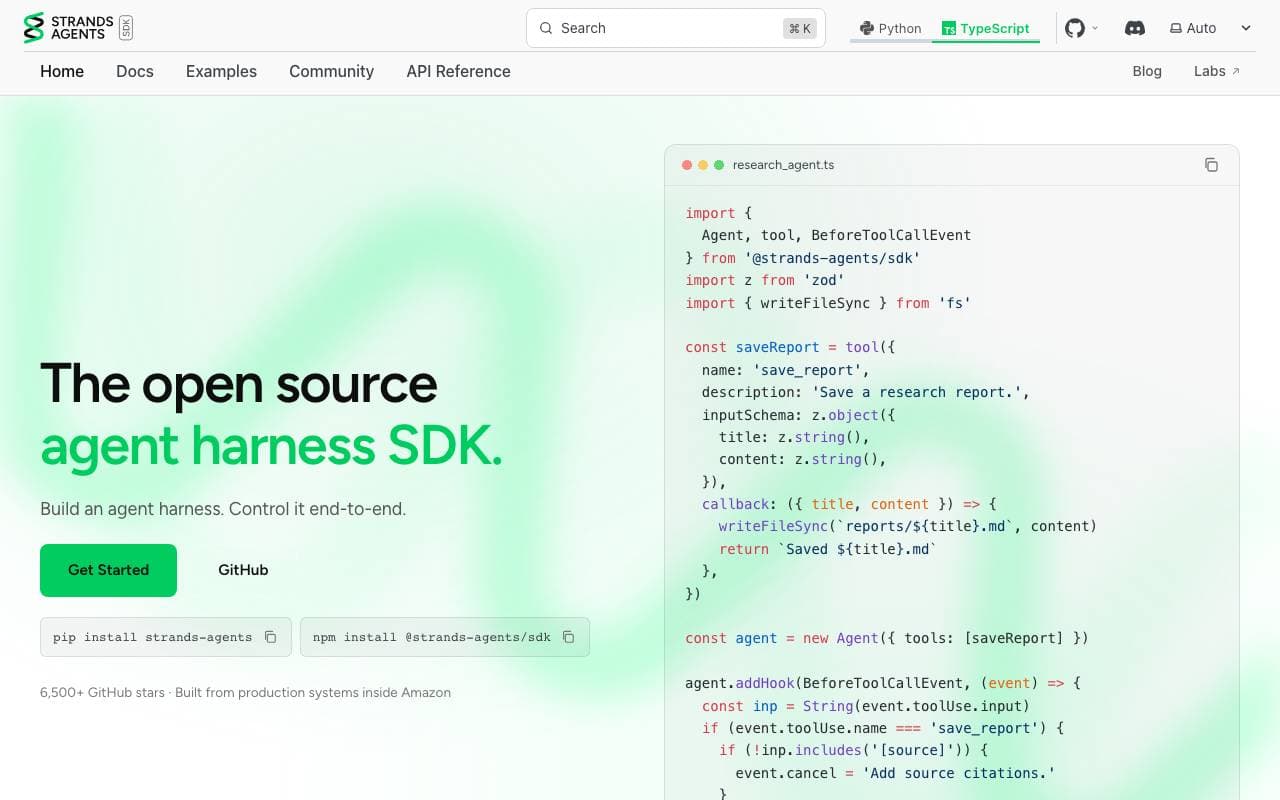

Strands Agents
AI Agent Development Frameworks
Open‑source SDK for building and orchestrating single or multi‑agent systems with LLMs and tool integration.

BabyCatAGI
AI Agent Development Frameworks
Lightweight autonomous AI agent framework for streamlined task automation

Awesome MCP Servers
AI Agent Development Frameworks
A curated directory of Model Context Protocol servers for extending AI assistants with tools and data.

Gemma 3
AI Agent Development Frameworks
An open-source AI model optimized for single-GPU performance, supporting multimodal inputs and over 140 languages.
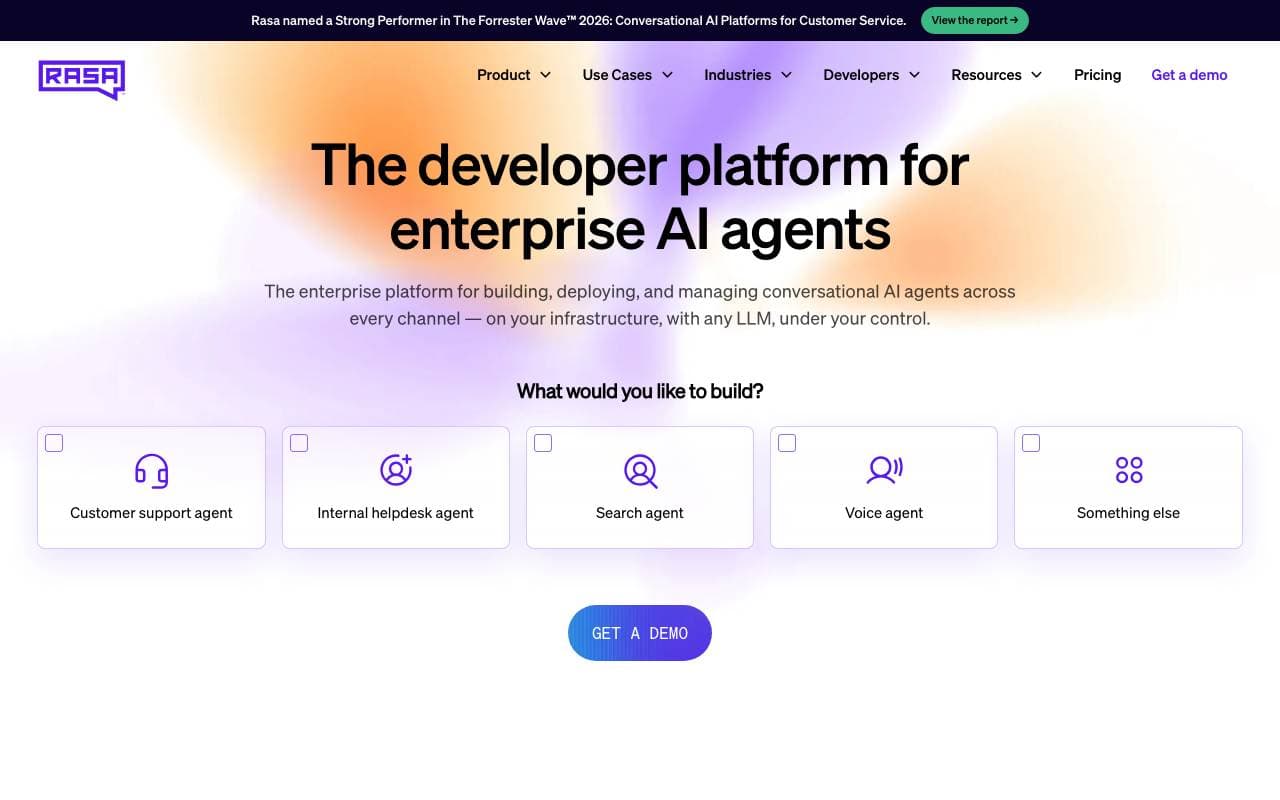

Rasa
AI Agent Development Frameworks
Open-source framework for building production-grade chat and voice assistants

BabyElfAGI
AI Agent Development Frameworks
Experimental AI agent framework with a modular Skills class for dynamic task planning and execution.
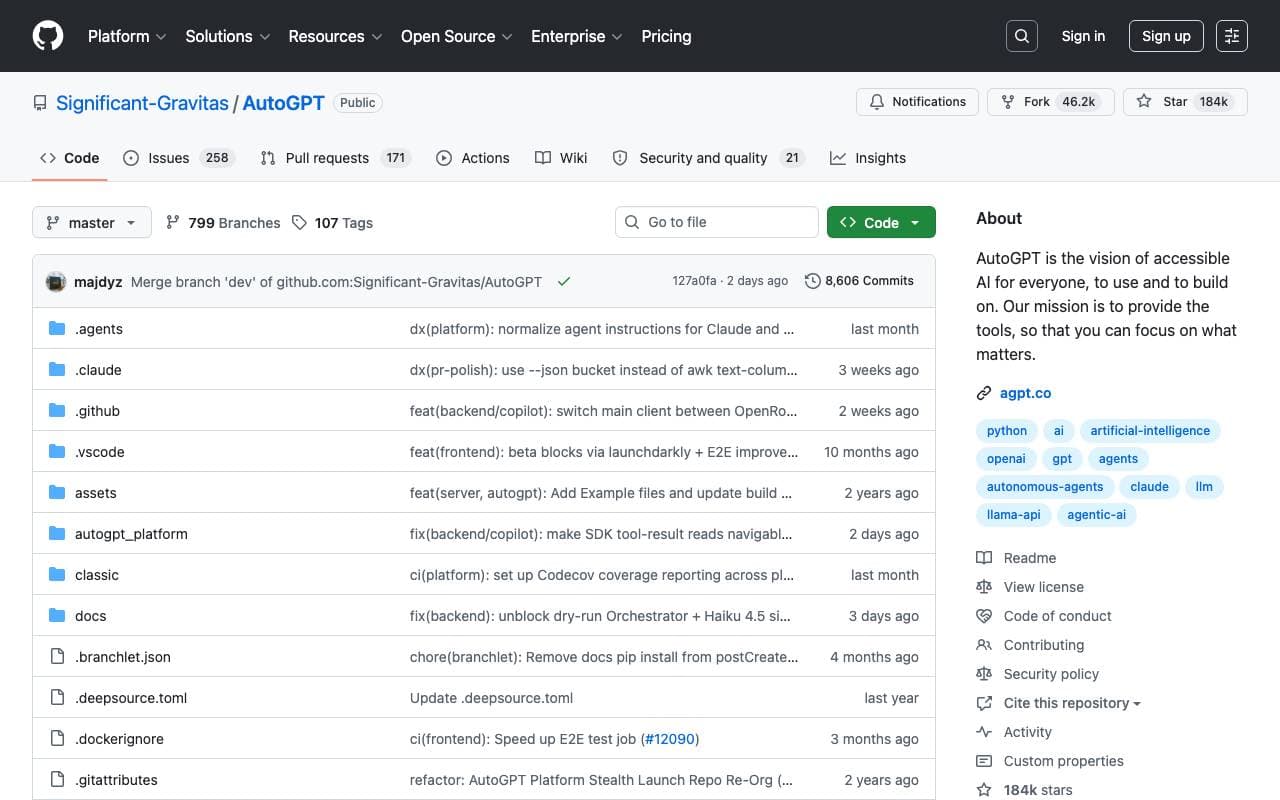

Auto-GPT
AI Agent Development Frameworks
An open-source AI agent capable of autonomously completing complex tasks using GPT models.
Trending now


Claude
AI Agents & Chatbots
Conversational AI assistant from Anthropic for writing, analysis, coding, and document tasks

Doozer Ai
Sales Agent
Digital co-workers that automate operational workflows to boost team efficiency.
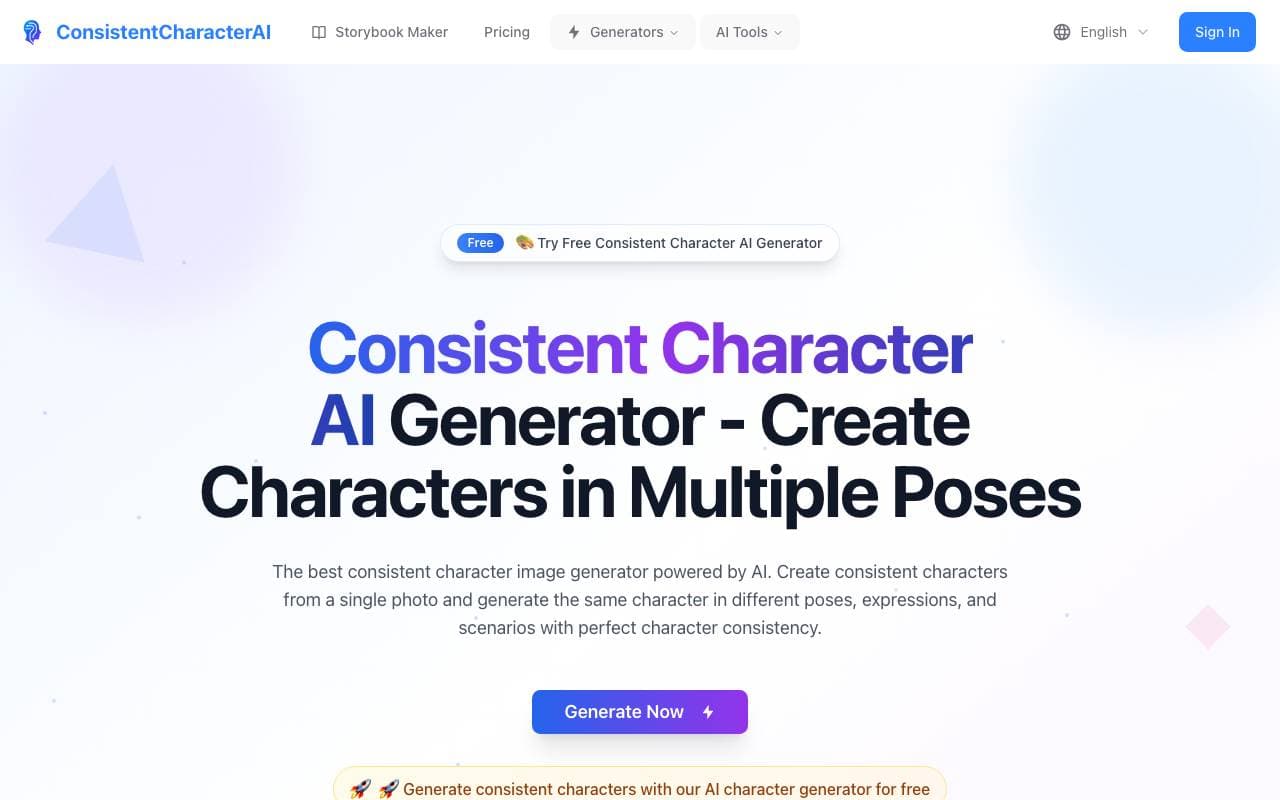

Consistent Character AI
Images
Generate consistent AI characters across scenes from a single reference photo.

Pin AI
Workflow automation
Agentic AI recruiter that automates sourcing, screening, and outreach to accelerate hiring.