
memUOpen-source agentic memory framework for 24/7 proactive AI agents with file-system memory, intention prediction, and lower token costs.

Overview
Key features
- Multimodal ingestion of conversations, documents, images, video, audio, URLs, and logs
- Compiled memory workspace with persistence of Index, Skill, and Memory layers
- Typed memory extraction from raw sources
- Self-evolving skills through auto-extraction of reusable tool patterns and workflows
- Self-organizing folders with auto-building of categories, links, summaries, and embeddings
Pricing
- Model
- Freemium
- Category
- AI Agent Development Frameworks
- Rating
- 4.8 / 5 (4)
Use cases
Build 24/7 Proactive AI Agents
Use memU as the memory layer for always-on agents that retain context across sessions and act proactively without constant user prompting.
Reduce LLM Token Costs
Leverage file-system-based memory to offload context from prompts, lowering token usage and operational costs for LLM-powered applications.
Intention-Aware Assistants
Integrate intention prediction so agents can anticipate user needs and surface relevant actions or information ahead of time.
Custom Agent Development
Adopt the open-source framework to prototype and deploy bespoke agentic systems with persistent, structured memory.
Pros & Cons
Pros
- Fast retrieval by traversing a tree-like memory organization
- Higher accuracy due to scoped context and exact conversation or document tracking
- Lower token costs as long histories aren't reinjected into every prompt
- Human-readable memory organization allowing for auditing and editing
Cons
- —
Reviews
Average from 4 ratings.
Sign in to leave a review.
Solid for our team
We rolled this out across the team last quarter and the value for money is strong. The core workflow fits neatly into how we already work, and the core workflow removed a step we used to do by hand. The mobile experience lags, which is the main caveat, but it has held up under daily use.
Years in this space
I've evaluated a lot of these over the years. What stands out here is the core workflow — handled better than most — and it saves real time. Worth the time if this is your use case.
Skeptical, then convinced
I went in skeptical — most tools in this space overpromise. It actually delivers on the automation, and the value for money is strong caught me off guard. Pricing gets steep at scale is why this isn't a perfect score, still, I'd recommend giving it a real trial.
Skeptical, then convinced
I went in skeptical — most tools in this space overpromise. It actually delivers on the API, and support is responsive caught me off guard. still, I'd recommend giving it a real trial.
Q&A
How does memU help lower token costs?
memU uses a file-system memory approach combined with intention prediction, which lets agents store and retrieve context efficiently rather than reprocessing large prompts—helping reduce the tokens consumed during ongoing agent operations.
Is memU open source, and who is it best suited for?
Yes, memU is open-source. It is best suited for developers and teams building proactive, always-on AI agents that need persistent memory, predictive intent handling, and cost-efficient token usage.
What is memU and what is it designed for?
memU is an open-source agentic memory framework built for 24/7 proactive AI agents. It provides file-system-based memory, intention prediction, and is designed to reduce token costs in long-running agent workflows.
Ask a question
AI Agent Development Frameworks alternatives

Wildcard AI / agents.json
AI Agent Development Frameworks
Open spec and platform that lets AI agents discover and call API workflows through an agents.json file.
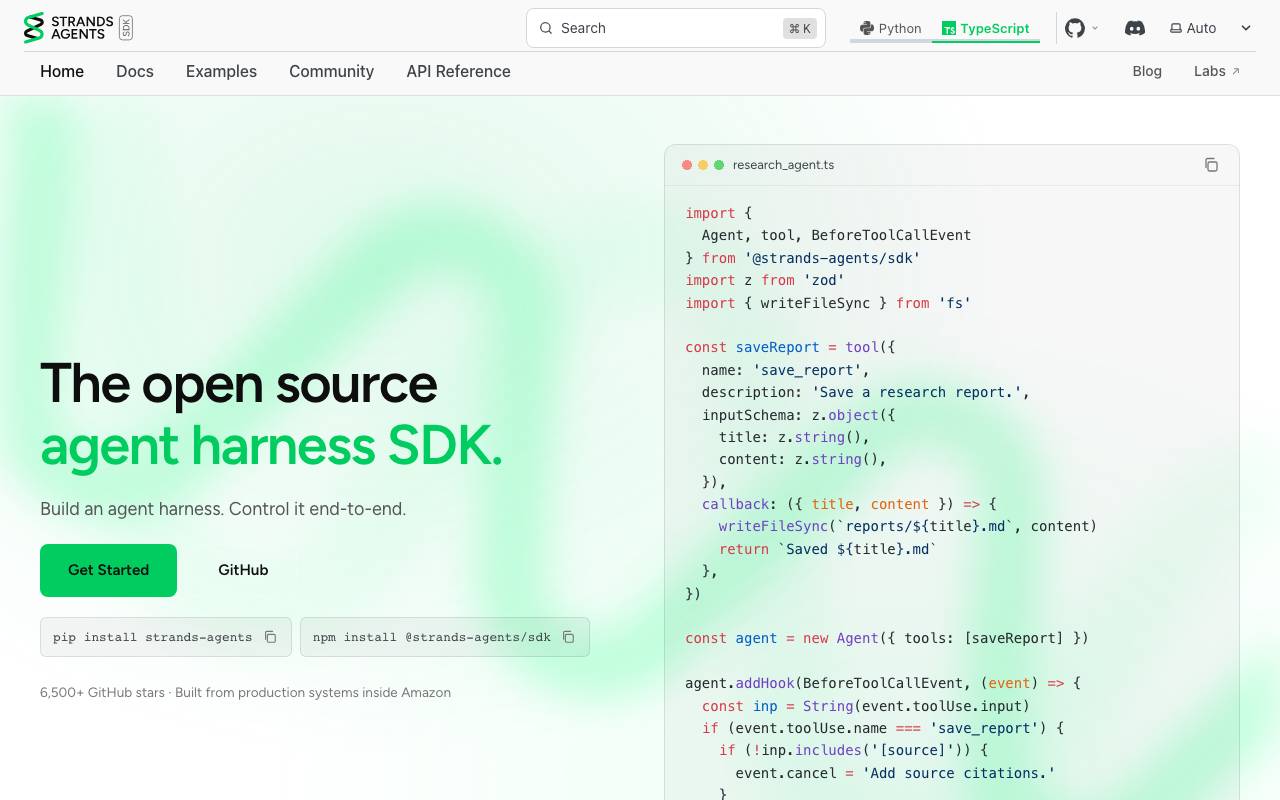

Strands Agents
AI Agent Development Frameworks
Open‑source SDK for building and orchestrating single or multi‑agent systems with LLMs and tool integration.

BabyCatAGI
AI Agent Development Frameworks
Lightweight autonomous AI agent framework for streamlined task automation

Awesome MCP Servers
AI Agent Development Frameworks
A curated directory of Model Context Protocol servers for extending AI assistants with tools and data.

Gemma 3
AI Agent Development Frameworks
An open-source AI model optimized for single-GPU performance, supporting multimodal inputs and over 140 languages.

Rasa
AI Agent Development Frameworks
Open-source framework for building production-grade chat and voice assistants

BabyElfAGI
AI Agent Development Frameworks
Experimental AI agent framework with a modular Skills class for dynamic task planning and execution.

Auto-GPT
AI Agent Development Frameworks
An open-source AI agent capable of autonomously completing complex tasks using GPT models.