Crawl4AIOpen-source web crawler and scraper that produces clean, LLM-ready output for AI agents and pipelines

Overview
Key features
- Markdown generation with content filtering
- CSS/XPath and LLM-based structured extraction
- Playwright-based headless browser rendering
- Asynchronous concurrent crawling
- Session, hook, and custom JavaScript support
- Docker deployment for service use
Pricing
- Model
- Free
- Category
- Agent Observability Tools
- Rating
- 4.4 / 5 (5)
Use cases
Collect training data for LLMs
Crawl and scrape websites to build clean, structured datasets suitable for fine-tuning or pretraining large language models.
Power retrieval for AI agents
Feed AI agents with up-to-date web content by integrating Crawl4AI into agent workflows for real-time information access.
Automate data pipelines
Use the scraper as a source step in ETL pipelines, extracting LLM-friendly web data for downstream processing and analysis.
Build RAG knowledge bases
Scrape documentation, articles, or domain sites to populate vector stores used in retrieval-augmented generation applications.
Pros & Cons
Pros
- Free and open-source with self-hosting control
- Outputs clean, LLM-ready Markdown and structured JSON
- Handles JavaScript-rendered pages via headless browser
- Async crawling and Docker deployment options
Cons
- Requires running and maintaining headless browsers
- Scraping can break with site changes or anti-bot defenses
- Configuration and setup have a learning curve
Reviews
Average from 5 ratings.
Sign in to leave a review.
Compared a few options
Evaluated this against two competitors. Where it wins: the automation and it is genuinely easy to set up. Where it lags: pricing gets steep at scale. On balance the feature set — especially the onboarding — justifies the 4 stars for our use case.
Years in this space
I've evaluated a lot of these over the years. What stands out here is the core workflow — handled better than most — and support is responsive. The docs could be deeper is my one real gripe. Worth the time if this is your use case.
Years in this space
I've evaluated a lot of these over the years. What stands out here is the core workflow — handled better than most — and it is genuinely easy to set up. The docs could be deeper is my one real gripe. Worth the time if this is your use case.
Compared a few options
Evaluated this against two competitors. Where it wins: the onboarding and support is responsive. Where it lags: pricing gets steep at scale. On balance the feature set — especially the automation — justifies the 4 stars for our use case.
Skeptical, then convinced
I went in skeptical — most tools in this space overpromise. It actually delivers on the integrations, and support is responsive caught me off guard. still, I'd recommend giving it a real trial.
Q&A
Why is Crawl4AI described as 'LLM-friendly' compared to traditional scrapers?
Crawl4AI is optimized to produce output that works well with large language models and AI agents, focusing on formats and workflows tailored to AI consumption rather than only raw HTML extraction.
What are the main use cases for Crawl4AI?
It is designed for web crawling and scraping in LLM-friendly formats, making it well-suited for feeding AI agents, RAG systems, and data pipelines with structured web content.
Is Crawl4AI free to use, and can I self-host it?
Yes. Crawl4AI is open-source, so you can use it for free and self-host it within your own infrastructure or data pipelines.
Ask a question
Agent Observability Tools alternatives
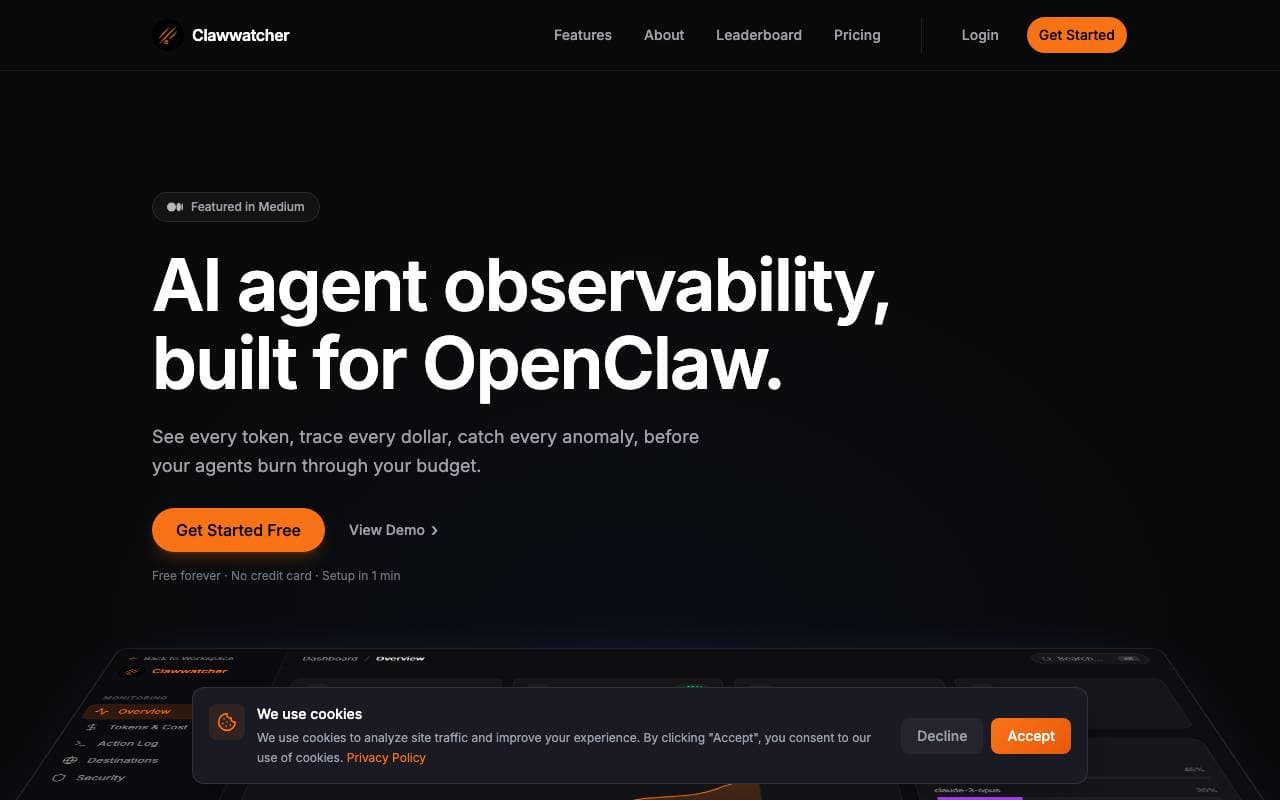

ClawWatcher
Agent Observability Tools
Real-time OpenClaw monitoring that breaks down token spend, actions, and cost per task so you can spot waste and optimize prompts.


Trent AI
Agent Observability Tools
Agentic AI security platform that continuously scans, judges, and mitigates risks across AI systems.
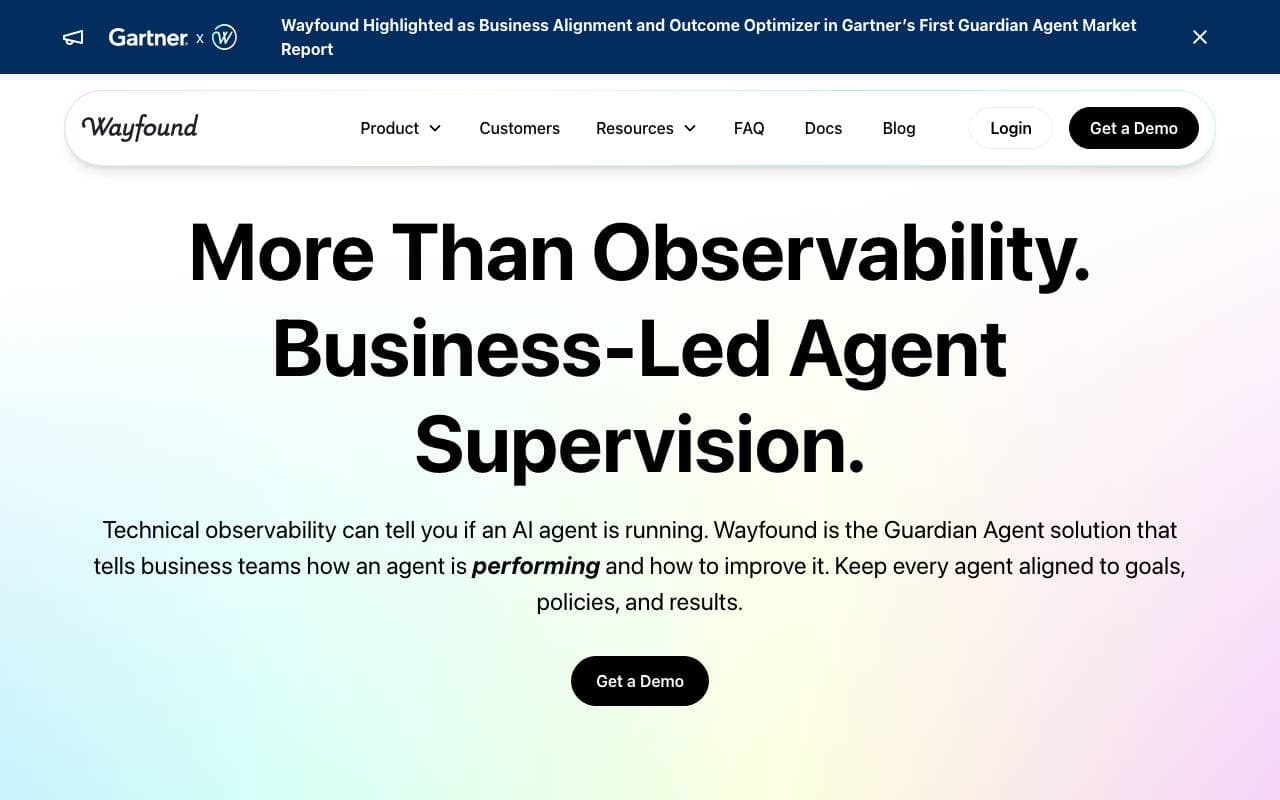

Wayfound AI
Agent Observability Tools
An AI agent supervision platform designed for business teams to monitor, align, and optimize agent performance and compliance.
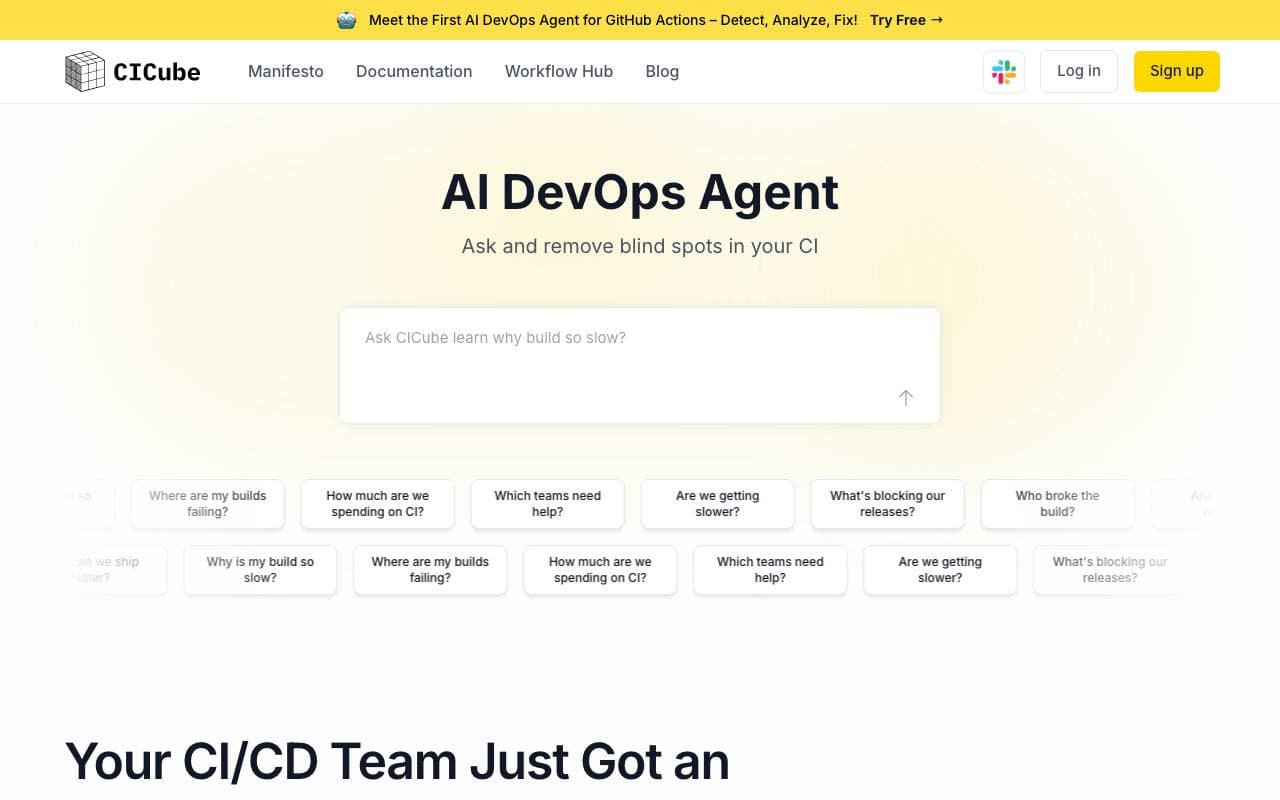

CICube
Agent Observability Tools
An AI DevOps agent that monitors GitHub Actions workflows, detects anomalies, and provides actionable fixes.

Manifest
Agent Observability Tools
Real-time cost observability and routing for AI agents and applications, enabling multi-provider LLM inference optimization.
Trending now

Doozer Ai
Sales Agent
Digital co-workers that automate operational workflows to boost team efficiency.


Claude
AI Agents & Chatbots
Conversational AI assistant from Anthropic for writing, analysis, coding, and document tasks

Consistent Character AI
Images
Generate consistent AI characters across scenes from a single reference photo.


Mistral AI
Large Language Models (LLMs)
Open-weight frontier models