
Agent Network ProtocolAn open-source protocol enabling secure, decentralized communication among AI agents.

Overview
Key features
- DID:WBA identity
- WNS handles
- Authentication
- Key distribution
- Secure messaging
- Direct messaging
Pricing
- Model
- Free
- Category
- AI Agent Development Frameworks
- Rating
- 4.6 / 5 (5)
Use cases
Cross-Platform Agent Communication
Enable AI agents built on different frameworks or by different vendors to securely exchange messages and collaborate using a shared open protocol.
Decentralized Multi-Agent Workflows
Coordinate distributed AI agents across organizations without relying on a central server, supporting peer-to-peer task delegation and information sharing.
Secure Agent Identity and Trust
Establish verifiable identities and secure channels between autonomous agents, reducing risks of impersonation or tampering in agent-to-agent interactions.
Building Open Agent Ecosystems
Developers can leverage the protocol to publish interoperable agents that discover and work with others in an open, standards-based network.
Pros & Cons
Pros
- Provides secure, decentralized communication among AI agents
- Reuses the open Internet foundation
- Designed for open, cross-domain agent networks
- Modular and extensible design
- Enables verifiable agent identity and readable handles
Cons
- Limited adoption due to its open-source nature, requiring development effort to establish and maintain a community of contributors.
- Dependent on existing web deployment patterns, which may introduce security or scalability concerns.
- Potential complexity in managing multiple domain protocols and applications, necessitating careful planning and coordination.
Reviews
Average from 5 ratings.
Sign in to leave a review.
Skeptical, then convinced
I went in skeptical — most tools in this space overpromise. It actually delivers on the API, and it is genuinely easy to set up caught me off guard. still, I'd recommend giving it a real trial.
Compared a few options
Evaluated this against two competitors. Where it wins: the onboarding and support is responsive. Where it lags: a few rough edges remain. On balance the feature set — especially the API — justifies the 5 stars for our use case.
Does the job
Pretty happy overall. The automation just works and it is genuinely easy to set up. but no dealbreakers — I'd recommend it to a friend without hesitating.
Skeptical, then convinced
I went in skeptical — most tools in this space overpromise. It actually delivers on the automation, and the value for money is strong caught me off guard. Pricing gets steep at scale is why this isn't a perfect score, still, I'd recommend giving it a real trial.
Does the job
Pretty happy overall. The integrations just works and support is responsive. The docs could be deeper can be annoying, but no dealbreakers — I'd recommend it to a friend without hesitating.
Q&A
What is the main use case for Agent Network Protocol?
It's designed to enable secure, decentralized communication among AI agents, making it suitable for projects that need multiple agents to interoperate across systems without relying on a centralized broker.
Why choose a decentralized protocol over a centralized agent framework?
A decentralized approach avoids single points of failure and vendor lock-in, while the protocol's emphasis on secure communication helps protect data exchanged between independently operated AI agents.
Is Agent Network Protocol free to use?
Yes. Agent Network Protocol is open-source, so it can be adopted and integrated without licensing fees. Operational costs would depend on your own infrastructure and deployment choices.
Ask a question
AI Agent Development Frameworks alternatives

Wildcard AI / agents.json
AI Agent Development Frameworks
Open spec and platform that lets AI agents discover and call API workflows through an agents.json file.
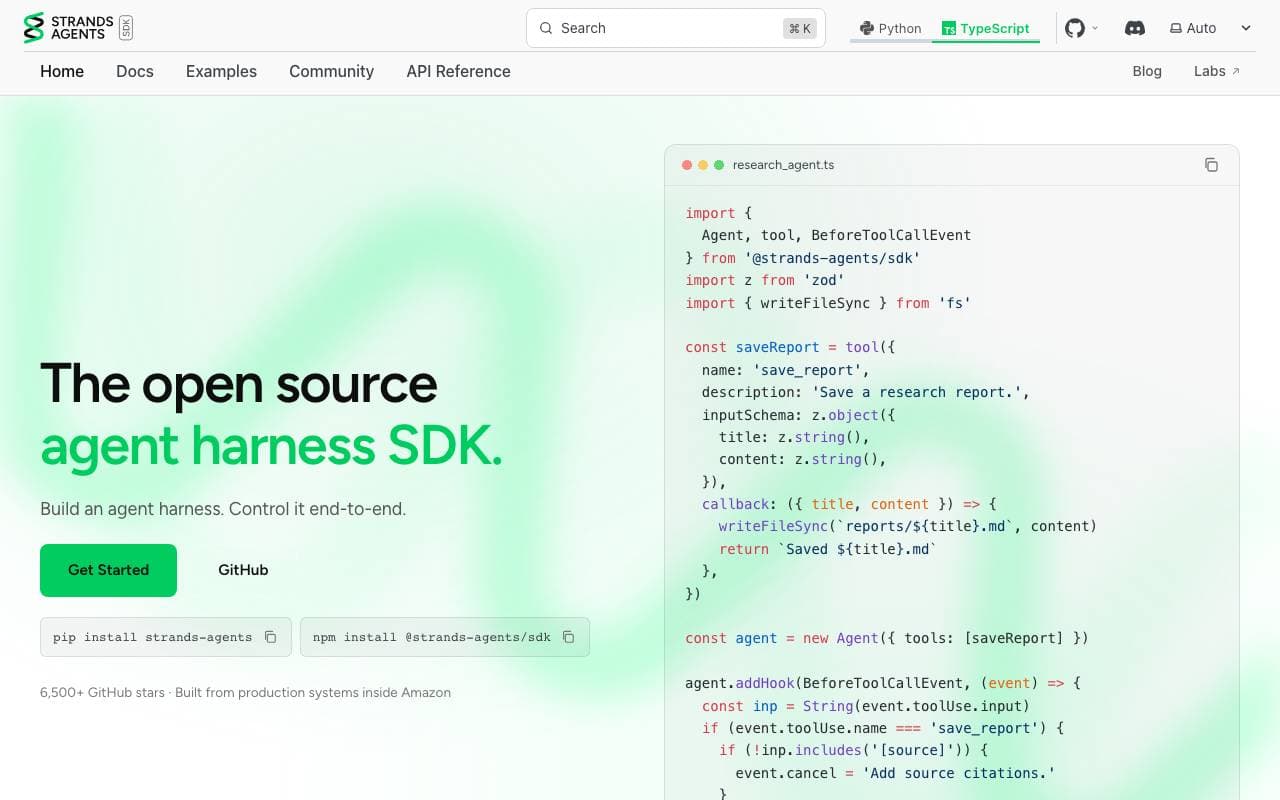

Strands Agents
AI Agent Development Frameworks
Open‑source SDK for building and orchestrating single or multi‑agent systems with LLMs and tool integration.

BabyCatAGI
AI Agent Development Frameworks
Lightweight autonomous AI agent framework for streamlined task automation
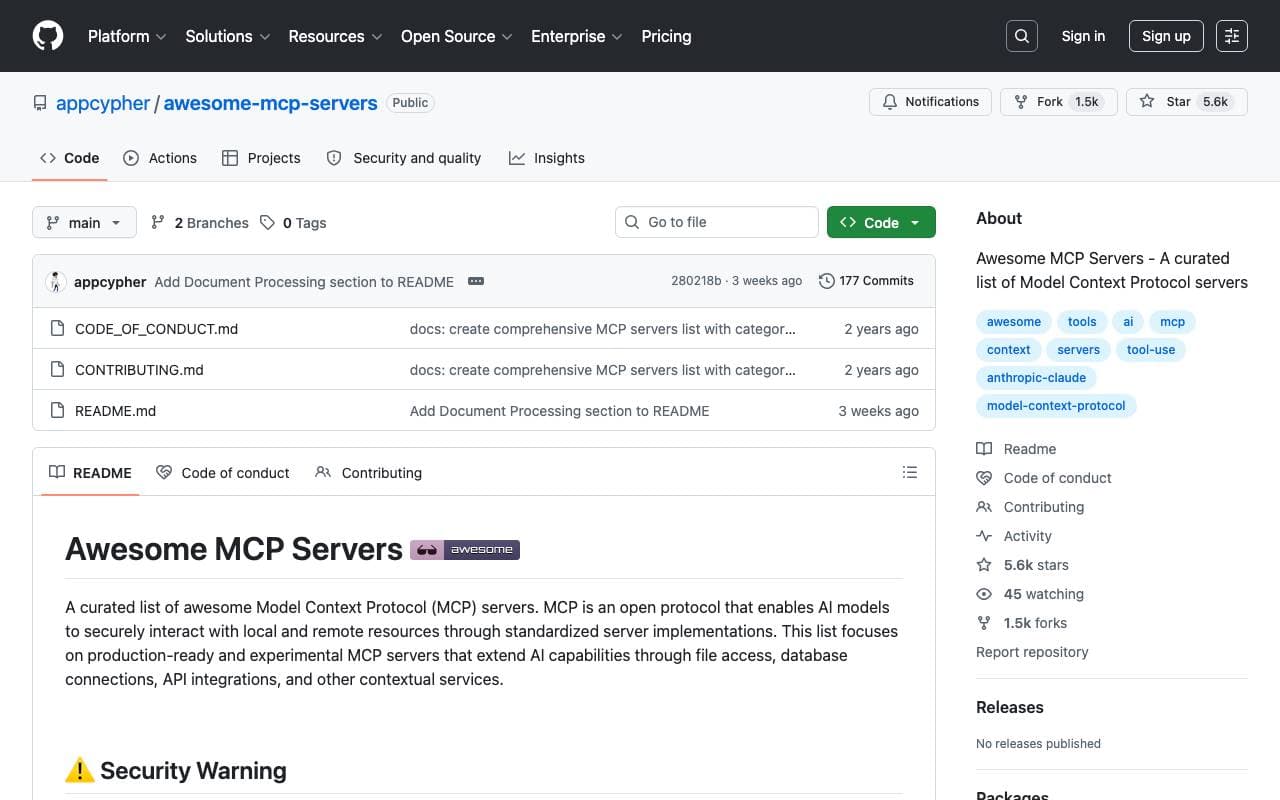

Awesome MCP Servers
AI Agent Development Frameworks
A curated directory of Model Context Protocol servers for extending AI assistants with tools and data.
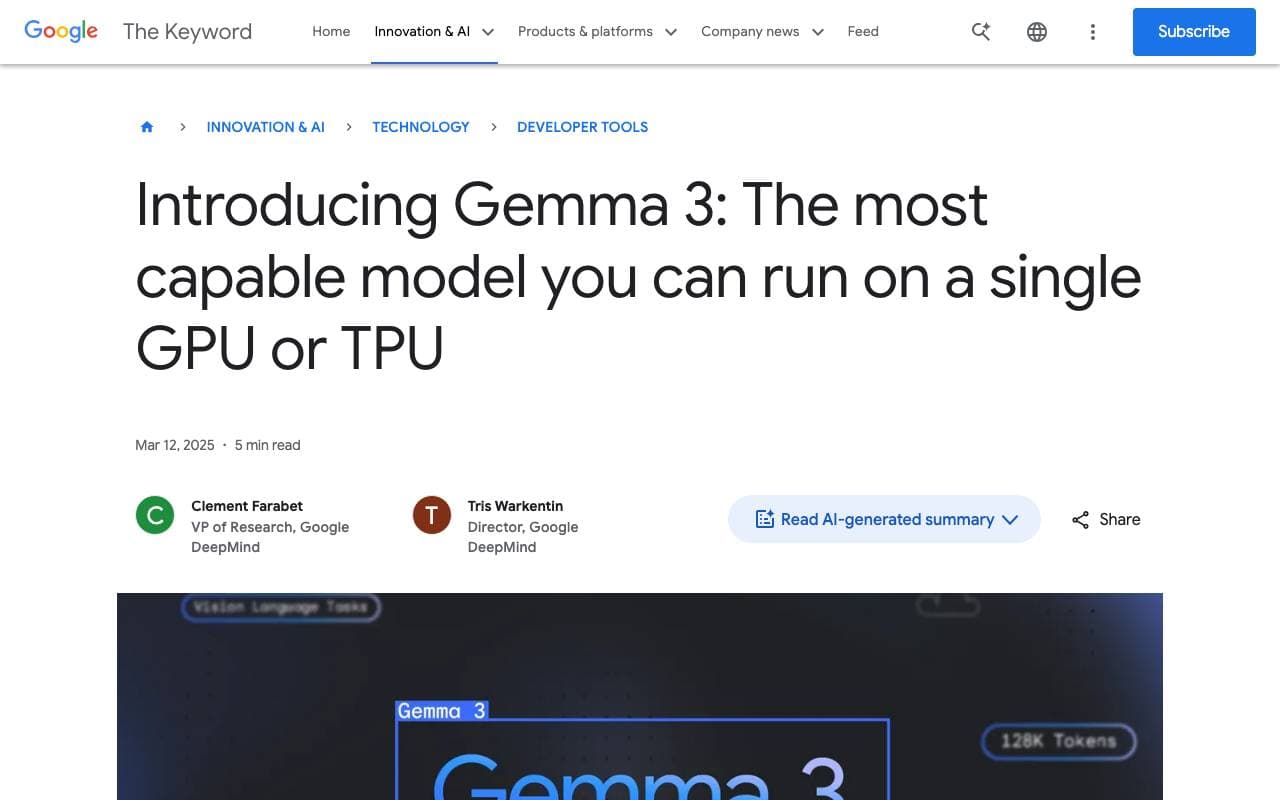

Gemma 3
AI Agent Development Frameworks
An open-source AI model optimized for single-GPU performance, supporting multimodal inputs and over 140 languages.

Rasa
AI Agent Development Frameworks
Open-source framework for building production-grade chat and voice assistants

BabyElfAGI
AI Agent Development Frameworks
Experimental AI agent framework with a modular Skills class for dynamic task planning and execution.

Auto-GPT
AI Agent Development Frameworks
An open-source AI agent capable of autonomously completing complex tasks using GPT models.
Trending now

Doozer Ai
Sales Agent
Digital co-workers that automate operational workflows to boost team efficiency.


Claude
AI Agents & Chatbots
Conversational AI assistant from Anthropic for writing, analysis, coding, and document tasks

Consistent Character AI
Images
Generate consistent AI characters across scenes from a single reference photo.

Pin AI
Workflow automation
Agentic AI recruiter that automates sourcing, screening, and outreach to accelerate hiring.